

Tibetan Sand Plover vs Greater Sand Plover
Anarhynchus atrifrons versus Anarhynchus leschenaultii
Play a quiz with Tibetan Sand Plover and Greater Sand Plover
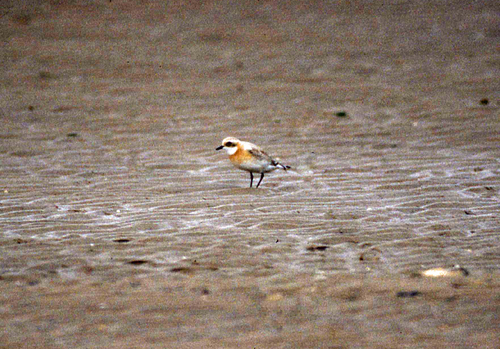 Tibetan Sand Plover
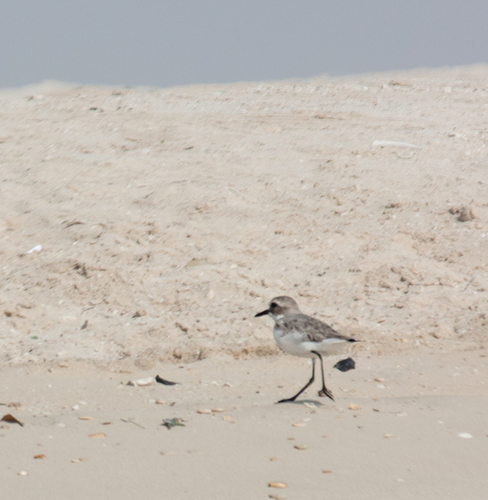 Greater Sand Plover
In short
The most reliable field mark between Tibetan Sand Plover and Greater Sand Plover is structure: Greater Sand Plover is noticeably larger, chunkier, with longer legs and a thicker bill, especially obvious when the two are side-by-side. Both species show similar plumage patterns in all ages and seasons, including a black mask and orange breast in breeding plumage, and brown above/white below in winter and juvenile plumages. Separating them in the field is most straightforward by comparing overall size, leg length, and bill thickness, as plumage differences are subtle and variable. In lone birds or distant flocks, identification is challenging and often requires a combination of structure and context clues.
Identification tips
- Size and structure are key: Greater Sand Plover is larger, chunkier, and longer-legged than Tibetan Sand Plover. If you see both together, the difference is usually clear. Alone, look for a robust, upright stance (Greater) versus a more delicate, medium-sized plover (Tibetan).
- Bill thickness: Greater Sand Plover has a noticeably thicker, heavier bill, even in its smallest-billed subspecies. Tibetan Sand Plover's bill is finer and more proportionate to its head.
- Leg length: Greater Sand Plover's legs are longer and more conspicuous, giving it a taller, more upright look. This is especially visible when birds are wading or running.
- Breeding plumage mask and breast band: Both species show a black mask and orange/rufous breast in breeding plumage. Greater Sand Plover's orange is more variable (from weak to strong) and can extend to the forehead and nape, while Tibetan Sand Plover's is described as light orange, especially in males. These differences are subtle and overlap.
- Sex differences in breeding plumage: In Tibetan Sand Plover, males are paler than females. In Greater Sand Plover, females are duller and greyer than males. This is only useful if sex can be determined, which is difficult in the field.
- Juvenile and winter birds: Both are brown above and white below, with some white on the forehead. Greater Sand Plover juveniles may show a hint of rufous on the head, but this is not a strong field mark. No distinctive upperwing or flight pattern differences are described for immatures.
- Leg and bill color: Both have black bills. Greater Sand Plover's legs are greenish-yellow; Tibetan Sand Plover's leg color is not specified but likely similar, so not a strong separator.
- Habitat and context: If you are birding in the high-altitude breeding range (Tibetan Plateau, Pamir, Tian Shan), Tibetan Sand Plover is more likely. On lowland beaches in Africa or South Asia, both species can occur, but Greater Sand Plover is often more numerous and obvious in mixed flocks.
- Direct comparison: In mixed flocks, look for the largest, longest-legged, thickest-billed birds (Greater Sand Plover) versus smaller, more delicate individuals (Tibetan Sand Plover).
- When identification is tough: Lone vagrants outside normal range (e.g., Europe) are extremely difficult to separate without direct comparison or detailed measurements; structure is your best clue.
- Plumage overlap: Be aware that plumage features (mask, breast band, upperpart color) overlap greatly between the two species and are not reliable on their own.
- Subspecies variation: Some Greater Sand Plover subspecies (especially A. l. columbinus) have smaller bills and stronger orange breast bands, making them look more like Tibetan Sand Plover. Use structure first.
- No distinctive flight pattern: Neither species is described as having a unique upperwing or flight pattern in any age or plumage, so do not rely on this for separation.
- Voice: No diagnostic vocal differences are described in the sources provided.
- Summary: Always prioritize size, structure, and bill thickness over plumage details, especially when birds are not side-by-side.
Size
Greater Sand Plover is distinctly larger (19–22 cm in length), with a chunkier build, longer legs, and a thicker bill than Tibetan Sand Plover, which is medium-sized for a plover. This size difference is most apparent in direct comparison, but even singly, Greater Sand Plover often looks more robust and upright. Bill size varies among Greater Sand Plover subspecies, but even the smallest-billed forms tend to be thicker-billed than Tibetan Sand Plover. Both species are larger than Common Ringed Plover, but Greater Sand Plover is the largest of the two here.
Plumage
- Juvenile and winter plumage: Both species have light brown upperparts and white underparts, with some white on the forehead and back. Greater Sand Plover juveniles and non-breeding birds may show a hint of rufous on the head, but this is subtle and not always reliable. No distinctive upperwing or flight pattern differences are described for juveniles or immatures between these two species in the sources.
- Breeding plumage: Both species develop a black mask and orange or rufous breast band in summer. Tibetan Sand Plover's chest and neck are described as light orange, with males paler than females. Greater Sand Plover's orange is variable: the breast, forehead, and nape can be strongly or weakly orange depending on subspecies, with females duller and greyer. In both, the bill is black and legs are greenish-yellow (Greater Sand Plover) or not specified (Tibetan Sand Plover, but likely similar).
Behaviour
Both species behave as typical sand plovers: active, quick-moving waders, often seen running and pausing on open mudflats or sandy shores. Greater Sand Plover may appear more upright and robust due to its longer legs and chunkier build. No major behavioral differences are described in the sources.
Habitat
Both species breed in Central Asian highlands and winter across Africa and southern Asia, often sharing similar habitats on migration and wintering grounds: open sandy or muddy shores, estuaries, and beaches. Tibetan Sand Plover breeds at higher elevations (Tibetan Plateau, Pamir, Tian Shan), while Greater Sand Plover's range is broader and includes lower elevations. In mixed flocks on Indian beaches, the size and structure differences are most apparent.