
Motmot

Western Yellow Wagtail vs Pied Wagtail/White Wagtail

Motacilla flava versus Motacilla alba

Play a quiz with Western Yellow Wagtail and Pied Wagtail/White Wagtail
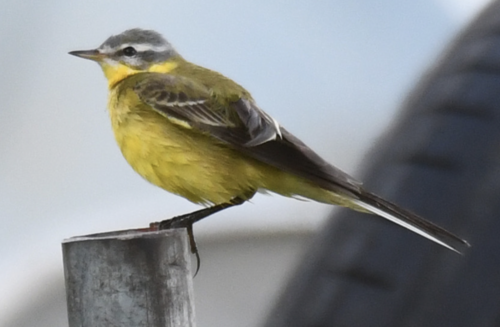
Western Yellow Wagtail (Motacilla flava) Western Yellow Wagtail
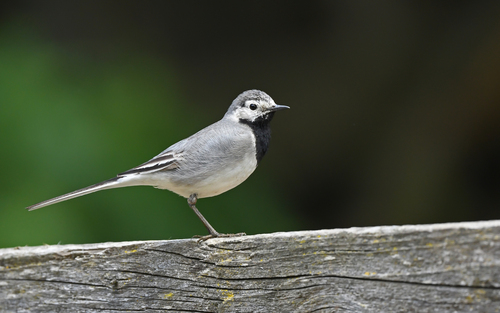
Pied Wagtail/White Wagtail (Motacilla alba) Pied Wagtail/White Wagtail

Media

Loading…

In short

The most reliable field mark to separate Western Yellow Wagtail from Pied/White Wagtail is underpart color: Western Yellow Wagtail (all ages) shows yellow or yellowish underparts, while Pied/White Wagtail is white or grey below, never yellow. Juvenile and non-breeding Yellow Wagtails can be pale, but still show a yellowish wash, especially on the belly and vent, which Pied/White Wagtail lacks. In flight or at rest, Pied/White Wagtail always shows a strong black, white, and grey pattern, while Western Yellow Wagtail is more olive and yellow, with less contrast. Structural differences are subtle, but Yellow Wagtail is slightly shorter-tailed and slimmer. Both species wag their tails and can be found in open country, but their preferred habitats and overall coloration are distinct.

Identification tips

  1. Underpart color is key: Western Yellow Wagtail always shows yellow or yellowish underparts, even in juveniles and non-breeding birds. Pied/White Wagtail is always white or grey below, never yellow. This is the most reliable mark at any age or season.
  2. Upperpart tone: Yellow Wagtail is olive or greenish above (except in some subspecies), while Pied/White Wagtail is grey or black above, with no olive tones. Juvenile Pied/White Wagtail is dark grey above, not olive.
  3. Head pattern: Breeding male Yellow Wagtails may have blue, grey, black, or greenish heads depending on subspecies, sometimes with a white supercilium. Pied/White Wagtail (including 'Pied') has a black, grey, or white head pattern, but never blue or olive. In winter, Pied/White Wagtail's black areas become grey, but the head is never olive or blue.
  4. Back color: Yellow Wagtail is olive or greenish on the back (breeding), while Pied/White Wagtail is grey or black (breeding males of 'Pied' form). In non-breeding plumage, Pied/White Wagtail's back is paler grey, but never olive.
  5. Flight pattern: Both show white outer tail feathers, but Pied/White Wagtail has a sharper black-and-white contrast on the wings and tail in flight. Yellow Wagtail's wings are less contrasting, and the overall impression is paler and yellower.
  6. Tail length: Yellow Wagtail is the shortest-tailed of the European wagtails, but the difference with Pied/White Wagtail is subtle and not always noticeable in the field.
  7. Bill and structure: Both are slender, but Yellow Wagtail is slightly slimmer and more delicate. Structural differences are minor and not diagnostic at a distance.
  8. Habitat context: Yellow Wagtail is almost always in wet, grassy, or agricultural areas, often with livestock. Pied/White Wagtail is common in urban and built-up areas, as well as open country. If seen in a city or on a rooftop, it is almost certainly Pied/White Wagtail.
  9. Behavior: Both wag their tails, but Yellow Wagtail is more likely to be seen running among grass or livestock, while Pied/White Wagtail often forages on hard surfaces or near water.
  10. Voice: Yellow Wagtail's call is a thin, high 'jeet'; Pied/White Wagtail's is a sharper, metallic 'chiswick' or 'tslee'. Calls can be similar, so use with caution.
  11. Seasonal variation: Both species show some seasonal change, but Yellow Wagtail always retains at least a yellowish wash below, while Pied/White Wagtail never does. In autumn and winter, Pied/White Wagtail's black areas become grey, but the underparts remain white.
  12. Subspecies confusion: Some Yellow Wagtail subspecies (e.g., 'Channel wagtail') can show extensive white on the head, but always have yellow below. Pied/White Wagtail subspecies vary in back and head color, but never show yellow underparts.
  13. Pitfalls: Juvenile Yellow Wagtail can be very pale, but look for any yellowish tinge below. Juvenile Pied/White Wagtail is grey and white, never yellowish. Lighting can affect perception of yellow tones, so check multiple angles if possible.
  14. Hybrid zones: Some Yellow Wagtail hybrids may have unusual head patterns, but underparts remain yellowish. Pied/White Wagtail never shows yellow below, even in hybrid zones.
  15. When in doubt: Focus on underpart color and overall contrast. If the bird is white or grey below with sharp black/white contrast, it is Pied/White Wagtail. If it is yellowish below, even faintly, it is Western Yellow Wagtail.

Size

Both species are small, slender passerines with similar proportions. Western Yellow Wagtail is about 15–16 cm long and is the shortest-tailed of the European wagtails [wikipedia]. Pied/White Wagtail is very similar in length and build, with no field-appreciable difference in size or mass [wikipedia][avonet]. Any size difference is minor and not reliable for field separation.

Plumage

Juvenile and first-winter birds are the most frequent source of confusion. Juvenile Western Yellow Wagtail is pale olive above and whitish to yellowish below, often with a diluted yellow wash that is most visible on the belly and vent. By contrast, juvenile Pied/White Wagtail is grey or dark grey above and white below, lacking any yellow tones. In all ages, Western Yellow Wagtail shows some yellow on the underparts, even if faint in young or non-breeding birds. Adult breeding male Yellow Wagtail is bright yellow below and olive above, with variable head patterns depending on subspecies (blue, grey, black, or greenish heads). Pied/White Wagtail (including the British 'Pied' form) is always white below, with a black, grey, or white head pattern, and a black or dark grey back in breeding males. In winter, Pied/White Wagtail's black areas become greyer, but the underparts remain white. In flight, both species show white outer tail feathers, but Pied/White Wagtail has more sharply defined black-and-white contrast on the wings and tail, while Yellow Wagtail's flight feathers are less contrasting and the overall impression is paler and yellower. No distinctive 'W' or triangle pattern is noted for either species in the sources, so focus on underpart color and overall contrast.

Behaviour

Both species are highly active, walking or running on the ground with frequent tail wagging. Western Yellow Wagtail is especially associated with wet meadows and marshy ground, often seen foraging among livestock or in grassy fields. Pied/White Wagtail is more versatile, commonly found in urban areas, car parks, rooftops, and along water edges, as well as open fields. Both species are insectivorous and may be seen flycatching, but Pied/White Wagtail is more likely to be seen around human habitation. In flight, both have a bounding, undulating flight and wag their tails when perched.

Habitat

Western Yellow Wagtail prefers open country near water, especially wet meadows, marshes, and grassy fields, often in rural or agricultural settings [wikipedia]. Pied/White Wagtail is more adaptable, breeding across a wider range of habitats including towns, villages, riverbanks, lakeshores, and open countryside. In winter, Pied/White Wagtail is frequently seen in urban environments, while Yellow Wagtail is almost exclusively in open, wet grassland or agricultural areas. If seen in a city center or on rooftops, it is almost certainly Pied/White Wagtail.

Voice

Western Yellow Wagtail gives a high-pitched, sharp 'jeet' call [wikipedia]. Pied/White Wagtail has a more variable call, often a sharp 'chiswick' or 'tslee', sometimes doubled. Both calls are high-pitched and can be confused, but Yellow Wagtail's is thinner and more sibilant, while Pied/White Wagtail's is slightly more metallic. Song is not a reliable field mark for separation in most situations.

Submit a better description

Use the same sections as the comparison. Your text is published immediately.

The most reliable field mark to separate Western Yellow Wagtail from Pied/White Wagtail is underpart color: Western Yellow Wagtail (all ages) shows yellow or yellowish underparts, while Pied/White Wagtail is white or grey below, never yellow. Juvenile and non-breeding Yellow Wagtails can be pale, but still show a yellowish wash, especially on the belly and vent, which Pied/White Wagtail lacks. In flight or at rest, Pied/White Wagtail always shows a strong black, white, and grey pattern, while Western Yellow Wagtail is more olive and yellow, with less contrast. Structural differences are subtle, but Yellow Wagtail is slightly shorter-tailed and slimmer. Both species wag their tails and can be found in open country, but their preferred habitats and overall coloration are distinct.

  1. Underpart color is key: Western Yellow Wagtail always shows yellow or yellowish underparts, even in juveniles and non-breeding birds. Pied/White Wagtail is always white or grey below, never yellow. This is the most reliable mark at any age or season.
  2. Upperpart tone: Yellow Wagtail is olive or greenish above (except in some subspecies), while Pied/White Wagtail is grey or black above, with no olive tones. Juvenile Pied/White Wagtail is dark grey above, not olive.
  3. Head pattern: Breeding male Yellow Wagtails may have blue, grey, black, or greenish heads depending on subspecies, sometimes with a white supercilium. Pied/White Wagtail (including 'Pied') has a black, grey, or white head pattern, but never blue or olive. In winter, Pied/White Wagtail's black areas become grey, but the head is never olive or blue.
  4. Back color: Yellow Wagtail is olive or greenish on the back (breeding), while Pied/White Wagtail is grey or black (breeding males of 'Pied' form). In non-breeding plumage, Pied/White Wagtail's back is paler grey, but never olive.
  5. Flight pattern: Both show white outer tail feathers, but Pied/White Wagtail has a sharper black-and-white contrast on the wings and tail in flight. Yellow Wagtail's wings are less contrasting, and the overall impression is paler and yellower.
  6. Tail length: Yellow Wagtail is the shortest-tailed of the European wagtails, but the difference with Pied/White Wagtail is subtle and not always noticeable in the field.
  7. Bill and structure: Both are slender, but Yellow Wagtail is slightly slimmer and more delicate. Structural differences are minor and not diagnostic at a distance.
  8. Habitat context: Yellow Wagtail is almost always in wet, grassy, or agricultural areas, often with livestock. Pied/White Wagtail is common in urban and built-up areas, as well as open country. If seen in a city or on a rooftop, it is almost certainly Pied/White Wagtail.
  9. Behavior: Both wag their tails, but Yellow Wagtail is more likely to be seen running among grass or livestock, while Pied/White Wagtail often forages on hard surfaces or near water.
  10. Voice: Yellow Wagtail's call is a thin, high 'jeet'; Pied/White Wagtail's is a sharper, metallic 'chiswick' or 'tslee'. Calls can be similar, so use with caution.
  11. Seasonal variation: Both species show some seasonal change, but Yellow Wagtail always retains at least a yellowish wash below, while Pied/White Wagtail never does. In autumn and winter, Pied/White Wagtail's black areas become grey, but the underparts remain white.
  12. Subspecies confusion: Some Yellow Wagtail subspecies (e.g., 'Channel wagtail') can show extensive white on the head, but always have yellow below. Pied/White Wagtail subspecies vary in back and head color, but never show yellow underparts.
  13. Pitfalls: Juvenile Yellow Wagtail can be very pale, but look for any yellowish tinge below. Juvenile Pied/White Wagtail is grey and white, never yellowish. Lighting can affect perception of yellow tones, so check multiple angles if possible.
  14. Hybrid zones: Some Yellow Wagtail hybrids may have unusual head patterns, but underparts remain yellowish. Pied/White Wagtail never shows yellow below, even in hybrid zones.
  15. When in doubt: Focus on underpart color and overall contrast. If the bird is white or grey below with sharp black/white contrast, it is Pied/White Wagtail. If it is yellowish below, even faintly, it is Western Yellow Wagtail.

Both species are small, slender passerines with similar proportions. Western Yellow Wagtail is about 15–16 cm long and is the shortest-tailed of the European wagtails [wikipedia]. Pied/White Wagtail is very similar in length and build, with no field-appreciable difference in size or mass [wikipedia][avonet]. Any size difference is minor and not reliable for field separation.

Juvenile and first-winter birds are the most frequent source of confusion. Juvenile Western Yellow Wagtail is pale olive above and whitish to yellowish below, often with a diluted yellow wash that is most visible on the belly and vent. By contrast, juvenile Pied/White Wagtail is grey or dark grey above and white below, lacking any yellow tones. In all ages, Western Yellow Wagtail shows some yellow on the underparts, even if faint in young or non-breeding birds. Adult breeding male Yellow Wagtail is bright yellow below and olive above, with variable head patterns depending on subspecies (blue, grey, black, or greenish heads). Pied/White Wagtail (including the British 'Pied' form) is always white below, with a black, grey, or white head pattern, and a black or dark grey back in breeding males. In winter, Pied/White Wagtail's black areas become greyer, but the underparts remain white. In flight, both species show white outer tail feathers, but Pied/White Wagtail has more sharply defined black-and-white contrast on the wings and tail, while Yellow Wagtail's flight feathers are less contrasting and the overall impression is paler and yellower. No distinctive 'W' or triangle pattern is noted for either species in the sources, so focus on underpart color and overall contrast.

Both species are highly active, walking or running on the ground with frequent tail wagging. Western Yellow Wagtail is especially associated with wet meadows and marshy ground, often seen foraging among livestock or in grassy fields. Pied/White Wagtail is more versatile, commonly found in urban areas, car parks, rooftops, and along water edges, as well as open fields. Both species are insectivorous and may be seen flycatching, but Pied/White Wagtail is more likely to be seen around human habitation. In flight, both have a bounding, undulating flight and wag their tails when perched.

Western Yellow Wagtail prefers open country near water, especially wet meadows, marshes, and grassy fields, often in rural or agricultural settings [wikipedia]. Pied/White Wagtail is more adaptable, breeding across a wider range of habitats including towns, villages, riverbanks, lakeshores, and open countryside. In winter, Pied/White Wagtail is frequently seen in urban environments, while Yellow Wagtail is almost exclusively in open, wet grassland or agricultural areas. If seen in a city center or on rooftops, it is almost certainly Pied/White Wagtail.

Western Yellow Wagtail gives a high-pitched, sharp 'jeet' call [wikipedia]. Pied/White Wagtail has a more variable call, often a sharp 'chiswick' or 'tslee', sometimes doubled. Both calls are high-pitched and can be confused, but Yellow Wagtail's is thinner and more sibilant, while Pied/White Wagtail's is slightly more metallic. Song is not a reliable field mark for separation in most situations.

Discard your changes?

You have unsaved edits. If you leave now, those changes will be lost.

Western Yellow Wagtail · Pied Wagtail/White Wagtail · My Tricky Birds