
Motmot

White-bellied Bustard vs Black-bellied Bustard

Eupodotis senegalensis versus Lissotis melanogaster

Play a quiz with White-bellied Bustard and Black-bellied Bustard
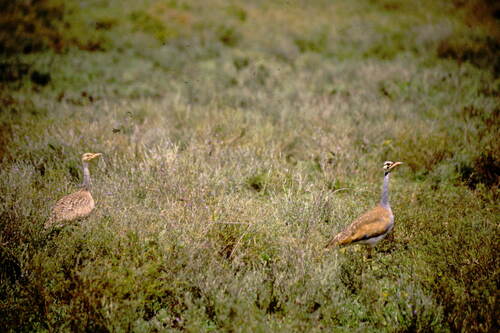
White-bellied Bustard (Eupodotis senegalensis) White-bellied Bustard
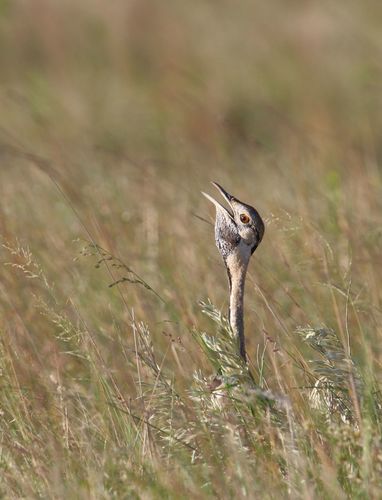
Black-bellied Bustard (Lissotis melanogaster) Black-bellied Bustard

Media

Loading…

In short

The most reliable field mark between White-bellied Bustard and Black-bellied Bustard is the color of the underparts: White-bellied Bustard has a white belly and breast, while Black-bellied Bustard shows a black belly and breast in adult males. Juveniles and females are trickier, but the white vs. black underpart contrast is still helpful in most views. In flight or when wings are spread, Black-bellied Bustard shows a striking white upperwing with a brown triangle at the base and black-tipped flight feathers, visible even when standing. Head and neck patterns also differ: White-bellied Bustard adults have blue-grey necks (males) or light brown (juveniles/females), while Black-bellied Bustard males have a buffy brown neck with a black line down the front. Both species occur in similar open habitats, but subtle differences in structure and behavior can further aid identification.

Identification tips

  1. Underparts color (all ages, especially adult males): White-bellied Bustard has a white belly and breast; Black-bellied Bustard adult males have black underparts. This is the single best mark in good light.
  2. Upperwing pattern in flight or with wings spread (all ages): Black-bellied Bustard shows a white upperwing with a brown triangle at the base and black-tipped flight feathers (except outer secondaries). This bold pattern is visible even when the bird is standing. White-bellied Bustard lacks this contrast.
  3. Head and neck color (adults): White-bellied Bustard adult males have a blue-grey neck, black crown, and black lines on the white cheeks; females have a grey crown and brown/buff line below the eye. Black-bellied Bustard males have a buffy brown neck with a thin black line down the front and a boldly patterned head; females are plain buff with darker mottling and vermiculated neck and breast.
  4. Juvenile and female confusion: Juvenile White-bellied Bustards are paler with light brown necks and heads and a white belly. Juvenile Black-bellied Bustards are duller and darker, with a dark grey crown and buff spots on the wing, and lack the white belly. Females of Black-bellied Bustard are cryptically marked with brown mottling and vermiculations, while White-bellied females are plainer below.
  5. Bill and leg color: White-bellied Bustard males have a pinkish-red bill and cream legs; Black-bellied Bustard has a dull yellow bill and legs. This can be subtle and variable, but may help at close range.
  6. Tail pattern: Black-bellied Bustard has a brown and buff tail with 4–5 narrow dark brown bands; White-bellied Bustard's tail pattern is not described as distinctive in the notes.
  7. Size and structure: Black-bellied Bustard is slightly larger (58–65 cm vs. 48–61 cm), with a longer, thinner neck and bulkier build. This is only useful with direct comparison or experience.
  8. Sexual dimorphism: Both species show sexual dimorphism, but White-bellied Bustard males are especially striking with their blue-grey neck and black facial markings, while Black-bellied Bustard males are boldest below.
  9. Habitat context: Both species overlap widely in habitat, but White-bellied Bustard is more likely in arid or high-elevation grasslands, while Black-bellied Bustard favors wetter, tall grassland after rain. Use with caution.
  10. Group size: White-bellied Bustard is often seen in pairs or family groups; Black-bellied Bustard may be more solitary, but this is not a reliable mark.
  11. Vocalization: If heard, White-bellied Bustard's loud, guttural call is distinctive. Black-bellied Bustard's call is not described here.
  12. Pitfalls: Females and juveniles of both species can be confusingly similar, especially at distance or in poor light. Focus on underparts color and flight pattern when possible.
  13. When in doubt: Try to obtain views of the underparts and upperwing in flight, and note neck/head pattern and bill color for supporting evidence.

Size

Black-bellied Bustard is slightly larger, measuring 58–65 cm in length, compared to White-bellied Bustard's 48–61 cm. The difference is most apparent when seen side by side, but can be subtle in the field. Both species are among the smaller bustards, but Black-bellied Bustard tends to look longer-necked and bulkier. Males of both species are larger than females, but this is not a reliable field mark unless birds are together.

Plumage

Age and sex affect plumage in both species. For adults, the underparts are the key: White-bellied Bustard is white-bellied and white-breasted, while Black-bellied Bustard adult males have black underparts. Females and juveniles of Black-bellied Bustard are much duller, with plain buff and brown mottling and vermiculated necks and breasts, lacking the bold black belly but still darker and more patterned than White-bellied Bustard. Juvenile White-bellied Bustards are paler overall, with light brown necks and heads and a white belly. In flight, Black-bellied Bustard shows a white upperwing with a brown triangle at the base and black-tipped flight feathers (except outer secondaries), which is visible even when perched. White-bellied Bustard lacks this bold upperwing pattern. Head and neck: White-bellied Bustard adult males have blue-grey necks, black crown, and black lines on the cheeks; females have a grey crown and brown/buff eye-stripe. Black-bellied Bustard males have a buffy brown neck with a thin black line down the front, a boldly patterned head, and a white chin and lores; females have a plain buff head with darker mottling. Bill and leg color: White-bellied Bustard has cream legs and a pinkish-red bill (male), while Black-bellied Bustard has dull yellow bill and legs.

Behaviour

Both species are usually seen in pairs or small groups, often walking slowly through tall grass or open savanna. White-bellied Bustard is often found in family groups, as young stay with parents longer than in other bustards. Black-bellied Bustard may be more solitary or loosely paired. Both are ground-dwelling and wary, flushing with strong, direct flight when disturbed. There are no strong behavioral differences noted in the sources.

Habitat

Both species inhabit sub-Saharan African grasslands, open savanna, and cultivated fields. White-bellied Bustard is widespread and uses both tall grassland and open woodland, sometimes venturing into arid areas or even desert margins during the rainy season. Black-bellied Bustard prefers tall, open grassland and savanna with higher rainfall, and is often found in areas after heavy rain. Both can occur at a range of elevations, but White-bellied Bustard is more often found at higher altitudes (up to 2,000 m) in East Africa. Habitat overlap is extensive, so context alone is rarely diagnostic.

Voice

White-bellied Bustard gives a very loud, guttural call described as "k'whuka WHUKa, k'wuka WHUKa..., or k'warrak, k'warrak...", usually in early morning or late evening. No specific vocal description is provided for Black-bellied Bustard in the notes, so voice is not a reliable separator unless the White-bellied's call is heard.

Submit a better description

Use the same sections as the comparison. Your text is published immediately.

The most reliable field mark between White-bellied Bustard and Black-bellied Bustard is the color of the underparts: White-bellied Bustard has a white belly and breast, while Black-bellied Bustard shows a black belly and breast in adult males. Juveniles and females are trickier, but the white vs. black underpart contrast is still helpful in most views. In flight or when wings are spread, Black-bellied Bustard shows a striking white upperwing with a brown triangle at the base and black-tipped flight feathers, visible even when standing. Head and neck patterns also differ: White-bellied Bustard adults have blue-grey necks (males) or light brown (juveniles/females), while Black-bellied Bustard males have a buffy brown neck with a black line down the front. Both species occur in similar open habitats, but subtle differences in structure and behavior can further aid identification.

  1. Underparts color (all ages, especially adult males): White-bellied Bustard has a white belly and breast; Black-bellied Bustard adult males have black underparts. This is the single best mark in good light.
  2. Upperwing pattern in flight or with wings spread (all ages): Black-bellied Bustard shows a white upperwing with a brown triangle at the base and black-tipped flight feathers (except outer secondaries). This bold pattern is visible even when the bird is standing. White-bellied Bustard lacks this contrast.
  3. Head and neck color (adults): White-bellied Bustard adult males have a blue-grey neck, black crown, and black lines on the white cheeks; females have a grey crown and brown/buff line below the eye. Black-bellied Bustard males have a buffy brown neck with a thin black line down the front and a boldly patterned head; females are plain buff with darker mottling and vermiculated neck and breast.
  4. Juvenile and female confusion: Juvenile White-bellied Bustards are paler with light brown necks and heads and a white belly. Juvenile Black-bellied Bustards are duller and darker, with a dark grey crown and buff spots on the wing, and lack the white belly. Females of Black-bellied Bustard are cryptically marked with brown mottling and vermiculations, while White-bellied females are plainer below.
  5. Bill and leg color: White-bellied Bustard males have a pinkish-red bill and cream legs; Black-bellied Bustard has a dull yellow bill and legs. This can be subtle and variable, but may help at close range.
  6. Tail pattern: Black-bellied Bustard has a brown and buff tail with 4–5 narrow dark brown bands; White-bellied Bustard's tail pattern is not described as distinctive in the notes.
  7. Size and structure: Black-bellied Bustard is slightly larger (58–65 cm vs. 48–61 cm), with a longer, thinner neck and bulkier build. This is only useful with direct comparison or experience.
  8. Sexual dimorphism: Both species show sexual dimorphism, but White-bellied Bustard males are especially striking with their blue-grey neck and black facial markings, while Black-bellied Bustard males are boldest below.
  9. Habitat context: Both species overlap widely in habitat, but White-bellied Bustard is more likely in arid or high-elevation grasslands, while Black-bellied Bustard favors wetter, tall grassland after rain. Use with caution.
  10. Group size: White-bellied Bustard is often seen in pairs or family groups; Black-bellied Bustard may be more solitary, but this is not a reliable mark.
  11. Vocalization: If heard, White-bellied Bustard's loud, guttural call is distinctive. Black-bellied Bustard's call is not described here.
  12. Pitfalls: Females and juveniles of both species can be confusingly similar, especially at distance or in poor light. Focus on underparts color and flight pattern when possible.
  13. When in doubt: Try to obtain views of the underparts and upperwing in flight, and note neck/head pattern and bill color for supporting evidence.

Black-bellied Bustard is slightly larger, measuring 58–65 cm in length, compared to White-bellied Bustard's 48–61 cm. The difference is most apparent when seen side by side, but can be subtle in the field. Both species are among the smaller bustards, but Black-bellied Bustard tends to look longer-necked and bulkier. Males of both species are larger than females, but this is not a reliable field mark unless birds are together.

Age and sex affect plumage in both species. For adults, the underparts are the key: White-bellied Bustard is white-bellied and white-breasted, while Black-bellied Bustard adult males have black underparts. Females and juveniles of Black-bellied Bustard are much duller, with plain buff and brown mottling and vermiculated necks and breasts, lacking the bold black belly but still darker and more patterned than White-bellied Bustard. Juvenile White-bellied Bustards are paler overall, with light brown necks and heads and a white belly. In flight, Black-bellied Bustard shows a white upperwing with a brown triangle at the base and black-tipped flight feathers (except outer secondaries), which is visible even when perched. White-bellied Bustard lacks this bold upperwing pattern. Head and neck: White-bellied Bustard adult males have blue-grey necks, black crown, and black lines on the cheeks; females have a grey crown and brown/buff eye-stripe. Black-bellied Bustard males have a buffy brown neck with a thin black line down the front, a boldly patterned head, and a white chin and lores; females have a plain buff head with darker mottling. Bill and leg color: White-bellied Bustard has cream legs and a pinkish-red bill (male), while Black-bellied Bustard has dull yellow bill and legs.

Both species are usually seen in pairs or small groups, often walking slowly through tall grass or open savanna. White-bellied Bustard is often found in family groups, as young stay with parents longer than in other bustards. Black-bellied Bustard may be more solitary or loosely paired. Both are ground-dwelling and wary, flushing with strong, direct flight when disturbed. There are no strong behavioral differences noted in the sources.

Both species inhabit sub-Saharan African grasslands, open savanna, and cultivated fields. White-bellied Bustard is widespread and uses both tall grassland and open woodland, sometimes venturing into arid areas or even desert margins during the rainy season. Black-bellied Bustard prefers tall, open grassland and savanna with higher rainfall, and is often found in areas after heavy rain. Both can occur at a range of elevations, but White-bellied Bustard is more often found at higher altitudes (up to 2,000 m) in East Africa. Habitat overlap is extensive, so context alone is rarely diagnostic.

White-bellied Bustard gives a very loud, guttural call described as "k'whuka WHUKa, k'wuka WHUKa..., or k'warrak, k'warrak...", usually in early morning or late evening. No specific vocal description is provided for Black-bellied Bustard in the notes, so voice is not a reliable separator unless the White-bellied's call is heard.

Discard your changes?

You have unsaved edits. If you leave now, those changes will be lost.

White-bellied Bustard · Black-bellied Bustard · My Tricky Birds