

Yellow-billed Pintail vs Yellow-billed Teal
Anas georgica versus Anas flavirostris
Play a quiz with Yellow-billed Pintail and Yellow-billed Teal
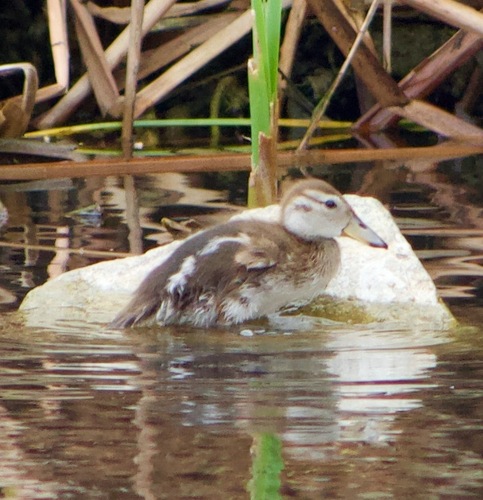 Yellow-billed Pintail
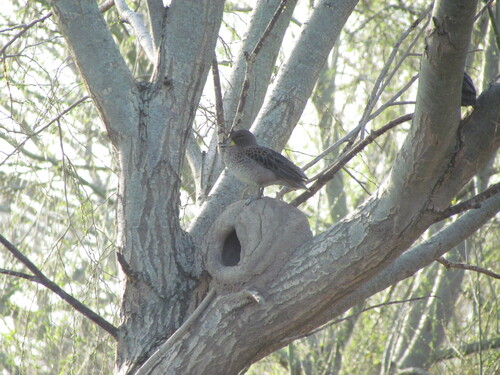 Yellow-billed Teal
In short
The most reliable way to separate Yellow-billed Pintail from Yellow-billed Teal is by size and structure: the pintail is noticeably larger and longer-necked, with a pointed tail, while the teal is compact with a shorter neck and tail. Both have yellow bills with black markings, but the pintail's bill shows yellow side stripes and a central black stripe, whereas the teal's bill is more uniformly yellow with a black tip and a black culmen ridge. In plumage, pintail shows a buffy brown body with black spots and a grayish-brown upperwing with blackish-green secondaries; the teal is plainer, with a darker head and more uniform grayish sides. Social behavior can also help: pintails are less likely to form large flocks than teals.
Identification tips
- Size and Structure: The pintail is much larger and longer-necked than the teal. If you see both together, the difference is obvious; alone, compare to nearby ducks or note the stretched, elegant look of the pintail versus the teal's compact, squat shape.
- Tail Shape: Pintail has a pointed, brownish tail that often projects noticeably beyond the body, especially in flight or when swimming. The teal's tail is shorter and less pointed.
- Bill Pattern: Pintail's bill is yellow with a black tip and a bold black stripe down the center, plus yellow side stripes. Teal's bill is bright yellow with a black tip and a black band along the ridge (culmen), but lacks the central black stripe and side stripes of the pintail. This is a key close-range mark.
- Head and Neck: Pintail has a brown head and a proportionally longer neck. Teal's head is darker and the neck is noticeably shorter.
- Body Plumage: Pintail shows a buffy brown body with variable black spotting, especially on the flanks and breast. Teal is more uniform below, with plain grayish sides and a unicolored underside, lacking strong spotting.
- Upperwing Pattern: Pintail's upperwing is grayish-brown with blackish-green secondaries, but no unique flight marks are described for either species. Use overall color and structure in flight.
- Group Size: Teal is often in large flocks, especially in winter or migration; pintail is usually solitary or in pairs, rarely forming big groups.
- Habitat Preference: Both overlap in wetlands, but pintail may be found in a wider range of habitats, including higher elevations and open coasts, while teal prefers marshy, vegetated wetlands.
- Behavior: Pintail's longer neck and body give it a more graceful, stretched look when dabbling; teal appears more compact and busy.
- Confusion Risk: In poor light or at distance, both may appear brownish with yellow bills. Use size, tail shape, and bill pattern as primary clues.
- No Distinctive Juvenile/Immature Flight Marks: There are no described age-specific upperwing or flight marks for separation; rely on structure and bill pattern at all ages.
- Sexes Similar: Both species show little sexual dimorphism in the field; the above marks apply to both males and females.
- Seasonal Variation: No strong seasonal plumage changes are described for either species; identification tips are reliable year-round.
- Bill Pattern in Hybrids: Rare hybrids may show intermediate bill patterns; if the bill pattern is ambiguous, use size and structure as backup.
- When in Doubt: If flocking, compact shape, and plain sides are all present, lean teal; if solitary, larger, with pointed tail and spotted flanks, lean pintail.
Size
Yellow-billed Pintail is distinctly larger than Yellow-billed Teal. The pintail has a longer neck and a more elongated, pointed tail, giving it a stretched, elegant profile both on water and in flight. In contrast, the teal is compact, with a shorter neck and tail, and appears more squat overall. This size difference is often visible even at a distance if both species are present together.
Plumage
No age-specific upperwing or flight pattern marks are described for either species, but adults and immatures can be separated by overall body and wing coloration. The pintail has a brownish, pointed tail and a grayish-brown upperwing with blackish-green secondaries, contrasting with its buffy brown, black-spotted body. The teal lacks the pintail's pointed tail and is more uniformly colored, with a darker head and plain grayish sides; its underside is unicolored, lacking the pintail's spotting. Both species have yellow bills with black markings, but the pintail's bill shows yellow side stripes and a black central stripe, while the teal's bill is more evenly yellow with a black tip and a black band along the culmen. These differences are consistent across ages and seasons.
Behaviour
Yellow-billed Teal tends to form larger flocks, especially outside the breeding season, and is often seen in groups. Yellow-billed Pintail is less gregarious and more likely to be found singly or in pairs. Both species dabble and feed in shallow water, but the pintail's longer neck and body may give it a more graceful, stretched appearance when foraging.
Habitat
Both species overlap widely in South America, including the Falkland Islands and South Georgia, and both use freshwater wetlands, lakes, and marshes. The pintail is more flexible, occurring from high-altitude lakes to lowland rivers and even coastal areas in open country. The teal prefers palustrine (marshy) habitats and is less often found along rivers. Habitat alone is not reliable for separation where both occur.
Yellow-billed Pintail · Yellow-billed Teal · My Tricky Birds