

Colibrí Caribeño Gorjiverde vs Tordo Renegrido
Eulampis holosericeus frente a Molothrus bonariensis
Juega un quiz con Colibrí Caribeño Gorjiverde y Tordo Renegrido
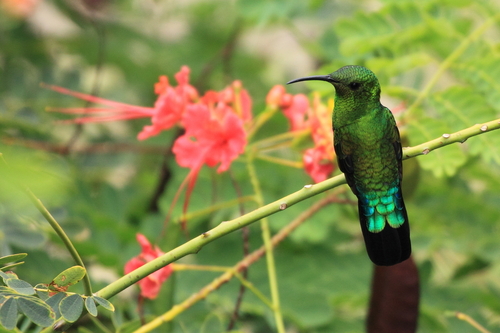 Colibrí Caribeño Gorjiverde
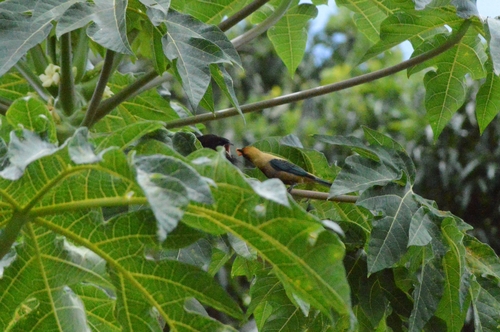 Tordo Renegrido
En breve
La marca de campo más confiable para separar el Colibrí Caribeño Gorjiverde del Tordo Renegrido es la estructura y plumaje en general: el colibrí es un colibrí grande y robusto con un brillante gorjeo verde y espalda, mientras que el tordo es un ave cantora mucho más grande y robusta con un pico recto y plumaje sexualmente dimórfico (machos negro brillante, hembras marrón apagado). En vuelo o posado, el pico curvado del colibrí y su gorjeo verde iridiscente son diagnósticos, mientras que el pico recto del tordo y la falta de verde iridiscente descartan confusiones. La diferencia de tamaño es extrema: el tordo es aproximadamente seis veces más pesado y mucho más largo. Si ves un ave alimentándose en flores o flotando, es el colibrí; si está caminando en el suelo o buscando alimento en áreas abiertas, es el tordo.
Consejos de identificación
- Forma del pico: El Colibrí Caribeño Gorjiverde tiene un pico de longitud media, ligeramente curvado (la hembra incluso más largo y más curvado); el Tordo Renegrido tiene un pico recto y cónico. La forma del pico es un separador rápido incluso a distancia.
- Tamaño: El tordo es mucho más grande y pesado (aproximadamente 6 veces la masa del colibrí). Si el ave parece del tamaño de un gorrión o más grande, no es un colibrí.
- Plumaje (colibrí macho): Espalda y gorjeo verde brillante, vientre negro y cola azul-negra. Ningún tordo muestra esta combinación.
- Plumaje (colibrí hembra): Espalda y gorjeo verde más apagados, pero aún metálicos; pico más largo y más curvado. Las hembras de tordo nunca son verdes o iridiscentes.
- Plumaje (tordo macho): Totalmente negro brillante con iridiscencia púrpura-azul, nunca verde. El colibrí nunca aparece completamente negro o púrpura.
- Plumaje (tordo hembra): Marrón apagado en general, a veces más pálido por debajo, sin iridiscencia. Puede confundirse con otros tordos, pero no con ningún colibrí.
- Estilo de vuelo: El colibrí flota con frecuencia y se mueve con un vuelo rápido y veloz; el tordo vuela directamente y no flota.
- Comportamiento alimenticio: El colibrí se alimenta en flores, a menudo flotando; el tordo busca alimento en el suelo o en vegetación baja, nunca en flores.
- Cola: La cola del colibrí es azul oscura (a menudo parece negra), corta y cuadrada; la cola del tordo es más larga, no iridiscente y más típica de un ave cantora.
- Contexto de hábitat: El colibrí se ve generalmente donde hay arbustos o árboles en flor; el tordo es más probable que se encuentre en áreas abiertas, herbáceas o agrícolas.
- Voz: El colibrí emite agudos llamados 'chup!' o 'chuwp!'; las vocalizaciones del tordo son más similares a las de un ave cantora e incluyen canciones de exhibición.
- Dimorfismo sexual: El tordo es fuertemente dimórfico (machos negros, hembras marrones); los sexos del colibrí son similares (ambos verdes, hembra más apagada).
- Postura de posado: El colibrí se posa erguido, a menudo en ramitas expuestas cerca de flores; el tordo se posa más horizontalmente, a menudo en bandadas.
- Parasitismo de cría: Solo el tordo es un parásito de cría; el colibrí no está asociado con los nidos de otras aves.
- Trampas: La hembra del tordo podría parecer superficialmente un ave apagada y no iridiscente, pero la forma del pico y la falta de verde o azul rápidamente descartan al colibrí. Las aves jóvenes o en muda no se describen en detalle, pero deberían seguir las mismas diferencias estructurales y de comportamiento.
Tamaño
El Colibrí Caribeño Gorjiverde es un colibrí pequeño (6.2 g), mientras que el Tordo Renegrido es un paseriforme de tamaño mediano (37 g). El tordo es mucho más robusto y largo (hasta 22 cm en algunas subespecies) en comparación con los 10.5–12 cm del colibrí. Incluso a distancia, el tamaño y las proporciones del tordo (especialmente en vuelo o en el suelo) son mucho más sustanciales que los del delicado y compacto colibrí.
Plumaje
No se describen marcas específicas de alas o patrones de vuelo por edad para ninguna de las especies, por lo que el enfoque está en el plumaje adulto y hembra/inmaduro. El Colibrí Caribeño Gorjiverde de todas las edades y sexos muestra una espalda y gorjeo verde brillante, vientre negro, ventrículo verde y una cola azul oscura que puede parecer negra en poca luz. Las hembras son más apagadas pero aún verdes por encima, con un pico más largo y más curvado. Los machos del Tordo Renegrido son negros brillantes con iridiscencia púrpura-azul; las hembras son marrón apagado, a veces más pálidas por debajo, sin iridiscencia o verde. El plumaje del tordo nunca es verde metálico o azul-verde, y las hembras pueden confundirse con otros tordos pero no con un colibrí. No se menciona ningún patrón de alas inmaduro o juvenil para ninguna de las especies.
Comportamiento
El Colibrí Caribeño Gorjiverde flota en las flores y se alimenta de néctar, a menudo defendiendo territorios de alimentación. También puede cazar insectos. El Tordo Renegrido busca alimento principalmente en el suelo o en vegetación baja, buscando semillas e insectos, y a menudo se le ve caminando o saltando en lugar de flotando. El vuelo del colibrí es rápido y ágil, típico de los colibríes, mientras que el vuelo del tordo es más directo y menos acrobático. Los tordos son parásitos de cría y pueden verse cerca de los nidos de otras aves, pero esto rara vez se observa directamente.
Hábitat
El Colibrí Caribeño Gorjiverde se encuentra en Puerto Rico y las Antillas Menores, principalmente en jardines, crecimiento secundario y vegetación alrededor de hogares. El Tordo Renegrido es común en América del Sur y el Caribe, prefiriendo hábitats abiertos, tierras agrícolas y áreas perturbadas. Ambos pueden encontrarse en entornos modificados por humanos, pero el colibrí está más estrechamente relacionado con la vegetación en flor, mientras que el tordo prefiere entornos abiertos, herbáceos o agrícolas.
Voz
El Colibrí Caribeño Gorjiverde emite un agudo llamado 'chup!' o 'chuwp!', y puede producir sonidos de traqueteo y zumbidos de alas durante disputas. Los machos del Tordo Renegrido cantan durante el cortejo, con una canción de exhibición y reverencias, pero no se describe un llamado específico para la separación en campo. Los llamados del colibrí son más agudos y típicos de los colibríes, mientras que las vocalizaciones del tordo son más similares a las de un ave cantora.
Colibrí Caribeño Gorjiverde · Tordo Renegrido · Mis aves difíciles