

Green-throated Carib vs Shiny Cowbird
Eulampis holosericeus contro Molothrus bonariensis
Fai un quiz con Green-throated Carib e Shiny Cowbird
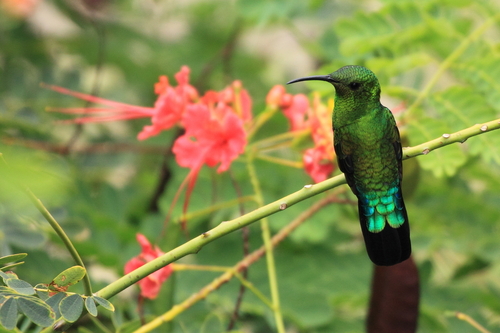 Green-throated Carib
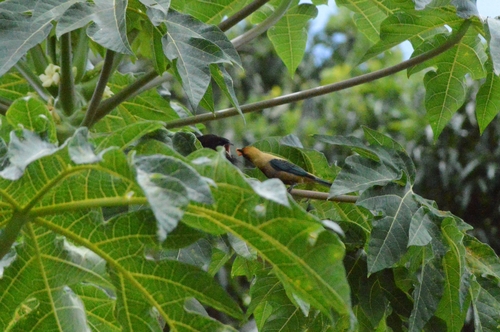 Shiny Cowbird
In breve
Il segno di campo più affidabile per separare il Green-throated Carib dallo Shiny Cowbird è la struttura complessiva e il piumaggio: il carib è un grande e robusto colibrì con una gola e un dorso verdi scintillanti, mentre il cowbird è un uccello canoro molto più grande e tozzo con un becco dritto e un piumaggio sessualmente dimorfico (maschi neri lucidi, femmine marroni opache). In volo o posato, il becco ricurvo del carib e il gorget verde iridescente sono diagnostici, mentre il becco dritto del cowbird e la mancanza di verde iridescente escludono confusione. La differenza di dimensioni è estrema: il cowbird è circa sei volte più pesante e molto più lungo. Se vedi un uccello che si nutre di fiori o che sta sospeso, è il carib; se sta camminando a terra o cercando cibo in aree aperte, è il cowbird.
Consigli di identificazione
- Bill shape: Il Green-throated Carib ha un becco di media lunghezza, leggermente ricurvo (la femmina è ancora più lunga e più curva); lo Shiny Cowbird ha un becco dritto e conico. La forma del becco è un separatore rapido anche a distanza.
- Size: Il cowbird è molto più grande e pesante (circa 6 volte la massa del carib). Se l'uccello sembra delle dimensioni di un passero o più grande, non è un carib.
- Plumage (male carib): Dorso e gorget verdi brillanti, ventre nero e coda blu-nera. Nessun cowbird mostra questa combinazione.
- Plumage (female carib): Dorso e gorget verdi più opachi, ma ancora metallici; becco più lungo e più curvo. Le femmine di cowbird non sono mai verdi o iridescenti.
- Plumage (male cowbird): Interamente nero lucido con iridescenza blu-viola, mai verde. Il carib non appare mai completamente nero o viola.
- Plumage (female cowbird): Marrone opaco in generale, a volte più chiaro sotto, senza iridescenza. Può essere confuso con altri cowbirds, ma non con alcun carib.
- Flight style: Il carib sospende frequentemente e si muove con un volo rapido e scattante; il cowbird vola direttamente e non sospende.
- Feeding behavior: Il carib si nutre di fiori, spesso sospeso; il cowbird cerca cibo a terra o in vegetazione bassa, mai nei fiori.
- Tail: La coda del carib è blu scuro (spesso sembra nera), corta e squadrata; la coda del cowbird è più lunga, non iridescente e più tipica di un uccello canoro.
- Habitat context: Il carib è solitamente visto dove ci sono arbusti o alberi in fiore; il cowbird è più probabile trovarlo in aree aperte, erbose o agricole.
- Voice: Il carib emette richiami acuti 'chup!' o 'chuwp!'; le vocalizzazioni del cowbird sono più simili a quelle degli uccelli canori e includono canti di corteggiamento.
- Sexual dimorphism: Il cowbird è fortemente dimorfico (maschi neri, femmine marroni); i sessi del carib sono simili (entrambi verdi, femmina più opaca).
- Perching posture: Il carib si posiziona eretto, spesso su rametti esposti vicino ai fiori; il cowbird si posiziona più orizzontalmente, spesso in stormi.
- Brood parasitism: Solo il cowbird è un parassita della covata; il carib non è associato ai nidi di altri uccelli.
- Pitfalls: La femmina di cowbird potrebbe superficialmente assomigliare a un uccello opaco e non iridescente, ma la forma del becco e la mancanza di verde o blu escludono rapidamente il carib. Gli uccelli giovani o in muta non sono descritti in dettaglio ma dovrebbero seguire le stesse differenze strutturali e comportamentali.
Taglia
Il Green-throated Carib è un piccolo colibrì (6.2 g), mentre lo Shiny Cowbird è un passeriforme di dimensioni medie (37 g). Il cowbird è molto più massiccio e lungo (fino a 22 cm in alcune sottospecie) rispetto ai 10.5–12 cm del carib. Anche a distanza, le dimensioni e le proporzioni del cowbird (soprattutto in volo o a terra) sono molto più sostanziali rispetto al delicato e compatto carib.
Piumaggio
Nessun segno specifico per età o schema di volo è descritto per entrambe le specie, quindi ci si concentra sul piumaggio adulto e femminile/immaturo. Il Green-throated Carib di tutte le età e sessi mostra un dorso e un gorget verdi brillanti, ventre nero, ventriglio verde e una coda blu scura che può sembrare nera in scarsa illuminazione. Le femmine sono più opache ma ancora verdi sopra, con un becco più lungo e più ricurvo. I maschi dello Shiny Cowbird sono neri lucidi con iridescenza blu-viola; le femmine sono marroni opache, a volte più chiare sotto, senza iridescenza o verde. Il piumaggio del cowbird non è mai verde metallico o blu-verde, e le femmine possono essere confuse con altri cowbirds ma non con un carib. Nessun schema di volo immaturo o giovanile è menzionato per entrambe le specie.
Comportamento
Il Green-throated Carib sospende ai fiori e si nutre di nettare, spesso difendendo i territori di alimentazione. Può anche catturare insetti in volo. Lo Shiny Cowbird cerca principalmente cibo a terra o in vegetazione bassa, cercando semi e insetti, ed è spesso visto camminare o saltellare piuttosto che sospendere. Il volo del carib è rapido e agile, tipico dei colibrì, mentre il volo del cowbird è più diretto e meno acrobatico. I cowbirds sono parassiti della covata e possono essere visti vicino ai nidi di altri uccelli, ma questo è raramente osservato direttamente.
Habitat
Il Green-throated Carib si trova a Porto Rico e nelle Piccole Antille, principalmente in giardini, vegetazione secondaria e vegetazione intorno alle case. Lo Shiny Cowbird è diffuso in Sud America e nei Caraibi, preferendo habitat aperti, terreni agricoli e aree disturbate. Entrambi possono essere trovati in ambienti modificati dall'uomo, ma il carib è più strettamente legato alla vegetazione fiorita, mentre il cowbird preferisce ambienti aperti, erbosi o agricoli.
Voce
Il Green-throated Carib emette un richiamo acuto 'chup!' o 'chuwp!', e può produrre rumori di tamburellamento e fruscii delle ali durante le dispute. I maschi dello Shiny Cowbird cantano durante il corteggiamento, con un canto di esibizione e inchini, ma non è descritto alcun richiamo specifico per la separazione sul campo. I richiami del carib sono più acuti e più tipici dei colibrì, mentre le vocalizzazioni del cowbird sono più simili a quelle degli uccelli canori.
Green-throated Carib · Shiny Cowbird · I miei uccelli difficili