
Archibebe Oscuro vs Combatiente
Tringa erythropus frente a Calidris pugnax
Juega un quiz con Archibebe Oscuro y Combatiente
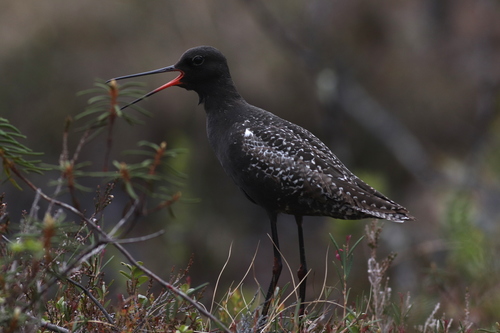 Archibebe Oscuro
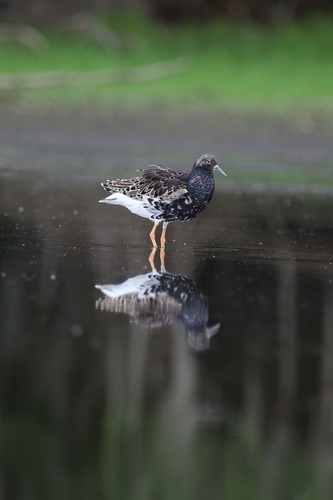 Combatiente
En breve
La marca de campo más confiable para separar el Archibebe Oscuro del Combatiente es el ovalo blanco audaz en la espalda del Archibebe Oscuro visible en vuelo, presente en todas las edades y estaciones, mientras que el Combatiente muestra solo óvalos blancos tenues en los lados de la cola y una delgada barra alar blanca indistinta. El Combatiente juvenil y de invierno tiene un patrón de parte superior ordenado y escamoso y una apariencia de barriga prominente y cabeza redonda, mientras que los juveniles del Archibebe Oscuro están más finamente moteados arriba y son más esbeltos en su construcción. Los adultos del Archibebe Oscuro en plumaje de cría son notablemente negruzcos, a diferencia de cualquier Combatiente. Las diferencias estructurales también son clave: el Archibebe Oscuro tiene patas más largas, es más delgado y tiene un pico recto, fino y de base roja, mientras que el Combatiente es más compacto con un cuello más grueso y un color de patas variable. Los llamados difieren, pero pueden ser difíciles de usar a menos que los pájaros estén vocalizando.
Consejos de identificación
- Óvalo blanco en la espalda en vuelo (todas las edades): El Archibebe Oscuro muestra un óvalo blanco audaz en la espalda, visible en todas las plumajes y edades; el Combatiente carece de esto, mostrando solo óvalos blancos tenues en los lados de la cola y una delgada barra alar blanca indistinta.
- Patrón de parte superior juvenil: El Combatiente juvenil tiene un patrón ordenado, similar a escamas, con centros de plumas oscuros y un tinte amarillento abajo; los juveniles del Archibebe Oscuro están más finamente moteados arriba y son más pálidos abajo, careciendo del escamado audaz.
- Estructura general: El Archibebe Oscuro es más alto, más delgado, con patas y cuello más largos, y un pico recto y fino con una base roja; el Combatiente tiene una barriga prominente, cabeza redonda, con un cuello más corto y un pico más grueso de longitud media.
- Color de patas: El Archibebe Oscuro tiene patas rojas (volviéndose gris oscuro en plumaje de cría); el color de las patas del Combatiente es variable: rosa, naranja o verdoso, con algunos machos mostrando naranja rojizo solo en la temporada de cría.
- Forma y color del pico: El pico del Archibebe Oscuro es recto, fino y de base roja; el pico del Combatiente es más grueso, ligeramente curvado hacia abajo en algunos pájaros, y carece de la fuerte base roja.
- Plumaje de cría: Los adultos del Archibebe Oscuro son notablemente negruzcos con manchas blancas y patas oscuras; ningún Combatiente es completamente negro. Los machos del Combatiente desarrollan cuellos elaborados y mechones, pero las hembras y los machos no reproductores son moteados de gris-marrón.
- Plumaje no reproductor: El Archibebe Oscuro es muy pálido con patas y pico rojos; el Combatiente es gris-marrón arriba y más pálido abajo, con color de patas variable.
- Estilo de vuelo: El Archibebe Oscuro vuela con una acción elegante y directa; el Combatiente tiene un batir de alas más profundo y lento y parece más pesado en vuelo.
- Tamaño del grupo: El Archibebe Oscuro suele ser solitario o estar en pequeños grupos; el Combatiente es muy gregario, a menudo en grandes bandadas, especialmente fuera de la temporada de cría.
- Preferencia de hábitat: El Archibebe Oscuro prefiere hábitats abiertos y húmedos y rara vez se encuentra lejos del agua; el Combatiente es más probable que se vea en pastizales húmedos, pantanos o incluso campos agrícolas.
- Voz: El silbido chirriante del Archibebe Oscuro 'teu-it' y la alarma aguda son distintivos si se escuchan; los llamados del Combatiente son más suaves y menos diagnósticos.
- Dimorfismo sexual: El Combatiente muestra un fuerte dimorfismo sexual en la temporada de cría, con machos desarrollando cuellos elaborados y mechones; el Archibebe Oscuro no lo hace.
- Momento de la muda: El Combatiente tiene una secuencia de muda compleja, con machos y hembras desarrollando plumaje de cría a rayas; el Archibebe Oscuro muda completamente entre julio y octubre, con juveniles experimentando una muda parcial entre agosto y febrero.
- Patrón facial: El Combatiente juvenil tiene una cara mucho más simple en comparación con los correlimos de cola afilada y los correlimos canelos, pero en comparación con el Archibebe Oscuro, la cara sigue siendo más uniforme y menos contrastante.
- Posibles trampas: Cuidado con los pájaros no reproductores y juveniles, que pueden parecer similares a distancia; siempre busque el óvalo blanco en la espalda en vuelo para el Archibebe Oscuro, y la apariencia de barriga prominente y escamosa para el Combatiente juvenil.
Tamaño
Both species are similar in overall size, but Archibebe Oscuro averages slightly heavier (151.5g vs 136.0g [wikidata]). Archibebe Oscuro is longer (29–31 cm) with a broader wingspan (61–67 cm), while female Combatiente is smaller (22–26 cm, wingspan 46–49 cm). However, male Combatiente can be larger and more variable, especially in breeding season. In the field, Archibebe Oscuro appears taller and more elongated due to its long legs and neck, whereas Combatiente is pot-bellied, with a shorter neck and more rounded body.
Plumaje
-
Juveniles and non-breeding birds: Archibebe Oscuro juveniles are grey-brown above, finely speckled with white, and have pale, finely barred underparts. Combatiente juveniles have a neat, scale-like upperpart pattern with dark feather centers and a strong buff tinge below. This scaly pattern is diagnostic for juvenile Combatiente, while Archibebe Oscuro is more evenly speckled and lacks the bold scaling.
-
In flight (all ages): Archibebe Oscuro shows a bold white oval on the back, a key mark in all plumages. Combatiente has only faint white ovals on the sides of the tail and a thin, indistinct white wing bar, lacking the strong back oval of Archibebe Oscuro.
-
Adult breeding: Archibebe Oscuro turns mostly black with white spots and dark grey legs; no Combatiente is ever all-black. Combatiente males develop elaborate ruffs and tufts, but females and non-breeding males are mottled grey-brown with variable blotching and never approach the black of Archibebe Oscuro.
-
Adult non-breeding: Archibebe Oscuro is very pale, with red legs and bill, while Combatiente is grey-brown above and paler below, with variable leg color (pink, orange, or greenish).
Comportamiento
El Archibebe Oscuro tiende a ser solitario o estar en pequeños grupos, a menudo vadear en aguas más profundas, moviéndose con una marcha elegante y erguida. El Combatiente es muy gregario, especialmente fuera de la temporada de cría, formando grandes bandadas y alimentándose en una postura más encorvada y con barriga prominente. En vuelo, el Archibebe Oscuro es elegante y directo, mientras que el vuelo del Combatiente es más laborioso, con batidos de alas más profundos y lentos. Los machos del Combatiente exhiben un comportamiento de cortejo elaborado en primavera, pero esto no representa un riesgo de confusión con el Archibebe Oscuro.
Hábitat
Ambas especies utilizan hábitats de humedales, pero el Archibebe Oscuro prefiere la taiga abierta y pantanosa para la cría y a menudo se ve en aguas poco profundas o márgenes fangosos durante la migración y el invierno. El Combatiente cría en pantanos y praderas húmedas y es más probable que se encuentre en grandes bandadas en campos inundados, pastizales húmedos o pantanos. En invierno, el Combatiente es más probable que se vea en hábitats agrícolas o herbáceos alejados del agua, mientras que el Archibebe Oscuro permanece vinculado a sitios más húmedos y abiertos.
Voz
El Archibebe Oscuro emite un silbido chirriante 'teu-it' y una alarma 'kyip-kyip-kyip', algo reminiscentes de un charrán rosado. Los llamados del Combatiente no se describen en detalle aquí, pero son generalmente más suaves y menos distintivos. Las vocalizaciones no son la separación más confiable a menos que los llamados se escuchen claramente, pero los llamados del Archibebe Oscuro son más agudos y distintivos.