
Totano moro vs Combattente
Tringa erythropus contro Calidris pugnax
Fai un quiz con Totano moro e Combattente
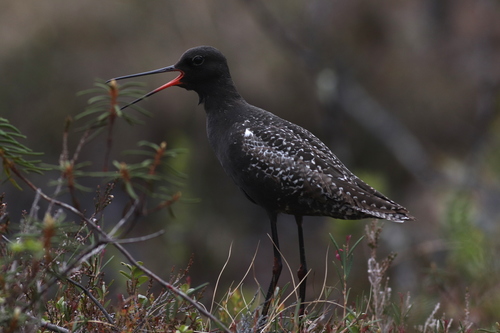 Totano moro
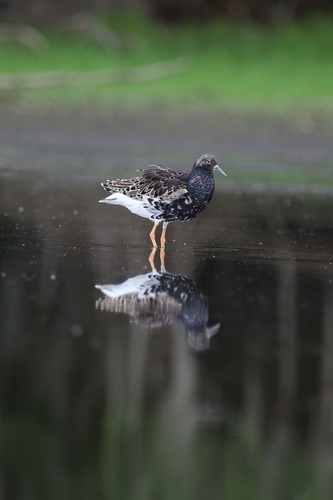 Combattente
In breve
Il segno distintivo più affidabile per separare il Totano moro dal Combattente è l'ovale bianco audace sul dorso del Totano moro, visibile in volo, presente in tutte le età e stagioni, mentre il Combattente mostra solo deboli ovali bianchi sui lati della coda e una sottile barra alare bianca indistinta. I giovani e i Combattenti invernali hanno un pattern superiore ordinato e squamoso e un aspetto rotondo e panciuto, mentre i giovani Totani mori sono più finemente macchiati sopra e più snelli nella struttura. Gli adulti di Totano moro in abito nuziale sono sorprendentemente nerastro, a differenza di qualsiasi Combattente. Anche le differenze strutturali sono fondamentali: il Totano moro ha gambe più lunghe, è più snello e ha un becco dritto, fine e con base rossa, mentre il Combattente è più compatto con un collo più spesso e un colore delle gambe variabile. I richiami differiscono, ma possono essere difficili da utilizzare a meno che gli uccelli non stiano vocalizzando.
Consigli di identificazione
- Ovale bianco sul dorso in volo (tutte le età): Il Totano moro mostra un audace ovale bianco sul dorso, visibile in tutte le piumature e età; il Combattente manca di questo, mostrando solo deboli ovali bianchi ai lati della coda e una sottile barra alare bianca indistinta.
- Pattern superiore dei giovani: Il giovane Combattente ha un pattern ordinato e squamoso con centri di piume scure e una sfumatura fulva sotto; i giovani Totani mori sono più finemente macchiati sopra e più chiari sotto, privi della forte squamatura.
- Struttura generale: Il Totano moro è più alto, più snello, con gambe e collo più lunghi, e un becco dritto, fine e con base rossa; il Combattente è panciuto, con testa rotonda, collo più corto e un becco più spesso di lunghezza media.
- Colore delle gambe: Il Totano moro ha gambe rosse (che diventano grigio scuro in abito nuziale); il colore delle gambe del Combattente è variabile: rosa, arancione o verdastro, con alcuni maschi che mostrano arancione rossastro solo in stagione di riproduzione.
- Forma e colore del becco: Il becco del Totano moro è dritto, fine e con base rossa; il becco del Combattente è più spesso, leggermente ricurvo in alcuni uccelli, e privo della forte base rossa.
- Abito nuziale: Gli adulti di Totano moro sono sorprendentemente nerastri con macchie bianche e gambe scure; nessun Combattente è mai completamente nero. I maschi del Combattente sviluppano collari e ciuffi elaborati, ma le femmine e i maschi non in riproduzione sono macchiati di grigio-marrone.
- Abito non nuziale: Il Totano moro è molto pallido con gambe e becco rossi; il Combattente è grigio-marrone sopra e più chiaro sotto, con colore delle gambe variabile.
- Stile di volo: Il Totano moro vola con un'azione elegante e diretta; il Combattente ha un battito d'ali più profondo e lento e appare più pesante in volo.
- Dimensione del gruppo: Il Totano moro è solitamente solitario o in piccoli gruppi; il Combattente è altamente gregario, spesso in grandi stormi, specialmente al di fuori della stagione di riproduzione.
- Preferenza dell'habitat: Il Totano moro preferisce habitat aperti e umidi e raramente si trova lontano dall'acqua; il Combattente è più probabile che venga visto su prati umidi, paludi o anche campi agricoli.
- Voce: Il fischio scricchiolante del Totano moro 'teu-it' e l'allerta acuta sono distintivi se uditi; i richiami del Combattente sono più morbidi e meno diagnostici.
- Dimorfismo sessuale: Il Combattente mostra un forte dimorfismo sessuale nella stagione di riproduzione, con i maschi che sviluppano collari e ciuffi elaborati; il Totano moro non lo fa.
- Tempistica della muta: Il Combattente ha una sequenza di muta complessa, con maschi e femmine che sviluppano piumaggio pre-nuziale a strisce; il Totano moro muta completamente tra luglio e ottobre, con i giovani che subiscono una muta parziale tra agosto e febbraio.
- Pattern del viso: Il giovane Combattente ha un viso molto più semplice rispetto ai piro piro a coda appuntita e ai piro piro fulvi, ma rispetto al Totano moro, il viso è ancora più uniforme e meno contrastante.
- Possibili insidie: Fai attenzione agli uccelli non in riproduzione e ai giovani, che possono sembrare simili a distanza; cerca sempre l'ovale bianco sul dorso in volo per il Totano moro e l'aspetto panciuto e squamoso per il giovane Combattente.
Taglia
Both species are similar in overall size, but Totano moro averages slightly heavier (151.5g vs 136.0g [wikidata]). Totano moro is longer (29–31 cm) with a broader wingspan (61–67 cm), while female Combattente is smaller (22–26 cm, wingspan 46–49 cm). However, male Combattente can be larger and more variable, especially in breeding season. In the field, Totano moro appears taller and more elongated due to its long legs and neck, whereas Combattente is pot-bellied, with a shorter neck and more rounded body.
Piumaggio
-
Juveniles and non-breeding birds: Totano moro juveniles are grey-brown above, finely speckled with white, and have pale, finely barred underparts. Combattente juveniles have a neat, scale-like upperpart pattern with dark feather centers and a strong buff tinge below. This scaly pattern is diagnostic for juvenile Combattente, while Totano moro is more evenly speckled and lacks the bold scaling.
-
In flight (all ages): Totano moro shows a bold white oval on the back, a key mark in all plumages. Combattente has only faint white ovals on the sides of the tail and a thin, indistinct white wing bar, lacking the strong back oval of Totano moro.
-
Adult breeding: Totano moro turns mostly black with white spots and dark grey legs; no Combattente is ever all-black. Combattente males develop elaborate ruffs and tufts, but females and non-breeding males are mottled grey-brown with variable blotching and never approach the black of Totano moro.
-
Adult non-breeding: Totano moro is very pale, with red legs and bill, while Combattente is grey-brown above and paler below, with variable leg color (pink, orange, or greenish).
Comportamento
Il Totano moro tende a essere solitario o in piccoli gruppi, spesso guadando in acque più profonde, muovendosi con un passo elegante e eretto. Il Combattente è altamente gregario, specialmente al di fuori della stagione di riproduzione, formando grandi stormi e alimentandosi in una postura più curvata e panciuta. In volo, il Totano moro è elegante e diretto, mentre il volo del Combattente è più faticoso, con battiti d'ali più profondi e lenti. I maschi del Combattente mostrano comportamenti di corteggiamento elaborati in primavera, ma questo non rappresenta un rischio di confusione con il Totano moro.
Habitat
Entrambe le specie utilizzano habitat umidi, ma il Totano moro favorisce la taiga aperta e paludosa per la riproduzione ed è spesso visto in acque poco profonde o margini fangosi durante la migrazione e l'inverno. Il Combattente nidifica in paludi e prati umidi ed è più probabile che venga trovato in grandi stormi su campi allagati, praterie umide o paludi. In inverno, il Combattente è più probabile che venga visto in habitat agricoli o erbosi lontano dall'acqua, mentre il Totano moro rimane legato a siti più umidi e aperti.
Voce
Il Totano moro emette un fischio scricchiolante 'teu-it' e un allerta 'kyip-kyip-kyip', che ricorda in parte un gabbiano roseo. I richiami del Combattente non sono descritti in dettaglio qui, ma sono generalmente più morbidi e meno distintivi. Le vocalizzazioni non sono la separazione più affidabile a meno che i richiami non siano chiaramente uditi, ma i richiami del Totano moro sono più acuti e distintivi.