

Black-eared Barbet vs Gold-whiskered Barbet
Psilopogon duvaucelii contro Psilopogon chrysopogon
Fai un quiz con Black-eared Barbet e Gold-whiskered Barbet
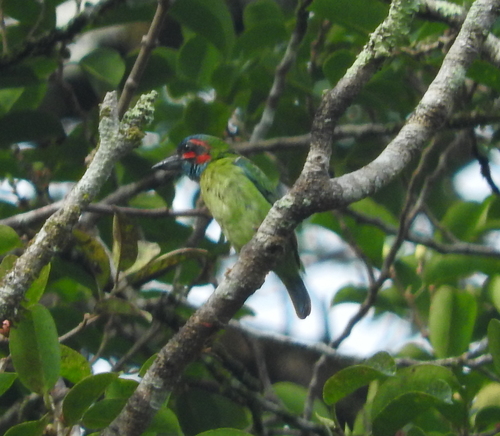 Black-eared Barbet
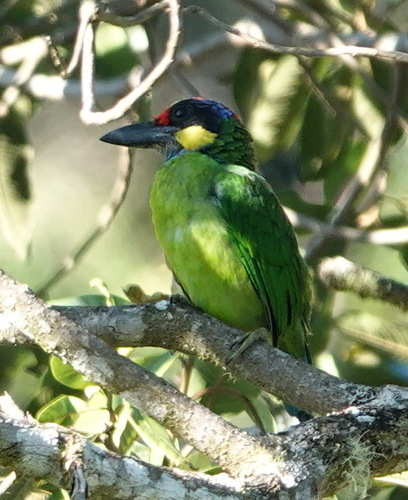 Gold-whiskered Barbet
In breve
Il segno di campo più affidabile per separare il Black-eared Barbet dal Gold-whiskered Barbet è la dimensione: il Gold-whiskered è drammaticamente più grande e massiccio, con un becco visibilmente più pesante. In viste ravvicinate, il Black-eared Barbet mostra una distintiva striscia nera tra gli occhi e macchie rosse sotto gli occhi, mentre il Gold-whiskered Barbet presenta una audace striscia moustachiale gialla e una fronte gialla pallida. Entrambe le specie sono verdi nel complesso con gole blu, ma il motivo facciale e le proporzioni sono sorprendentemente diversi. Gli uccelli immaturi di entrambe le specie sono più opachi, ma il divario di dimensione e i segni facciali rimangono utili.
Consigli di identificazione
- La dimensione è il controllo più veloce: il Gold-whiskered Barbet è quasi due volte più lungo e diverse volte più pesante del Black-eared Barbet. Se l'uccello sembra grande e massiccio, sospetta il Gold-whiskered.
- Dimensione e colore del becco: il Gold-whiskered ha un becco grande e spesso (quello della femmina è di un blu pallido), mentre il becco del Black-eared è più piccolo e nero. Questo è visibile anche da lontano.
- Motivo facciale (tutte le età): il Black-eared Barbet mostra una chiara striscia nera tra gli occhi e macchie rosse sotto gli occhi, circondate di nero. Il Gold-whiskered manca della striscia nera ma ha una audace moustache gialla e una fronte gialla pallida.
- Blu sul viso: entrambi hanno gole blu, ma il Gold-whiskered ha anche blu attorno agli occhi e sulla testa, oltre a macchie rosse vicino al becco. Il blu del Black-eared è limitato alla gola e alla nuca.
- Rosso sul viso: il rosso del Black-eared è limitato a macchie sotto gli occhi; il Gold-whiskered ha macchie rosse su entrambi i lati del becco e piccole macchie rosse sulla testa.
- Striscia moustachiale: solo il Gold-whiskered Barbet ha una forte moustache gialla che va dal becco all'orecchio, un segno di campo chiave a qualsiasi età.
- Colore della fronte: il Gold-whiskered ha una fronte gialla pallida, in contrasto con la corona verde del Black-eared.
- Luminosità del piumaggio negli immaturi: entrambe le specie sono più opache quando immature, ma i giovani Gold-whiskered mantengono alcune tonalità gialle e blu sul viso; la striscia facciale del Black-eared rimane un buon segno.
- Differenze sessuali: entrambi sono per lo più simili, ma le femmine di Gold-whiskered Barbets hanno un becco più pallido e bluastro. Il Black-eared mostra un forte dimorfismo sessuale sul campo.
- Contesto dell'habitat: in arbusti o al margine della foresta sotto i 1.200 m, è più probabile trovare il Black-eared. In foreste dense, specialmente sopra i 1.200 m, è più probabile trovare il Gold-whiskered, ma la sovrapposizione è ampia.
- In percheggio vs. in volo: non sono descritte differenze distintive nel volo o nel modello delle ali; fare affidamento su dimensione e viso.
- Contesto di gruppo: se vedi un gruppo e un uccello è molto più piccolo, è probabile che sia un Black-eared tra i Gold-whiskered, o viceversa.
- Colore del becco nelle femmine: se vedi un becco pallido e bluastro, è una femmina di Gold-whiskered; il becco del Black-eared è sempre nero.
- Rosso sotto l'occhio: se il rosso è solo sotto l'occhio e circondato di nero, è Black-eared; se il rosso è sui lati del becco, è Gold-whiskered.
- Quando hai dubbi, dimensione e viso insieme: se non riesci a vedere bene il motivo facciale, usa la dimensione come tuo indizio principale, poi cerca la moustache gialla o la striscia nera come conferma.
Taglia
Il Gold-whiskered Barbet è molto più grande (circa 30 cm di lunghezza, 110–215 g, massa media 151 g [wikidata]) rispetto al Black-eared Barbet (16–17 cm, 26.3–37 g [wikipedia]). Questa differenza di dimensione è ovvia sul campo, specialmente se entrambi sono visti allo stesso tempo o vicino a oggetti familiari. Il Gold-whiskered appare molto più massiccio, con una testa e un becco proporzionalmente più grandi. Il Black-eared Barbet è compatto e visibilmente più leggero, quasi la metà della lunghezza e una frazione della massa.
Piumaggio
Non sono descritte differenze specifiche di pattern delle ali o di volo per età per nessuna delle due specie; entrambe sono verdi nel complesso e mancano di forti segni sulle ali. Per tutte le età, concentrati sul viso: il Black-eared Barbet ha una striscia nera tra gli occhi, un becco nero e macchie rosse sotto gli occhi circondate di nero. La sua gola e nuca sono blu. Il Gold-whiskered Barbet ha una moustache gialla che si estende fino all'orecchio, una fronte gialla pallida, gola blu e blu attorno agli occhi, con macchie rosse su entrambi i lati del becco. I giovani Gold-whiskered Barbets sono più opachi ma mantengono la moustache gialla e le tonalità blu sul viso; i giovani Black-eared Barbets non sono descritti in dettaglio ma si prevede che mantengano la striscia facciale nera. Entrambi i sessi sono simili, ma le femmine di Gold-whiskered Barbets hanno un becco più pallido e bluastro.
Comportamento
Non sono descritte differenze comportamentali specifiche nelle fonti. Entrambe le specie sono barbets tipici, spesso visti in percheggio nella chioma o nel sottobosco e talvolta uditi prima di essere visti. Non sono notate differenze nello stile di volo o nel comportamento alimentare.
Habitat
Entrambe le specie si sovrappongono nell'areale (Malesia Peninsulare, Sumatra, Borneo) e si trovano nelle foreste, ma il Black-eared Barbet utilizza anche gli arbusti e si trova fino a 1.200 m di altitudine, mentre il Gold-whiskered Barbet è più strettamente un uccello di foresta e si estende fino a 1.500 m. Negli habitat misti o ai margini sotto i 1.200 m, è più probabile trovare il Black-eared Barbet, ma l'habitat da solo non è diagnostico dove entrambe le specie si trovano.
Black-eared Barbet · Gold-whiskered Barbet · I miei uccelli difficili