

black-eared barbet vs gold-whiskered barbet
Psilopogon duvaucelii versus Psilopogon chrysopogon
Jogue um quiz com black-eared barbet e gold-whiskered barbet
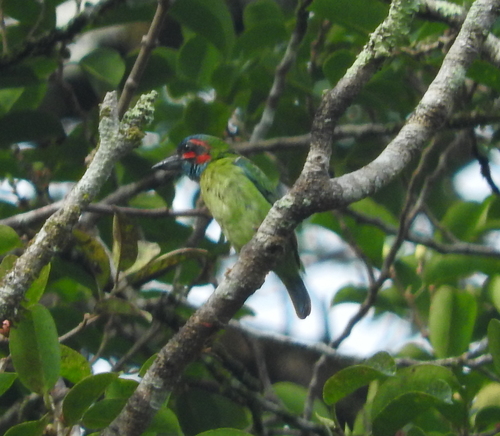 black-eared barbet
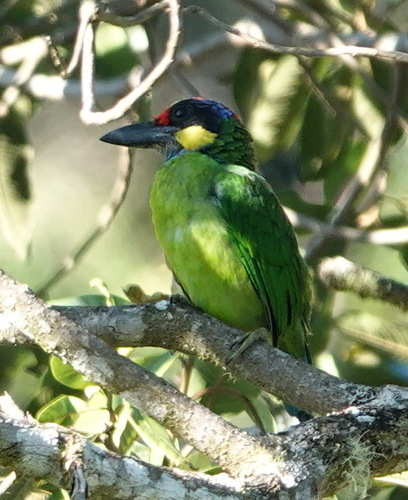 gold-whiskered barbet
Em resumo
A marca de campo mais confiável para separar o black-eared barbet do gold-whiskered barbet é o tamanho: o gold-whiskered é dramaticamente maior e mais robusto, com um bico visivelmente mais pesado. Em vistas próximas, o black-eared barbet mostra uma distinta faixa preta entre os olhos e manchas vermelhas abaixo dos olhos, enquanto o gold-whiskered barbet apresenta uma faixa bigode amarela ousada e uma coroa frontal amarelo pálido. Ambas as espécies são verdes no geral com gargantas azuis, mas o padrão facial e as proporções são strikingly diferentes. Pássaros imaturos de ambas as espécies são mais apagados, mas a diferença de tamanho e as marcas faciais permanecem úteis.
Dicas de identificação
- O tamanho é a verificação mais rápida: O gold-whiskered barbet é quase duas vezes mais longo e várias vezes mais pesado que o black-eared barbet. Se o pássaro parecer grande e robusto, suspeite do gold-whiskered.
- Tamanho e cor do bico: O gold-whiskered tem um bico grande e grosso (o da fêmea é mais pálido e azul), enquanto o bico do black-eared é menor e preto. Isso é visível mesmo à distância.
- Padrão facial (todas as idades): O black-eared barbet mostra uma clara faixa preta entre os olhos e manchas vermelhas abaixo dos olhos, cercadas por preto. O gold-whiskered não tem a faixa preta, mas possui um bigode amarelo ousado ("whisker") e uma coroa frontal amarelo pálido.
- Azul no rosto: Ambos têm gargantas azuis, mas o gold-whiskered também tem azul ao redor dos olhos e na cabeça, além de manchas vermelhas perto do bico. O azul do black-eared é limitado à garganta e à nuca.
- Vermelho no rosto: O vermelho do black-eared é restrito a manchas abaixo dos olhos; o gold-whiskered tem manchas vermelhas em ambos os lados do bico e pequenas manchas vermelhas na cabeça.
- Faixa bigode: Apenas o gold-whiskered barbet tem um forte bigode amarelo que vai do bico até a orelha, uma marca de campo chave em qualquer idade.
- Cor da coroa frontal: O gold-whiskered tem uma coroa frontal amarelo pálido, contrastando com a coroa verde do black-eared.
- Brilho da plumagem em imaturos: Ambas as espécies são mais apagadas quando imaturas, mas os juvenis do gold-whiskered retêm alguns tons amarelos e azuis faciais; a faixa facial do black-eared permanece uma boa marca.
- Diferenças sexuais: Ambos são principalmente semelhantes, mas as fêmeas do gold-whiskered barbet têm um bico mais pálido e azul. O black-eared não mostra dimorfismo sexual forte no campo.
- Contexto de habitat: Em arbustos ou borda de floresta abaixo de 1.200 m, o black-eared é mais provável. Em floresta densa, especialmente acima de 1.200 m, o gold-whiskered é mais provável, mas a sobreposição é ampla.
- Empoleirado vs. em voo: Nenhuma diferença distintiva de padrão de voo ou asa é descrita; confie no tamanho e no rosto.
- Contexto de grupo: Se você ver um grupo e um pássaro for muito menor, é provável que seja o black-eared entre os gold-whiskered, ou vice-versa.
- Cor do bico nas fêmeas: Se você ver um bico pálido e azulado, é uma fêmea do gold-whiskered; o bico do black-eared é sempre preto.
- Vermelho abaixo do olho: Se o vermelho estiver apenas abaixo do olho e cercado por preto, é black-eared; se o vermelho estiver nos lados do bico, é gold-whiskered.
- Quando em dúvida, tamanho e rosto juntos: Se você não consegue ver bem o padrão facial, use o tamanho como sua pista principal, depois procure pelo bigode amarelo ou pela faixa preta nos olhos como confirmação.
Tamanho
O gold-whiskered barbet é muito maior (cerca de 30 cm de comprimento, 110–215 g, massa média 151 g [wikidata]) em comparação com o black-eared barbet (16–17 cm, 26.3–37 g [wikipedia]). Essa diferença de tamanho é óbvia no campo, especialmente se ambos forem vistos ao mesmo tempo ou perto de objetos familiares. O gold-whiskered parece muito mais robusto, com uma cabeça e um bico proporcionalmente maiores. O black-eared barbet é compacto e visivelmente mais leve, quase metade do comprimento e uma fração da massa.
Plumagem
Nenhuma diferença específica de padrão de asa ou voo relacionada à idade é descrita para ambas as espécies; ambas são verdes no geral e não possuem marcas de asa fortes. Para todas as idades, concentre-se no rosto: o black-eared barbet tem uma faixa preta entre os olhos, um bico preto e manchas vermelhas abaixo dos olhos cercadas por preto. Sua garganta e nuca são azuis. O gold-whiskered barbet tem um bigode amarelo que se estende até a orelha, uma coroa frontal amarelo pálido, garganta azul e azul ao redor dos olhos, com manchas vermelhas em ambos os lados do bico. Os juvenis do gold-whiskered barbet são mais apagados, mas retêm o bigode amarelo e os tons faciais azuis; os black-eared barbet imaturos não são descritos em detalhes, mas espera-se que mantenham a faixa facial preta. Ambos os sexos são semelhantes, mas as fêmeas do gold-whiskered barbet têm um bico mais pálido e azulado.
Comportamento
Nenhuma diferença comportamental específica é descrita nas fontes. Ambas as espécies são típicas de barbets, frequentemente vistas empoleiradas na copa ou subcopa e às vezes ouvidas antes de serem vistas. Nenhuma diferença no estilo de voo ou comportamento alimentar é notada.
Habitat
Ambas as espécies se sobrepõem em alcance (Malásia Peninsular, Sumatra, Bornéu) e são encontradas em florestas, mas o black-eared barbet também utiliza arbustos e é encontrado até 1.200 m de altitude, enquanto o gold-whiskered barbet é mais estritamente um pássaro de floresta e se estende até 1.500 m. Em habitats mistos ou de borda abaixo de 1.200 m, o black-eared barbet é mais provável, mas o habitat sozinho não é diagnóstico onde ambos ocorrem.
black-eared barbet · gold-whiskered barbet · Minhas aves difíceis