

Gruccione egiziano vs Sulphur-breasted Bushshrike
Merops persicus contro Chlorophoneus sulfureopectus
Fai un quiz con Gruccione egiziano e Sulphur-breasted Bushshrike
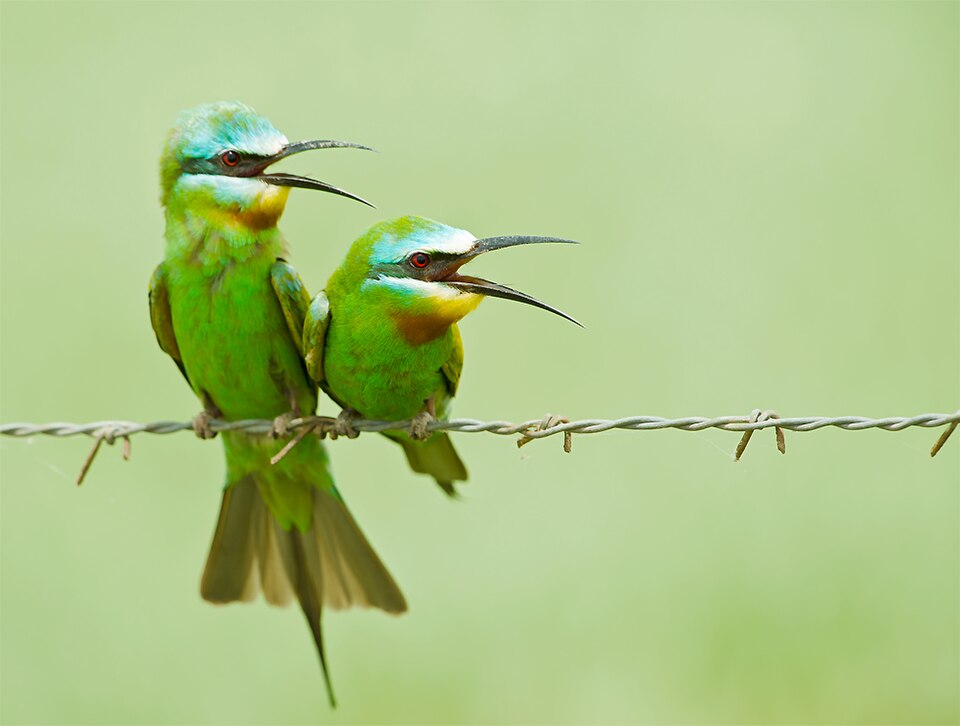 Gruccione egiziano
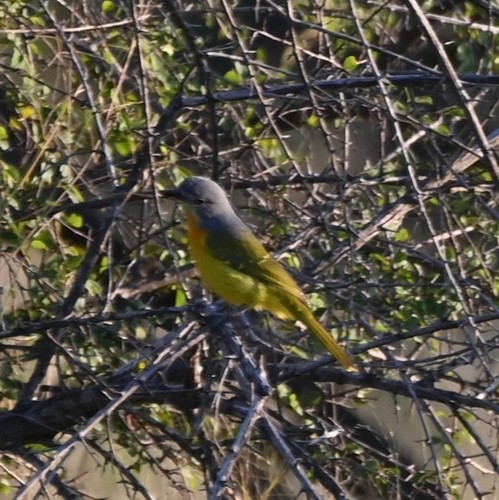 Sulphur-breasted Bushshrike
In breve
Il modo più affidabile per separare il Gruccione egiziano dal Sulphur-breasted Bushshrike è attraverso la struttura e la colorazione complessive: il gruccione è un uccello snello, dalla lunga coda, prevalentemente verde con lati del viso blu e una striscia nera attorno all'occhio, mentre il bushshrike è un uccello più compatto e robusto con un petto arancione o giallo sorprendente, ma privo del viso blu del gruccione e delle lunghe streamers della coda. In volo o posato, le lunghe ali appuntite del gruccione e le piume centrali della coda profondamente estese sono diagnostiche, specialmente negli adulti. Entrambe le specie sono colorate, ma la loro forma, postura e pattern facciale sono piuttosto diversi. L'habitat e il comportamento aiutano anche: i grucciona sono cacciatori aerei spesso visti lanciarsi da fili, mentre i bushshrike sono più furtivi e si posano all'interno di cespugli o alberi.
Consigli di identificazione
- Tail Shape and Length: Il Gruccione egiziano ha due piume centrali della coda allungate (streamers) che si estendono ben oltre il resto della coda, specialmente negli adulti. Il Sulphur-breasted Bushshrike ha una coda corta e a punta quadrata senza streamers. Questo è visibile sia posato che in volo.
- Facial Pattern: Il gruccione mostra un distintivo lavaggio blu sul viso con una netta striscia nera attorno all'occhio; il viso del bushshrike è semplice, privo di blu e di una forte striscia attorno all'occhio.
- Bill Shape: Il becco del gruccione è lungo, snello e fortemente ricurvo (verso il basso), adatto per catturare insetti in volo. Il becco del bushshrike è più corto, più pesante e ricurvo, adattato per afferrare e manipolare le prede nel fogliame.
- Overall Shape and Posture: Il gruccione è snello, con un corpo lungo, ali appuntite e una postura eretta su posatoi esposti. Il bushshrike è compatto, con un corpo robusto e una postura più orizzontale e curva, di solito all'interno della copertura.
- Breast Color: Il bushshrike ha un petto arancione vivace fino a giallo, che è la sua caratteristica più sorprendente. La gola del gruccione è gialla e marrone, ma il petto e le parti inferiori sono verdi, non arancioni o gialli.
- Upperparts Color: Entrambe le specie hanno parti superiori verdi, ma il verde del gruccione è più luminoso e uniforme, mentre il verde del bushshrike può essere più opaco e limitato alla schiena.
- Flight Behavior: Il gruccione è altamente aereo, spesso visto volare da posatoi per catturare insetti, con un volo leggero e aggraziato. Il bushshrike è raramente visto in volo sostenuto e di solito si muove attraverso la vegetazione.
- Perching Behavior: Il gruccione preferisce posatoi aperti ed esposti come fili o rami spogli. Il bushshrike di solito rimane all'interno di fogliame denso ed è meno probabile che si posi in aperto.
- Habitat Preference: Il gruccione favorisce il paese aperto, semi-desertico e le praterie, spesso vicino all'acqua. Il bushshrike si trova in habitat cespugliosi o boschivi, ai margini delle foreste o in folti cespugli.
- Sex Differences: I sessi del gruccione sono simili, ma le femmine hanno streamers della coda più corti. Non sono notate forti differenze sessuali per il bushshrike in queste note.
- Group Size: Il gruccione può essere visto in piccole colonie o gruppi sciolti, specialmente vicino ai siti di nidificazione. Il bushshrike è tipicamente solitario o in coppie.
- Vocalization: Se udito, il richiamo del gruccione è ‘più piatto’ e meno ‘fluteo’ rispetto al Gruccione, ma questo non è un forte separatore dal bushshrike con le informazioni attuali.
- Bill Color: Il becco del gruccione è nero; il colore del becco del bushshrike non è descritto, ma è tipicamente scuro nei bushshrike.
- Jizz in Flight: Le lunghe ali appuntite del gruccione e le streamers che seguono danno una silhouette distintiva. Il volo del bushshrike è più diretto e meno leggero, con una coda corta e ali arrotondate.
- Pitfalls: Entrambi sono colorati e possono mostrare parti superiori verdi, ma solo il gruccione combina guance blu, striscia nera attorno all'occhio e lunghe streamers della coda. Solo il bushshrike ha un petto arancione/giallo brillante senza blu sul viso.
Taglia
Il Gruccione egiziano è un uccello di dimensioni medie e snello (massa corporea ~49.4g), notevolmente allungato dalle sue lunghe piume centrali della coda (lunghezza totale fino a 31 cm, con streamers che aggiungono fino a 7 cm). Il Sulphur-breasted Bushshrike non è misurato qui, ma è un passeriforme più compatto e robusto con una coda più corta e una costruzione più pesante rispetto alla sua lunghezza. Sul campo, il gruccione appare molto più lungo e più aerodinamico, specialmente in volo, mentre il bushshrike appare tozzo e dalla coda corta.
Piumaggio
Non sono descritti segni specifici per età per le ali o il pattern di volo per nessuna delle due specie nelle fonti, quindi ci si concentra sul piumaggio degli adulti. Il Gruccione egiziano è prevalentemente di un verde brillante con un lavaggio blu sul viso, una striscia nera attorno all'occhio e una gola gialla e marrone. Le sue due piume centrali della coda sono allungate e si estendono ben oltre il resto della coda, specialmente nei maschi. Il bushshrike, al contrario, ha un petto arancione vivace fino a giallo (da cui il nome), ma manca di blu sul viso e non ha striscia nera attorno all'occhio. Le sue parti superiori sono tipicamente verdastre, ma il viso è semplice e la coda è corta e a punta quadrata. Entrambi i sessi del gruccione sono simili, anche se le femmine hanno streamers della coda più corti; il dimorfismo sessuale del bushshrike non è dettagliato, ma entrambi i sessi condividono il petto arancione/giallo. Il becco nero del gruccione è lungo e ricurvo, mentre il becco del bushshrike è più corto e ricurvo.
Comportamento
Il Gruccione egiziano è altamente aereo, spesso visto lanciarsi da posatoi esposti (come fili) per catturare insetti volanti, e può essere visto in gruppi sciolti o colonie. È evidente in aree aperte, frequentemente posandosi in vista. Il Sulphur-breasted Bushshrike è più ritirato, di solito cerca cibo all'interno di cespugli o alberi densi, ed è meno probabile che venga visto in aperto. Tende a essere solitario o in coppie, muovendosi metodicamente attraverso il fogliame piuttosto che catturare insetti in aria.
Habitat
Il Gruccione egiziano nidifica in semi-deserto con alberi sparsi (acacia), e sverna in boschi aperti o praterie, spesso vicino all'acqua. Di solito si trova in habitat aperti e soleggiati ed è raramente profondo nella vegetazione densa. Il Sulphur-breasted Bushshrike preferisce habitat cespugliosi o boschivi, spesso all'interno di cespugli o ai margini delle foreste, ed è meno probabile che venga trovato in paese aperto. Se l'uccello è in un cespuglio denso o ai margini di una foresta, è più probabile che sia un bushshrike; se è in aperto o su fili, è favorito il gruccione.
Voce
Il richiamo del Gruccione egiziano è descritto come ‘più piatto’ e meno ‘fluteo’ rispetto al Gruccione, ma non viene fornita alcuna comparazione diretta con il bushshrike. Nessuna descrizione vocale è fornita per il Sulphur-breasted Bushshrike in queste note. Pertanto, la voce non è un separatore affidabile con le informazioni a disposizione.
Gruccione egiziano · Sulphur-breasted Bushshrike · I miei uccelli difficili