

abelharuco-de-faces-azuis vs picanço-de-peito-laranja
Merops persicus versus Chlorophoneus sulfureopectus
Jogue um quiz com abelharuco-de-faces-azuis e picanço-de-peito-laranja
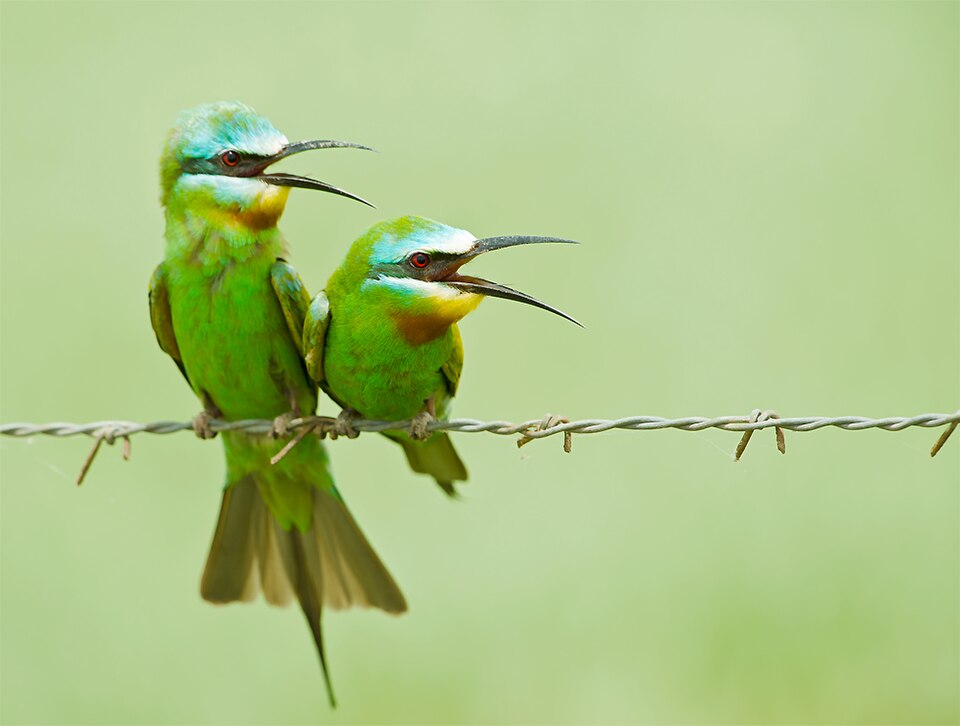 abelharuco-de-faces-azuis
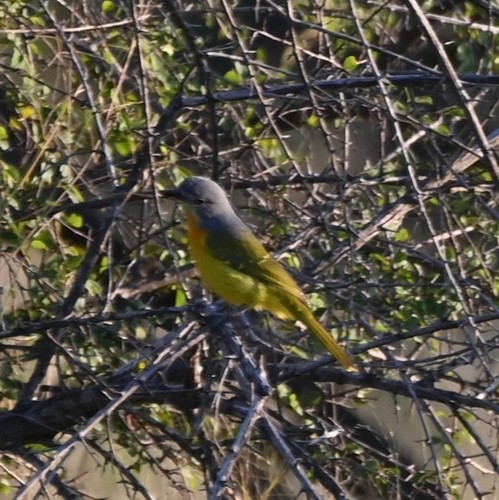 picanço-de-peito-laranja
Em resumo
A maneira mais confiável de separar o abelharuco-de-faces-azuis do picanço-de-peito-laranja é pela estrutura e coloração geral: o abelharuco é uma ave esbelta, de cauda longa, predominantemente verde, com lados faciais azuis e uma faixa ocular preta, enquanto o picanço é uma ave mais compacta e robusta, com um peito laranja ou amarelo marcante, mas que não possui o rosto azul do abelharuco e as longas penas centrais da cauda. Em voo ou empoleirada, as asas longas e pontudas do abelharuco e as penas centrais da cauda profundamente estendidas são diagnósticas, especialmente em adultos. Ambas as espécies são coloridas, mas sua forma, postura e padrão facial são bastante diferentes. O habitat e o comportamento também ajudam: os abelharucos são caçadores aéreos frequentemente vistos saindo de fios, enquanto os picanços são mais furtivos e se empoleiram dentro de arbustos ou árvores.
Dicas de identificação
- Forma e Comprimento da Cauda: O abelharuco-de-faces-azuis possui duas penas centrais da cauda alongadas (streamers) que se estendem bem além do resto da cauda, especialmente em adultos. O picanço-de-peito-laranja tem uma cauda curta e com ponta quadrada, sem streamers. Isso é visível tanto empoleirado quanto em voo.
- Padrão Facial: O abelharuco apresenta uma distinta coloração azul no rosto com uma nítida faixa ocular preta; o rosto do picanço é simples, sem azul e sem uma forte faixa ocular.
- Forma do Bico: O bico do abelharuco é longo, esbelto e fortemente curvado para baixo, adequado para capturar insetos em voo. O bico do picanço é mais curto, mais pesado e curvado, adaptado para agarrar e manipular presas na folhagem.
- Forma Geral e Postura: O abelharuco é esbelto, com um corpo longo, asas pontudas e uma postura ereta em poleiros expostos. O picanço é compacto, com um corpo robusto e uma postura mais horizontal e encurvada, geralmente dentro da cobertura.
- Cor do Peito: O picanço tem um peito laranja vívido a amarelo, que é sua característica mais marcante. A garganta do abelharuco é amarela e marrom, mas o peito e as partes inferiores são verdes, não laranja ou amarelo.
- Cor das Partes Superiores: Ambas as espécies têm partes superiores verdes, mas o verde do abelharuco é mais brilhante e uniforme, enquanto o verde do picanço pode ser mais opaco e restrito às costas.
- Comportamento de Voo: O abelharuco é altamente aéreo, frequentemente visto voando de poleiros para capturar insetos, com um voo leve e gracioso. O picanço é raramente visto em voo sustentado e geralmente se move através da vegetação.
- Comportamento de Empoleiramento: O abelharuco prefere poleiros abertos e expostos, como fios ou galhos nus. O picanço geralmente permanece dentro da folhagem densa e é menos provável que se empoleire em áreas abertas.
- Preferência de Habitat: O abelharuco favorece áreas abertas, semi-desérticas e campos, frequentemente perto da água. O picanço é encontrado em habitats arbustivos ou florestais, bordas de florestas ou em matagais densos.
- Diferenças Sexuais: Os sexos do abelharuco são semelhantes, mas as fêmeas têm streamers de cauda mais curtos. Nenhuma diferença sexual forte é notada para o picanço nessas notas.
- Tamanho do Grupo: O abelharuco pode ser visto em pequenas colônias ou grupos soltos, especialmente perto de locais de reprodução. O picanço é tipicamente solitário ou em pares.
- Vocalização: Se ouvido, o chamado do abelharuco é ‘mais plano’ e menos ‘musical’ do que o abelharuco, mas isso não é um forte separador do picanço com as informações atuais.
- Cor do Bico: O bico do abelharuco é preto; a cor do bico do picanço não é descrita, mas é tipicamente escura em picanços.
- Silhueta em Voo: As longas asas pontudas do abelharuco e os streamers pendentes dão uma silhueta distinta. O voo do picanço é mais direto e menos leve, com uma cauda curta e asas arredondadas.
- Armadilhas: Ambas as espécies são coloridas e podem mostrar partes superiores verdes, mas apenas o abelharuco combina bochechas azuis, faixa ocular preta e longos streamers de cauda. Apenas o picanço tem um peito laranja/amarelo brilhante sem azul no rosto.
Tamanho
O abelharuco-de-faces-azuis é uma ave de tamanho médio e esbelta (massa corporal ~49,4g), notavelmente alongada por suas longas penas centrais da cauda (comprimento total de até 31 cm, com streamers adicionando até 7 cm). O picanço-de-peito-laranja não é medido aqui, mas é um passeriforme mais compacto e robusto, com uma cauda mais curta e uma construção mais pesada em relação ao seu comprimento. No campo, o abelharuco parece muito mais longo e mais aerodinâmico, especialmente em voo, enquanto o picanço parece robusto e de cauda curta.
Plumagem
Nenhuma marca de padrão de asa ou voo específica para a idade é descrita para nenhuma das espécies nas fontes, então o foco está na plumagem adulta. O abelharuco-de-faces-azuis é predominantemente verde brilhante com uma coloração azul no rosto, uma faixa ocular preta e uma garganta amarela e marrom. Suas duas penas centrais da cauda são alongadas e se estendem bem além do resto da cauda, especialmente nos machos. O picanço, em contraste, tem um peito laranja vívido a amarelo (daí o nome), mas não possui azul no rosto e não tem faixa ocular preta. Suas partes superiores são tipicamente esverdeadas, mas o rosto é simples, e a cauda é curta e com ponta quadrada. Ambos os sexos do abelharuco são semelhantes, embora as fêmeas tenham streamers de cauda mais curtos; o dimorfismo sexual do picanço não é detalhado, mas ambos os sexos compartilham o peito laranja/amarelo. O bico preto do abelharuco é longo e curvado, enquanto o bico do picanço é mais curto e curvado.
Comportamento
O abelharuco-de-faces-azuis é altamente aéreo, frequentemente visto saindo de poleiros expostos (como fios) para capturar insetos voadores, e pode ser visto em grupos soltos ou colônias. É conspícuo em áreas abertas, frequentemente empoleirando-se em locais expostos. O picanço-de-peito-laranja é mais reservado, geralmente forrageando dentro de arbustos ou árvores densas, e é menos provável que seja visto em áreas abertas. Tende a ser solitário ou em pares, movendo-se metódicamente pela folhagem em vez de caçar insetos no ar.
Habitat
O abelharuco-de-faces-azuis se reproduz em semi-deserto com árvores esparsas (acácia) e inverna em florestas abertas ou campos, frequentemente perto da água. Geralmente é encontrado em habitats abertos e ensolarados e raramente está profundamente em vegetação densa. O picanço-de-peito-laranja prefere habitats arbustivos ou florestais, frequentemente dentro de matagais ou bordas de florestas, e é menos provável que seja encontrado em áreas abertas. Se a ave estiver em um arbusto denso ou na borda de uma floresta, é mais provável que seja um picanço; se estiver em um local aberto ou em fios, o abelharuco é favorecido.
Voz
O chamado do abelharuco-de-faces-azuis é descrito como ‘mais plano’ e menos ‘musical’ do que o abelharuco, mas nenhuma comparação direta com o picanço é dada. Nenhuma descrição vocal é fornecida para o picanço-de-peito-laranja nessas notas. Portanto, a voz não é um separador confiável com as informações disponíveis.
abelharuco-de-faces-azuis · picanço-de-peito-laranja · Minhas aves difíceis