

Pacific Emerald Dove vs Stephan's Dove
Chalcophaps longirostris contro Chalcophaps stephani
Fai un quiz con Pacific Emerald Dove e Stephan's Dove
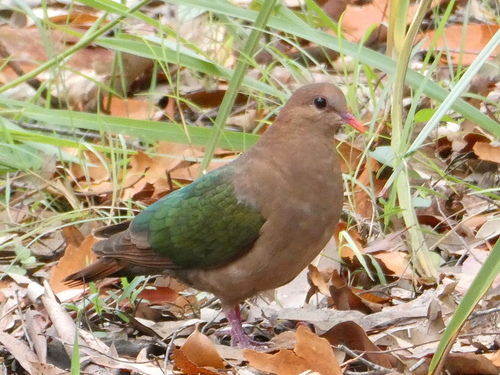 Pacific Emerald Dove
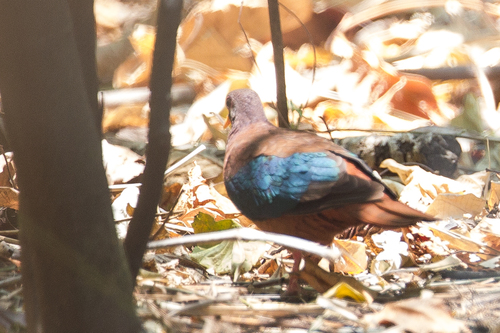 Stephan's Dove
In breve
Il segno di campo più affidabile tra Pacific Emerald Dove e Stephan's Dove è il colore della corona nei maschi adulti: i maschi di Pacific Emerald Dove mostrano una corona grigia chiara, mentre i maschi di Stephan's Dove hanno una corona marrone. Entrambe le specie sono piccioni tozzi, terrestri, con ali di un verde brillante, ma Pacific Emerald Dove è più propenso a mostrare una testa e parti inferiori vinose-rosa, e una macchia bianca sulla spalla nei maschi. Gli uccelli giovani e femminili sono più difficili da distinguere, poiché entrambi sono più marroni e mancano del modello di testa nitido del maschio adulto, ma i giovani di Pacific Emerald Dove mostrano una scallopatura marrone sul corpo e sulle ali. In volo, Pacific Emerald Dove espone un sottovolo color buff e piume di volo castano, con una coda e piume di volo nerastre, e una marcatura audace a strisce nere e bianche sulla parte bassa della schiena. Stephan's Dove si distingue meglio per le sue parti superiori complessivamente più marroni e la mancanza della macchia bianca sulla spalla e della corona grigia del Pacific, specialmente nei maschi in posa.
Consigli di identificazione
- Colore della corona del maschio adulto: I maschi di Pacific Emerald Dove hanno una corona grigia chiara; i maschi di Stephan's Dove hanno una corona marrone. Questo è il segno più affidabile per i maschi adulti.
- Macchia bianca sulla spalla: Il maschio adulto di Pacific Emerald Dove mostra una macchia bianca distintiva all'orlo della spalla, assente in Stephan's Dove. Le femmine e i giovani mancano di questo segno.
- Parti inferiori vinose-rosa: Pacific Emerald Dove (specialmente i maschi) ha una testa e parti inferiori vinose-rosa scure, che sfumano in grigio sulla pancia inferiore. Stephan's Dove è generalmente più opaco e marrone sotto.
- Scallopatura marrone nei giovani: I giovani e immaturi di Pacific Emerald Dove mostrano una scallopatura marrone sul corpo e sulle copritrici delle ali, un segno non descritto per Stephan's Dove.
- Colore delle ali superiori e modello di volo: In volo, Pacific Emerald Dove espone sottovoli color buff, piume di volo castano, coda e piume di volo nerastre, e marcature audaci a strisce nere e bianche sulla parte bassa della schiena. Non si descrive che Stephan's Dove mostri queste caratteristiche, quindi la loro presenza indica Pacific Emerald Dove.
- Colore generale delle parti superiori: Stephan's Dove ha un dorso più uniformemente marrone, mentre Pacific Emerald Dove ha ali di un verde smeraldo più brillante e una corona più marrone nelle femmine/immaturi.
- Colore del becco e delle gambe: Pacific Emerald Dove ha un becco rosso brillante e gambe e piedi rufous; i colori delle parti nude di Stephan's Dove non sono dettagliati, quindi questo potrebbe aiutare se visto bene.
- Differenze sessuali: Le femmine di Pacific Emerald Dove sono più marroni, mancano della macchia bianca sulla spalla e possono mostrare un segno grigio sulla spalla. Le femmine di Stephan's Dove hanno un dorso marrone e mancano di qualsiasi grigio o bianco sulla corona o sulla spalla.
- Jizz e comportamento: Entrambi sono tozzi, foraggiano a terra e sono spesso domestici. Pacific Emerald Dove può allontanarsi quando disturbato piuttosto che volare, ma questo non è unico.
- Distribuzione: In Australia, si trova solo Pacific Emerald Dove. In Nuova Guinea e nelle isole vicine, entrambe le specie possono essere presenti.
- Habitat: Entrambi preferiscono foreste dense e boschi; l'habitat non è un separatore nelle zone di sovrapposizione.
- Vocalizzazioni: Solo la voce di Pacific Emerald Dove è descritta; sentire il coo morbido e lamentoso o il nasale 'hoo-hoo-hoon' supporta quella specie.
- Dimensione del gruppo: Entrambi sono solitamente solitari, in coppie o piccoli gruppi; non è un separatore.
- Display di corteggiamento: Entrambi eseguono display di inchino/bobbing, non diagnostici.
- Quando in dubbio: Concentrati sul modello di testa e spalla del maschio adulto, e sulla scallopatura marrone negli immaturi. In volo, cerca il sottovolo color buff e le marcature a strisce nere e bianche sulla parte bassa della schiena per Pacific Emerald Dove.
Taglia
Entrambe le specie sono piccioni di dimensioni medie e tozzi. Pacific Emerald Dove è tipicamente lungo 23–28 cm. Non è fornita alcuna misura diretta per Stephan's Dove, ma è descritto come strettamente correlato e morfologicamente simile, quindi aspettati dimensioni e proporzioni molto simili. La dimensione non è un separatore affidabile sul campo.
Piumaggio
- Giovane/Immature: Gli immaturi di Pacific Emerald Dove assomigliano alle femmine ma hanno una distintiva scallopatura marrone sul corpo e sulle copritrici delle ali. Gli immaturi di Stephan's Dove non sono descritti in dettaglio, ma l'assenza di menzione della scallopatura suggerisce che questo segno sia utile per Pacific Emerald Dove.
- Maschio adulto: I maschi di Pacific Emerald Dove hanno una corona grigia e una macchia bianca sulla spalla, con ali di un verde smeraldo brillante e una testa e parti inferiori vinose-rosa. I maschi di Stephan's Dove mancano della corona grigia e della macchia bianca sulla spalla, mostrando invece una corona marrone e parti superiori complessivamente più marroni, con ali verdi ma una colorazione della testa e delle parti inferiori più attenuata.
- Femmina adulta: Le femmine di entrambe le specie sono complessivamente più marroni e mancano della macchia bianca sulla spalla. Le femmine di Pacific Emerald Dove possono mostrare un segno grigio sulla spalla, ma non una macchia completa. Le femmine di Stephan's Dove hanno un dorso complessivamente marrone e mancano di qualsiasi grigio o bianco sulla corona o sulla spalla.
- In volo: Pacific Emerald Dove mostra sottovoli color buff, piume di volo castano, coda e piume di volo nerastre, e marcature audaci a strisce nere e bianche sulla parte bassa della schiena. Il modello di volo di Stephan's Dove non è descritto in dettaglio, ma l'assenza di menzione di queste caratteristiche suggerisce che siano meno prominenti o assenti.
Comportamento
Entrambe le specie sono terrestri, spesso foraggiando frutta caduta a terra e trascorrendo poco tempo sugli alberi, tranne che per il riposo. Pacific Emerald Dove è noto per essere piuttosto domestico e avvicinabile, spesso allontanandosi piuttosto che volare quando disturbato. Entrambe le specie eseguono display di bobbing o inchino durante il corteggiamento, con i maschi che abbassano e sollevano teste e code in movimenti ritmici. Non vengono evidenziate differenze comportamentali significative che possano separare affidabilmente i due sul campo.
Habitat
Pacific Emerald Dove è diffuso nelle foreste pluviali tropicali e subtropicali, nelle foreste umide dense, nelle fattorie, nei giardini, nelle mangrovie e nelle brughiere costiere in tutta l'Indonesia, nel nord e nell'est dell'Australia, a Timor-Leste e in Papua Nuova Guinea. Stephan's Dove si trova in Indonesia e Melanesia, da Sulawesi e Taliabu verso est attraverso la Nuova Guinea di pianura e le sue isole satelliti fino all'arcipelago di Bismarck e alle Isole Salomone. Entrambi preferiscono foreste dense o boschi, ma Pacific Emerald Dove è l'unico a raggiungere l'Australia. Nelle aree sovrapposte (Nuova Guinea, alcune isole indonesiane), l'habitat non è un separatore affidabile.
Voce
Pacific Emerald Dove emette un coo lamentoso e morbido di circa sei-sette note, iniziando piano e aumentando, oltre a un nasale 'hoo-hoo-hoon.' Non viene fornita alcuna descrizione vocale specifica per Stephan's Dove, quindi la voce non è un separatore affidabile a meno che non si sentano i richiami di Pacific Emerald Dove.
Pacific Emerald Dove · Stephan's Dove · I miei uccelli difficili