

Australische smaragdduif vs Stephansmaragdduif
Chalcophaps longirostris versus Chalcophaps stephani
Speel een quiz met Australische smaragdduif en Stephansmaragdduif
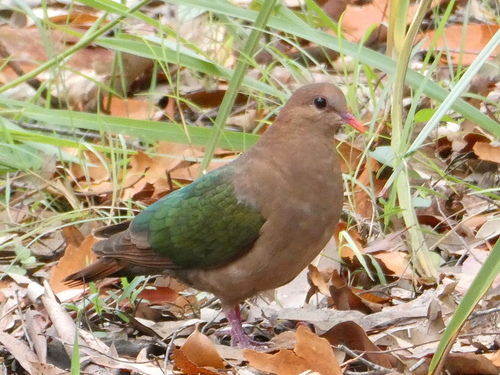 Australische smaragdduif
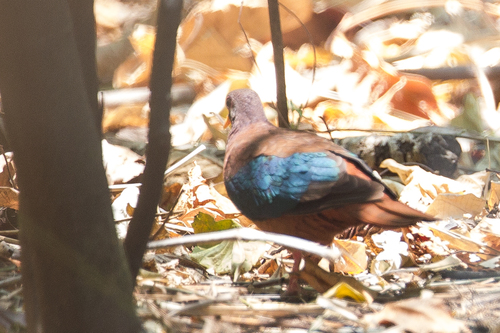 Stephansmaragdduif
Kort gezegd
Het meest betrouwbare veldkenmerk tussen Australische smaragdduif en Stephansmaragdduif is de kleur van de kap bij volwassen mannetjes: Australische smaragdduif mannetjes tonen een duidelijke grijze kroon, terwijl Stephansmaragdduif mannetjes een bruinachtige kroon hebben. Beide soorten zijn gedrongen, op de grond levende duiven met heldergroene vleugels, maar Australische smaragdduif toont waarschijnlijker een wijnroze kop en onderdelen, en een witte schoudervlek bij mannetjes. Juveniele en vrouwelijke vogels zijn lastiger, omdat beide bruiner zijn en het scherpe koppatroon van het volwassen mannetje missen, maar Australische smaragdduif onvolwassenen tonen bruine schubben op het lichaam en de vleugels. In de vlucht toont Australische smaragdduif een buff ondervleugel en kastanjebruine vliegveren, met zwartachtige staart- en vliegveren, en gedurfde zwart-witte streepjes op de onderrug. Stephansmaragdduif wordt het beste onderscheiden door zijn over het algemeen bruiner bovenwerk en het ontbreken van de witte schoudervlek en grijze kroon van de Australische, vooral bij zittende mannetjes.
Herkenningstips
- Kleur van de kroon bij volwassen mannetjes: Australische smaragdduif mannetjes hebben een duidelijke grijze kroon; Stephansmaragdduif mannetjes hebben een bruinachtige kroon. Dit is het meest betrouwbare kenmerk voor volwassen mannetjes.
- Witte schoudervlek: Volwassen mannelijke Australische smaragdduif toont een duidelijke witte vlek aan de rand van de schouder, afwezig bij Stephansmaragdduif. Vrouwen en onvolwassenen missen dit kenmerk.
- Wijnroze onderdelen: Australische smaragdduif (vooral mannetjes) heeft een donkere wijnroze kop en onderdelen, vervagend naar grijs op de onderbuik. Stephansmaragdduif is over het algemeen doffer en bruiner aan de onderzijde.
- Bruine schubben bij onvolwassenen: Juveniele en onvolwassen Australische smaragdduiven tonen bruine schubben op lichaam en vleugelbedekking, een kenmerk dat niet is beschreven voor Stephansmaragdduif.
- Bovenvleugel en vliegpatroon: In de vlucht toont Australische smaragdduif buff ondervleugels, kastanjebruine vliegveren, zwartachtige staart- en vliegveren, en gedurfde zwart-witte streepjes op de onderrug. Stephansmaragdduif wordt niet beschreven als het tonen van deze kenmerken, dus hun aanwezigheid wijst op Australische smaragdduif.
- Algemene kleur van het bovenwerk: Stephansmaragdduif is meer uniform bruinruggen, terwijl Australische smaragdduif helderdere smaragdgroene vleugels en een bruinere kroon heeft bij vrouwen/onvolwassenen.
- Kleur van de snavel en poten: Australische smaragdduif heeft een helderrode snavel en roestkleurige poten en voeten; de kleuren van de blote delen van Stephansmaragdduif zijn niet gedetailleerd, dus dit kan helpen als goed gezien.
- Geslachtsverschillen: Vrouwelijke Australische smaragdduiven zijn bruiner, missen de witte schoudervlek, en kunnen een grijs kenmerk op de schouder tonen. Stephansmaragdduif vrouwen zijn bruinruggen en missen enige grijs of wit op de kroon of schouder.
- Jizz en gedrag: Beide zijn gedrongen, op de grond foeragerend, en vaak tam. Australische smaragdduif kan wegwandelen wanneer verstoord in plaats van vliegen, maar dit is niet uniek.
- Verspreiding: In Australië komt alleen Australische smaragdduif voor. In Nieuw-Guinea en nabijgelegen eilanden kunnen beide aanwezig zijn.
- Habitat: Beide geven de voorkeur aan dichte bossen en bosgebieden; habitat is geen scheiding in overlappingszones.
- Vocalisaties: Alleen de stem van Australische smaragdduif is beschreven; het horen van de zachte zuchtende coo of nasale 'hoo-hoo-hoon' ondersteunt die soort.
- Groepsgrootte: Beide zijn meestal solitair, in paren of kleine groepen; geen scheiding.
- Paringsgedrag: Beide voeren buigende/bobbende displays uit, niet diagnostisch.
- Bij twijfel: Focus op het hoofd- en schouderpatroon van volwassen mannetjes, en op bruine schubben bij onvolwassenen. In de vlucht, let op buff ondervleugel en zwart-witte streepjes op de onderrug voor Australische smaragdduif.
Grootte
Beide soorten zijn middelgrote, gedrongen duiven. Australische smaragdduif is typisch 23–28 cm lang. Er is geen directe meting gegeven voor Stephansmaragdduif, maar het wordt beschreven als nauw verwant en morfologisch vergelijkbaar, dus verwacht zeer vergelijkbare grootte en verhoudingen. Grootte is geen betrouwbare scheiding in het veld.
Verenkleed
- Juveniel/Onvolwassen: Onvolwassen Australische smaragdduif lijkt op vrouwtjes maar heeft onderscheidende bruine schubben op het lichaam en de vleugelbedekking. Onvolwassen Stephansmaragdduif wordt niet in detail beschreven, maar geen vermelding van schubben suggereert dat dit kenmerk nuttig is voor Australische smaragdduif.
- Volwassen mannetje: Australische smaragdduif mannetjes hebben een grijze kroon en een witte vlek op de schouder, met heldergroene vleugels en een wijnroze kop en onderdelen. Stephansmaragdduif mannetjes missen de grijze kroon en witte schoudervlek, en tonen in plaats daarvan een bruinachtige kroon en over het algemeen bruiner bovenwerk, met groene vleugels maar een meer gedempte kop- en onderkleur.
- Volwassen vrouw: De vrouwtjes van beide soorten zijn over het algemeen bruiner en missen de witte schoudervlek. Vrouwelijke Australische smaragdduif kan een grijs kenmerk op de schouder tonen, maar niet een volledige vlek. Vrouwelijke Stephansmaragdduif zijn over het algemeen bruinruggen en missen enige grijs of wit op de kroon of schouder.
- In de vlucht: Australische smaragdduif toont buff ondervleugels, kastanjebruine vliegveren, zwartachtige staart- en vliegveren, en gedurfde zwart-witte streepjes op de onderrug. Het vliegpatroon van Stephansmaragdduif wordt niet in detail beschreven, maar het ontbreken van vermelding van deze kenmerken suggereert dat ze minder prominent of afwezig zijn.
Gedrag
Beide soorten zijn terrestrisch, vaak foeragerend naar gevallen fruit op de grond en besteden weinig tijd in bomen, behalve voor het rusten. Australische smaragdduif staat bekend als vrij tam en benaderbaar, vaak wegwandelen in plaats van vliegen wanneer verstoord. Beide soorten voeren bobbende of buigende displays uit tijdens het paren, waarbij mannetjes hun kop en staart in ritmische bewegingen laten zakken en omhoog brengen. Geen grote gedragsverschillen worden benadrukt die de twee betrouwbaar in het veld zouden scheiden.
Habitat
Australische smaragdduif is wijdverspreid in tropische en subtropische regenwouden, dichte natte bossen, boerderijen, tuinen, mangroven en kustheiden in heel Indonesië, noordelijk en oostelijk Australië, Timor-Leste en Papoea-Nieuw-Guinea. Stephansmaragdduif wordt aangetroffen in Indonesië en Melanesië, van Sulawesi en Taliabu oostwaarts door laagland Nieuw-Guinea en zijn satellieteilanden naar de Bismarck-archipel en de Salomonseilanden. Beide geven de voorkeur aan dichte bossen of bosgebieden, maar Australische smaragdduif is de enige die Australië bereikt. In overlappende gebieden (Nieuw-Guinea, enkele Indonesische eilanden) is habitat geen betrouwbare scheiding.
Geluid
Australische smaragdduif geeft een lage, zachte zuchtende coo van ongeveer zes tot zeven noten, die stil begint en stijgt, evenals een nasale 'hoo-hoo-hoon.' Geen specifieke vocale beschrijving is gegeven voor Stephansmaragdduif, dus de stem is geen betrouwbare scheiding tenzij de roep van Australische smaragdduif wordt gehoord.
Australische smaragdduif · Stephansmaragdduif · Mijn lastige vogels