

Allodola golagialla vs Allodola
Eremophila alpestris contro Alauda arvensis
Fai un quiz con Allodola golagialla e Allodola
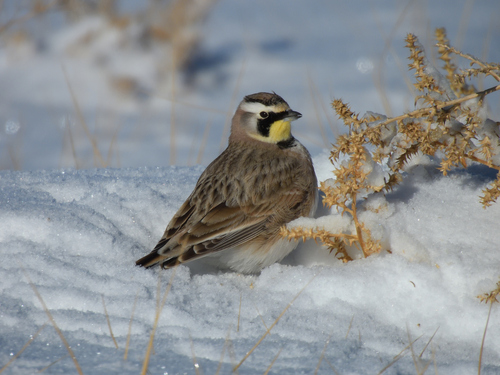 Allodola golagialla
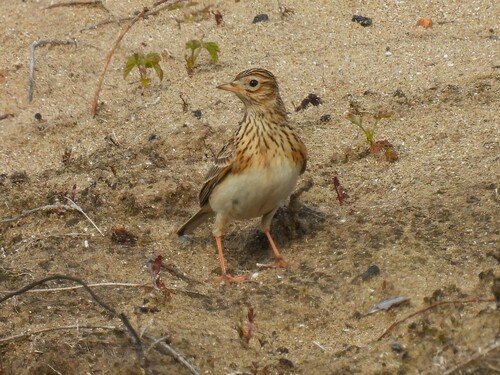 Allodola
In breve
Il segno distintivo più affidabile per separare l'Allodola golagialla dall'Allodola è il sorprendente motivo facciale nero e giallo (o nero e bianco in alcune razze) dell'Allodola golagialla, con 'corna' nere nei maschi, che non è mai mostrato dall'Allodola. In volo, l'Allodola golagialla mostra un forte contrasto tra il suo corpo chiaro e la coda per lo più nera (eccetto per le piume centrali), mentre l'Allodola ha un aspetto marrone più opaco e uniforme con bordi bianchi sulla coda e sull'ala posteriore visibili solo quando vola via. L'Allodola è più robusta, con una coda più corta e ali più ampie, e spesso solleva una breve cresta quando è posata. Entrambe le specie sono simili in dimensioni, ma la loro struttura e il piumaggio sono distinti quando visti bene.
Consigli di identificazione
- Motivo facciale (tutte le età): L'Allodola golagialla mostra sempre un sorprendente motivo facciale con marcature nere e gialle (o bianche); il volto dell'Allodola è marrone uniforme senza maschera o marcature audaci.
- 'Corna' (maschio adulto di Allodola golagialla): Solo i maschi di Allodola golagialla mostrano ciuffi di piume neri ('corna') sulla testa in piumaggio nuziale; l'Allodola non mostra mai corna, solo una breve cresta smussata che può essere sollevata o abbassata.
- Motivo della coda in volo (tutte le età): L'Allodola golagialla ha una coda per lo più nera con solo le piume centrali chiare, creando un forte contrasto con il corpo, particolarmente evidente in volo. La coda dell'Allodola è corta, marrone e bordata di bianco, con il bianco visibile solo quando vola via.
- Motivo dell'ala superiore e dell'ala posteriore: L'Allodola mostra bianco lungo il bordo posteriore dell'ala e della coda, ma solo quando vola via; l'Allodola golagialla non ha questa caratteristica e mostra invece più contrasto tra la coda scura e il corpo chiaro.
- Colorazione generale: L'Allodola golagialla è più chiara sotto e grigia o marrone-grigia sopra, con una chiara maschera facciale. L'Allodola è marrone opaco sopra e chiara sotto, con striature ma senza forte contrasto o maschera.
- Cresta vs. corna: L'Allodola può sollevare una breve cresta smussata quando è allerta o eccitata, ma non mostra mai le 'corna' appuntite dei maschi di Allodola golagialla. Le femmine di Allodola golagialla e gli immaturi non hanno corna ma mostrano comunque contrasto facciale.
- Struttura: L'Allodola è più robusta, con una coda più corta e ali più ampie; l'Allodola golagialla è più snella con una coda più lunga e contrastante.
- Volo: Il volo dell'Allodola è ondulato o sospeso, spesso alto e prolungato; il volo dell'Allodola golagialla è più diretto e basso, con meno sospensione.
- Canto: Il canto dell'Allodola è un lungo, continuo, gorgheggio frizzante da molto in alto; il canto dell'Allodola golagialla è breve, debole e tintinnante, spesso emesso in brevi voli di esibizione.
- Habitat: L'Allodola golagialla preferisce terreni nudi, linee costiere o tundra; l'Allodola si trova in campi erbosi, terreni agricoli o brughiera.
- Postura posata: L'Allodola appare spesso più rotonda e può sollevare la cresta; l'Allodola golagialla è più snella, e i maschi possono mostrare corna.
- Variazione stagionale: I maschi di Allodola golagialla sono più sorprendenti in estate con corna e maschera facciale complete; in inverno, la maschera può essere più opaca ma comunque presente. L'Allodola mostra poche variazioni stagionali.
- Trappole: Gli immaturi di Allodola golagialla possono avere un motivo facciale meno audace, ma mostrano comunque un certo contrasto e la coda nera; i giovani di Allodola hanno sempre il volto uniforme e mancano di contrasto nella coda.
- Differenze sessuali: I maschi di Allodola hanno ali più ampie per il volo sospeso, ma questo è sottile; i maschi di Allodola golagialla sono più facilmente separabili dalle loro corna e maschera.
- Variazione regionale: Le Allodole golagialla dell'Europa meridionale (E. a. penicillata) hanno una maschera facciale bianca (non gialla) ma mostrano comunque lo stesso motivo; l'Allodola ha sempre il volto uniforme.
Taglia
Both species are similar in length: Allodola golagialla measures 16–20 cm and Allodola 18–19 cm [wikipedia]. Skylark is slightly heavier on average, but the overlap is broad (Allodola golagialla: 28–48 g; Skylark: not specified here, but similar [avonet]). Wingspan is also close (Allodola golagialla: 30–34 cm). In the field, Skylark often appears bulkier and rounder, with a shorter tail and broader wings, especially in flight, while Allodola golagialla is slimmer with a longer, more contrasting tail.
Piumaggio
-
Juvenile/immature and adult non-breeding: Allodola golagialla of all ages shows a pale below, brown-grey above pattern, but even young birds have some facial contrast, and the tail is mostly black except for the central feathers—this creates a strong tail/body contrast in flight. Allodola, regardless of age, is much duller: brown above, pale below, with no strong facial pattern and a short tail edged with white, especially visible from behind in flight. The rear edge of the Skylark's wings is also edged white, but this is only visible when flying away, not from the front or side.
-
Adult breeding male: Allodola golagialla males show black 'horns' (tufts) and a bold black-and-yellow (or black-and-white in some races) face mask. Allodola males may show a short, blunt crest but never horns or a bold face mask. Both sexes of Skylark are similar, with the male having slightly broader wings.
-
Flight views: Allodola golagialla's black tail and pale body stand out, while Skylark looks more uniform, with white tail edges and rear wing only obvious when flying away.
Comportamento
L'Allodola golagialla spesso cerca cibo a terra, a volte in aree aperte e nude o lungo le coste, ed è meno probabile che venga vista eseguire voli di canto prolungati. L'Allodola è famosa per i suoi lunghi voli di canto sospesi, spesso cantando per diversi minuti in alto sopra campi o brughiere. A terra, l'Allodola può sollevare la sua breve cresta, mentre l'Allodola golagialla raramente mostra alcuna cresta eccetto le 'corna' del maschio. I maschi di Allodola golagialla possono eseguire brevi voli di esibizione con canto e immersioni, ma non il prolungato volo sospeso dell'Allodola.
Habitat
L'Allodola golagialla si trova tipicamente in terreni aperti e nudi, spesso vicino a linee costiere in inverno (da cui il nome europeo), o in habitat di tundra e alpini. L'Allodola preferisce terreni agricoli aperti, praterie e brughiere, ed è meno legata a terreni nudi o rocciosi. Se vedi un'allodola su una costa battuta dal vento o in tundra, è più probabile che sia un'Allodola golagialla; in campi erbosi o terreni agricoli, l'Allodola domina.
Voce
L'Allodola golagialla emette richiami acuti, sibilanti o tintinnanti e un canto debole—tipicamente alcuni cinguettii seguiti da un breve trill ascendente, spesso emesso in brevi voli. Il canto dell'Allodola è un lungo, gorgheggio frizzante e ininterrotto emesso durante voli sospesi prolungati, spesso durando diversi minuti. Se senti un canto lungo e continuo da molto in alto, è l'Allodola; il canto dell'Allodola golagialla è molto più breve e meno musicale.