

calhandra-cornuda vs laverca
Eremophila alpestris versus Alauda arvensis
Jogue um quiz com calhandra-cornuda e laverca
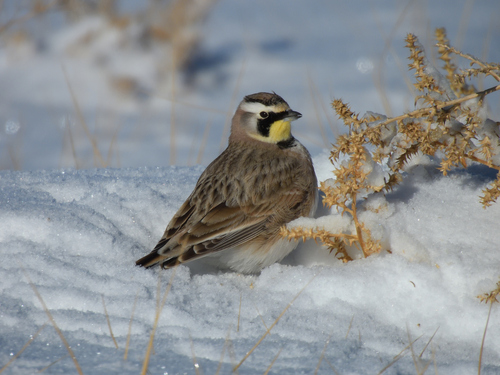 calhandra-cornuda
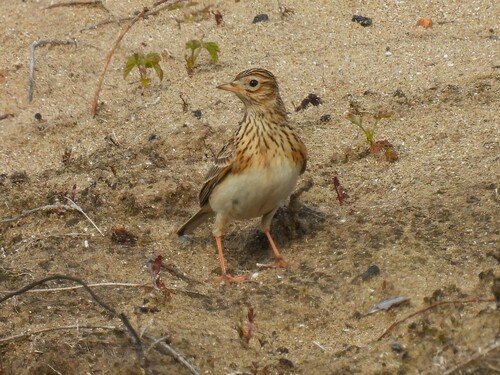 laverca
Em resumo
A marca de campo mais confiável para separar a calhandra-cornuda da laverca é o padrão facial marcante preto e amarelo (ou preto e branco em algumas raças) da calhandra-cornuda, com 'chifres' pretos nos machos, que nunca é exibido pela laverca. Em voo, a calhandra-cornuda mostra um forte contraste entre seu corpo claro e a cauda predominantemente preta (exceto pelas penas centrais), enquanto a laverca tem uma aparência marrom mais opaca e uniforme, com bordas brancas na cauda e na asa traseira visíveis apenas quando voando para longe. A laverca é mais robusta, com uma cauda mais curta e asas mais largas, e frequentemente levanta uma crista curta quando empoleirada. Ambas as espécies são semelhantes em tamanho, mas sua estrutura e plumagem são distintas quando vistas de perto.
Dicas de identificação
- Padrão facial (todas as idades): A calhandra-cornuda sempre mostra um padrão facial marcante com marcas pretas e amarelas (ou brancas); o rosto da laverca é marrom liso, sem máscara ou marcas ousadas.
- 'Chifres' (macho adulto da calhandra-cornuda): Apenas os machos da calhandra-cornuda mostram tufos de penas pretas ('chifres') na cabeça em plumagem de reprodução; a laverca nunca mostra chifres, apenas uma crista curta e romba que pode ser levantada ou abaixada.
- Padrão da cauda em voo (todas as idades): A calhandra-cornuda tem uma cauda predominantemente preta, com apenas as penas centrais claras, criando um forte contraste com o corpo, especialmente óbvio em voo. A cauda da laverca é curta, marrom e com bordas brancas, com o branco visível apenas quando voando para longe.
- Padrão da asa superior e asa traseira: A laverca mostra branco ao longo da borda traseira da asa e da cauda, mas apenas quando voando para longe; a calhandra-cornuda não possui esse recurso e, em vez disso, mostra mais contraste entre a cauda escura e o corpo claro.
- Coloração geral: A calhandra-cornuda é mais clara embaixo e cinza ou marrom-cinza em cima, com uma máscara facial clara. A laverca é marrom opaca em cima e clara embaixo, com estrias, mas sem forte contraste ou máscara.
- Crista vs. chifres: A laverca pode levantar uma crista curta e romba quando alerta ou excitada, mas nunca mostra os 'chifres' pontudos dos machos da calhandra-cornuda. As fêmeas da calhandra-cornuda e os imaturos não têm chifres, mas ainda mostram contraste facial.
- Estrutura: A laverca é mais robusta, com uma cauda mais curta e asas mais largas; a calhandra-cornuda é mais esbelta, com uma cauda mais longa e contrastante.
- Voo: O voo da laverca é ondulante ou pairando, frequentemente alto e prolongado; o voo da calhandra-cornuda é mais direto e baixo, com menos pairar.
- Canto: O canto da laverca é um longo e contínuo trinado borbulhante de alto acima; o canto da calhandra-cornuda é curto, fraco e tilintante, frequentemente dado em voos de exibição curtos.
- Habitat: A calhandra-cornuda prefere solo nu, margens de rios ou tundra; a laverca é encontrada em campos gramados, terras agrícolas ou brejos.
- Postura empoleirada: A laverca frequentemente parece mais arredondada e pode levantar sua crista; a calhandra-cornuda é mais esbelta, e os machos podem mostrar chifres.
- Variação sazonal: Os machos da calhandra-cornuda são mais marcantes no verão, com chifres e máscara facial completos; no inverno, a máscara pode ser mais opaca, mas ainda presente. A laverca mostra pouca mudança sazonal.
- Armadilhas: As calhandras-cornudas imaturas podem ter um padrão facial menos ousado, mas ainda mostram algum contraste e a cauda preta; os juvenis da laverca são sempre de rosto liso e carecem de contraste na cauda.
- Diferenças sexuais: Os machos da laverca têm asas mais largas para pairar, mas isso é sutil; os machos da calhandra-cornuda são mais facilmente separados por seus chifres e máscara.
- Variação regional: As calhandras-cornudas do sul da Europa (E. a. penicillata) têm uma máscara facial branca (não amarela), mas ainda mostram o mesmo padrão; a laverca é sempre de rosto liso.
Tamanho
Both species are similar in length: calhandra-cornuda measures 16–20 cm and laverca 18–19 cm [wikipedia]. Skylark is slightly heavier on average, but the overlap is broad (calhandra-cornuda: 28–48 g; Skylark: not specified here, but similar [avonet]). Wingspan is also close (calhandra-cornuda: 30–34 cm). In the field, Skylark often appears bulkier and rounder, with a shorter tail and broader wings, especially in flight, while calhandra-cornuda is slimmer with a longer, more contrasting tail.
Plumagem
-
Juvenile/immature and adult non-breeding: calhandra-cornuda of all ages shows a pale below, brown-grey above pattern, but even young birds have some facial contrast, and the tail is mostly black except for the central feathers—this creates a strong tail/body contrast in flight. laverca, regardless of age, is much duller: brown above, pale below, with no strong facial pattern and a short tail edged with white, especially visible from behind in flight. The rear edge of the Skylark's wings is also edged white, but this is only visible when flying away, not from the front or side.
-
Adult breeding male: calhandra-cornuda males show black 'horns' (tufts) and a bold black-and-yellow (or black-and-white in some races) face mask. laverca males may show a short, blunt crest but never horns or a bold face mask. Both sexes of Skylark are similar, with the male having slightly broader wings.
-
Flight views: calhandra-cornuda's black tail and pale body stand out, while Skylark looks more uniform, with white tail edges and rear wing only obvious when flying away.
Comportamento
A calhandra-cornuda frequentemente forrageia no solo, às vezes em áreas abertas e nuas ou margens de rios, e é menos provável que seja vista realizando voos de canto prolongados. A laverca é famosa por seus longos voos de canto pairando, frequentemente cantando por vários minutos alto acima de campos ou brejos. No solo, a laverca pode levantar sua crista curta, enquanto a calhandra-cornuda raramente mostra qualquer crista, exceto os 'chifres' do macho. Os machos da calhandra-cornuda podem realizar voos de exibição curtos com canto e mergulho, mas não o pairar prolongado da laverca.
Habitat
A calhandra-cornuda é tipicamente encontrada em solo aberto e nu, frequentemente perto de margens de rios no inverno (daí o nome europeu), ou em habitats de tundra e alpinos. A laverca prefere terras agrícolas abertas, pastagens e brejos, e está menos ligada a solo nu ou pedregoso. Se você ver uma laverca em uma costa varrida pelo vento ou tundra, a calhandra-cornuda é mais provável; em campos gramados ou terras agrícolas, a laverca domina.
Voz
A calhandra-cornuda emite chamadas agudas, sibilantes ou tilintantes e um canto fraco—tipicamente alguns cliques seguidos por um trinado ascendente curto, frequentemente dado em voos curtos. O canto da laverca é um longo, borbulhante e ininterrupto trinado entregue durante voos pairando prolongados, frequentemente durando vários minutos. Se você ouvir um canto longo e contínuo de alto acima, é a laverca; o canto da calhandra-cornuda é muito mais curto e menos musical.