

White-quilled Bustard vs Black-bellied Bustard
Afrotis afraoides contro Lissotis melanogaster
Fai un quiz con White-quilled Bustard e Black-bellied Bustard
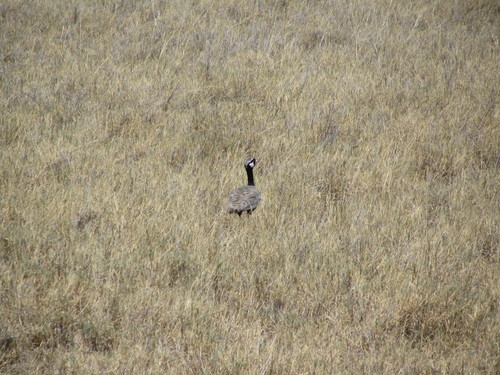 White-quilled Bustard
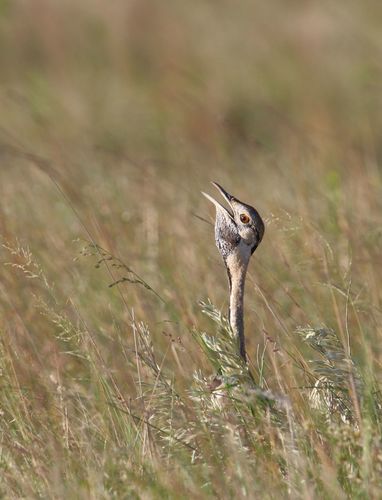 Black-bellied Bustard
In breve
Il segno di campo più affidabile tra questi due bustardi è il colore delle piume primarie in volo: il White-quilled Bustard (Afrotis afraoides) mostra primarie bianche straordinariamente bianche, mentre il Black-bellied Bustard (Lissotis melanogaster) ha le superiori bianche ma con piume da volo con punte nere e un triangolo marrone alla base dell'ala. Entrambe le specie hanno parti inferiori nere nei maschi, ma il colore delle gambe e del becco, così come il motivo della testa e del collo, aiutano a separarli. Le femmine sono più difficili da distinguere, ma il colore delle gambe e il motivo delle ali rimangono utili. Fai attenzione al contesto dell'habitat e al colore delle gambe se il motivo delle ali è oscurato.
Consigli di identificazione
- Colore delle piume primarie in volo (tutte le età): Il White-quilled Bustard mostra principalmente primarie bianche, creando un lampo bianco pulito sull'ala. Il Black-bellied Bustard ha superiori bianche ma con un triangolo marrone alla base e punte nere sulle piume da volo—cerca questi segni più scuri per escludere il White-quilled.
- Colore delle gambe (adulti, posati): Il White-quilled Bustard ha gambe gialle brillanti, mentre le gambe del Black-bellied Bustard sono gialle opache. Questo è spesso visibile quando gli uccelli camminano o stanno in piedi.
- Colore del becco (adulti): Il White-quilled Bustard ha un becco rosso, in contrasto con il becco giallo opaco del Black-bellied Bustard. Il colore del becco può essere sottile a distanza ma è diagnostico a distanza ravvicinata.
- Motivo della testa e del collo nei maschi: I maschi del White-quilled Bustard hanno una testa e un collo neri solidi, mentre i maschi del Black-bellied Bustard hanno un collo marrone chiaro con una sottile linea nera sul davanti, un mento e lore bianchi, e una testa con un motivo audace (nero, bianco, marrone chiaro). Il contrasto è particolarmente chiaro in buona luce.
- Parti superiori femminili: La femmina del White-quilled Bustard è barrata o a scacchi nera e marrone chiaro sulla testa, collo, petto e parti superiori, con un ventre nero. La femmina del Black-bellied Bustard è più semplice, marrone chiaro con macchie marrone scuro e fini vermicolazioni ondulate su collo e petto, priva della forte barratura del White-quilled.
- Segni giovanili: Il giovane Black-bellied Bustard è più opaco e scuro, con una corona grigia scura e macchie marrone chiaro sull'ala. Il giovane White-quilled Bustard non è descritto in dettaglio, ma il pannello primario bianco dovrebbe comunque essere presente in volo.
- Superiore in volo (adulti e immaturi): La superiore del White-quilled Bustard è principalmente bianca, mentre quella del Black-bellied Bustard ha un triangolo marrone alla base e punte nere. Questo è un segno chiave quando gli uccelli si alzano in volo.
- Parti inferiori (maschi): Entrambi hanno parti inferiori nere, ma il nero del White-quilled Bustard si estende alla testa e al collo, mentre il nero del Black-bellied Bustard è limitato al ventre e al petto, con un collo marrone chiaro.
- Motivo della coda: Il Black-bellied Bustard ha una coda marrone e chiara con quattro o cinque bande scure marrone strette, che possono essere visibili quando la coda è aperta. Il motivo della coda del White-quilled Bustard non è descritto come distintivo.
- Struttura e jizz: Il Black-bellied Bustard appare con un collo più lungo e più snello, specialmente quando è all'erta. Il White-quilled Bustard è più compatto e eretto, specialmente quando è in piedi.
- Contesto dell'habitat: Se visto in erba alta o dopo forti piogge, è più probabile che si tratti di un Black-bellied Bustard. In praterie aperte e più secche, il White-quilled Bustard è più probabile.
- Differenze sessuali: Entrambe le specie mostrano dimorfismo sessuale, ma il motivo della testa e del collo nei maschi è un forte separatore. Le femmine sono più difficili, ma la barratura (White-quilled) rispetto alla maculatura/vermicolazioni (Black-bellied) aiuta.
- Quando i segni falliscono: A lunga distanza o in scarsa luce, fai affidamento sul motivo delle ali in volo e sul colore delle gambe quando sono posate. Se entrambi sono oscurati, l'habitat e il jizz possono offrire indizi, ma fai attenzione alla sovrapposizione nell'areale.
- Trappole: Entrambe le specie possono mostrare bianco sull'ala, ma solo il White-quilled Bustard ha primarie bianche pulite senza punte scure o triangoli. Non fare affidamento solo sul colore delle parti inferiori nei maschi, poiché entrambi possono apparire con il ventre nero.
- Non diagnostico: La voce non è descritta come un separatore nelle fonti; non utilizzare vocalizzazioni per la separazione sul campo basata sulle informazioni attuali.
Taglia
Il Black-bellied Bustard è il più grande dei due, misurando 58–65 cm di lunghezza, mentre la dimensione del White-quilled Bustard non è specificata nelle fonti ma è generalmente più piccola e più compatta nel jizz. Entrambi sono bustardi di dimensioni medie, ma il Black-bellied appare con un collo più lungo e più snello, specialmente quando è all'erta. Le proporzioni di becco e gambe sono simili, ma il colore differisce: il White-quilled Bustard ha gambe gialle brillanti e un becco rosso, mentre il Black-bellied Bustard ha gambe e becco gialli opachi.
Piumaggio
- In volo (tutte le età): Il White-quilled Bustard mostra principalmente primarie bianche, dando un forte lampo bianco sull'ala. La superiore del Black-bellied Bustard è anch'essa bianca ma con un triangolo marrone alla base e punte nere sulle piume da volo, quindi il bianco è meno pulito e più patternizzato.
- Maschi adulti: Entrambi hanno parti inferiori nere, ma i maschi del White-quilled Bustard sono neri su testa, collo e parti inferiori, con barrature bianche e nere su schiena e ali. I maschi del Black-bellied Bustard hanno un collo marrone chiaro con una sottile linea nera, una testa con un motivo audace (nero, bianco, marrone chiaro), e un mento e lore bianchi; le loro parti superiori sono marrone chiaro con segni neri e marroni.
- Femmine adulte: Le femmine del White-quilled Bustard sono barrate o a scacchi nere e marrone chiaro su testa, collo, petto e parti superiori, con un ventre nero. Le femmine del Black-bellied Bustard sono più semplici, marrone chiaro con maculature marrone scuro e fini vermicolazioni ondulate su collo e petto; le loro parti inferiori non sono così distintamente nere.
- Giovani: I giovani del Black-bellied Bustard sono più opachi e scuri, con una corona grigia scura e macchie marrone chiaro sull'ala. Il piumaggio giovanile del White-quilled Bustard non è descritto, ma il pannello primario bianco dovrebbe comunque essere visibile in volo.
Comportamento
Entrambe le specie sono terrestri e favoriscono il paese aperto, spesso camminando con un passo deliberato. Il Black-bellied Bustard tende a essere più segreto e viene spesso visto solo dopo forti piogge, a volte in erba alta o in campi coltivati. Il White-quilled Bustard è più probabile da vedere in praterie aperte e cespugli, spesso in piedi più eretto e mostrando il suo brillante colore delle gambe. Entrambi si alzano in volo riluttantemente, ma il White-quilled Bustard può apparire più compatto e meno allungato in volo.
Habitat
Il White-quilled Bustard è diffuso in praterie aperte e cespugli in tutta l'Africa meridionale. Il Black-bellied Bustard preferisce savana, praterie alte e campi coltivati, spesso in aree con piogge più elevate e talvolta presente solo dopo forti piogge. I loro areali si sovrappongono in alcune parti dell'Africa meridionale, Zimbabwe e Botswana, ma il Black-bellied Bustard è più legato a habitat più umidi e può essere assente da praterie più secche dove il White-quilled Bustard è comune.
White-quilled Bustard · Black-bellied Bustard · I miei uccelli difficili