
Arnotmiertapuit vs Aardtapuit
Myrmecocichla arnotti versus Oenanthe pileata
Speel een quiz met Arnotmiertapuit en Aardtapuit
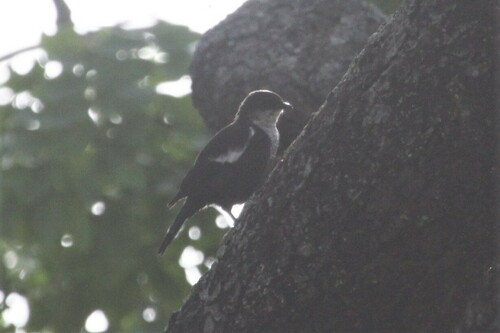 Arnotmiertapuit
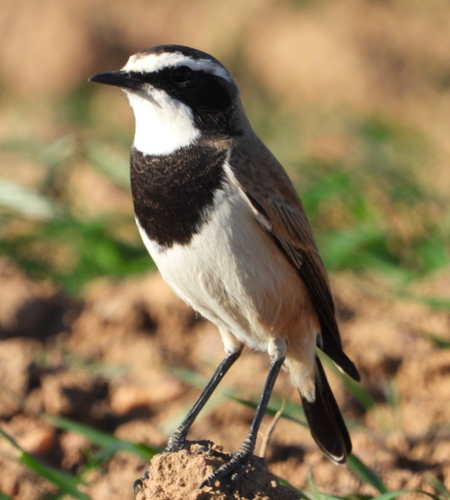 Aardtapuit
Kort gezegd
Het meest betrouwbare veldkenmerk om Arnotmiertapuit van Aardtapuit te scheiden, is de aanwezigheid van een witte kroon bij de volwassen mannelijke Arnotmiertapuit, tegenover de zwarte kap en de gedurfde zwarte borstband van Aardtapuit. Juvenielen van beide soorten kunnen verwarrend zijn, maar juveniele Aardtapuiten tonen een bruine kap en diffuse borstband, terwijl jonge Arnotmiertapuiten witte puntjes op de veren op de kroon of keel hebben. In de vlucht toont Aardtapuit een kenmerkend zwart T-patroon op de witte staart en onderrug, wat Arnotmiertapuit mist. Beide zijn vergelijkbaar in grootte en delen zwarte poten en snavel, maar hun hoofd- en vleugelpatronen zijn de meest praktische veld aanwijzingen.
Herkenningstips
- Witte kroon (volwassen mannelijke Arnotmiertapuit): Zoek naar een pure witte kroon die contrasteert met een zwart lichaam—uniek voor de mannelijke Arnotmiertapuit onder deze twee. Aardtapuit heeft altijd een zwarte kap, niet wit, in alle verenkleed.
- Zwarte kap en borstband (Aardtapuit): Volwassen Aardtapuit toont een zwarte kap, wangen en een gedurfde zwarte borstband, met een witte keel en onderdelen. Arnotmiertapuit heeft nooit een zwarte borstband of witte oogstreep.
- Staartpatroon in vlucht (alle leeftijden): Aardtapuit heeft een kenmerkend zwart T-patroon op een witte onderrug en staart, zichtbaar wanneer de vogel zijn staart opent of vliegt. Arnotmiertapuit mist dit, met een meer uniform donkere staart en onderrug.
- Juveniele hoofdpatroon: Juveniele Aardtapuit heeft een bruine (niet zwarte of witte) kap en wangen, en een zwakke, diffuse borstband. Juveniele Arnotmiertapuit toont witte puntjes op de veren op de kroon of keel, wat vlekkerig kan lijken maar nooit een volledige witte kroon vormt.
- Witte keel (vrouwelijke Arnotmiertapuit): Vrouwelijke Arnotmiertapuit heeft een witte keel en nek, scherp afgebakend van een zwarte kroon en lichaam. Bij Aardtapuit mengt de witte keel zich met de witte onderdelen en is niet zo scherp gedefinieerd.
- Witte vlek op vleugelbedekking (mannelijke Arnotmiertapuit): Mannelijke Arnotmiertapuit toont een witte vlek op de vleugelbedekking, die afwezig is bij Aardtapuit.
- Bruine flanken (Aardtapuit): Volwassen Aardtapuiten hebben een bruine kleur op de flanken en onderbuik, terwijl Arnotmiertapuit onderaan meer uniform donker is (behalve voor de witte keel bij vrouwtjes).
- Snavel en poten: Beide soorten hebben zwarte snavels en poten; dit is geen nuttige scheiding.
- Zittende houding: Beide soorten zitten rechtop, maar Aardtapuit flikkert vaak met zijn staart, wat de aandacht vestigt op het witte onderrug- en staartpatroon.
- Subspecies verwarring: Sommige Arnotmiertapuit subspecies (bijv. harterti) hebben minder wit op het hoofd en de vleugels, waardoor ze er nog donkerder uitzien en gemakkelijker te verwarren zijn met Aardtapuit. In deze gevallen, vertrouw op het staartpatroon en de borstband.
- Habitat overlap: Hoewel habitat een aanwijzing kan geven (Aardtapuit in open grasland, Arnotmiertapuit in bos/savanne), vertrouw hier niet alleen op waar beide voorkomen.
- Seksueel dimorfisme: Alleen Arnotmiertapuit is sterk seksueel dimorf in hoofdpatroon (witte kroon bij mannetjes, zwart bij vrouwtjes); de seksen van Aardtapuit zijn vergelijkbaar.
- Witte oogstreep (Aardtapuit): De witte supercilium (oogstreep) is prominent bij Aardtapuit, afwezig bij Arnotmiertapuit.
- Algemene indruk: Als de vogel voornamelijk zwart lijkt met een witte kroon of keel, denk dan aan Arnotmiertapuit. Als hij een zwarte kap, witte onderdelen en een zwarte borstband toont, denk dan aan Aardtapuit.
- Bij twijfel: Let op het staartpatroon in de vlucht—de zwarte T op wit van Aardtapuit is het meest betrouwbare veldkenmerk in alle leeftijden en seksen.
Grootte
Beide soorten zijn zeer dicht bij elkaar in grootte: Arnotmiertapuit meet 16–18 cm en ongeveer 35 g, terwijl Aardtapuit 17–18 cm en ongeveer 32 g is [wikipedia]. In het veld is grootte alleen geen nuttige scheiding. Beide hebben zwarte poten en een puntige zwarte snavel, dus structurele verschillen zijn subtiel of afwezig.
Verenkleed
-
Juvenielen: Juveniele Aardtapuit heeft een bruine kap en wangen, met een zwakke, diffuse borstband. Juveniele Arnotmiertapuit lijkt op volwassenen maar met witte veertips op de kroon of keel (niet een volledige witte kroon of keel). Het staartpatroon van de juveniele Aardtapuit ontwikkelt al het zwarte T-patroon op de witte onderrug, wat afwezig is bij Arnotmiertapuit van welke leeftijd dan ook.
-
Volwassen mannelijke: Arnotmiertapuit (nominaat) is zwart met een opvallende witte kroon en een witte vlek op de vleugelbedekking. Volwassen Aardtapuit heeft een zwarte kap, wangen en borstband, met een witte oogstreep en keel, en een witte buik met bruine flanken. Het staartpatroon van Aardtapuit is diagnostisch: een zwart T op een witte onderrug en staart, in tegenstelling tot de meer uniform donkere staart van Arnotmiertapuit.
-
Volwassen vrouwelijke: Vrouwelijke Arnotmiertapuit heeft een zwarte kroon en een witte keel en nek (getipt met zwart), terwijl vrouwelijke Aardtapuit vergelijkbaar is met het mannetje maar iets doffer kan zijn. De witte keel van vrouwelijke Arnotmiertapuit is meer geïsoleerd en scherp gedefinieerd in vergelijking met de continue witte onderdelen van Aardtapuit.
-
Subspecies: Sommige Arnotmiertapuit rassen (bijv. harterti) hebben minder wit op de vleugels en een voornamelijk zwart hoofd, wat het contrast met Aardtapuit kan verminderen, maar het staartpatroon blijft een betrouwbare scheiding.
Gedrag
Beide soorten zijn grondbewonende insecteneters en kunnen rechtop zittend op lage struiken of rotsen worden gezien. Aardtapuit flikkert vaak met zijn staart en toont zijn witte onderrug in de vlucht, een gedrag dat de aandacht vestigt op zijn staartpatroon. Arnotmiertapuit is minder geneigd om een witte onderrug te tonen en kan er meer uniform donker uitzien wanneer hij zit of vliegt.
Habitat
Beide worden aangetroffen in Zuid-Afrika en kunnen overlappen in bereik. Arnotmiertapuit wordt over het algemeen geassocieerd met open bos en savanne, terwijl Aardtapuit de voorkeur geeft aan open grasland, korte struiken en kale grond. Echter, habitat alleen is niet diagnostisch waar de gebieden overlappen.