

andorinha-de-bando vs european/african/eastern red-rumped swallow
Hirundo rustica versus Cecropis daurica
Jogue um quiz com andorinha-de-bando e european/african/eastern red-rumped swallow
 andorinha-de-bando
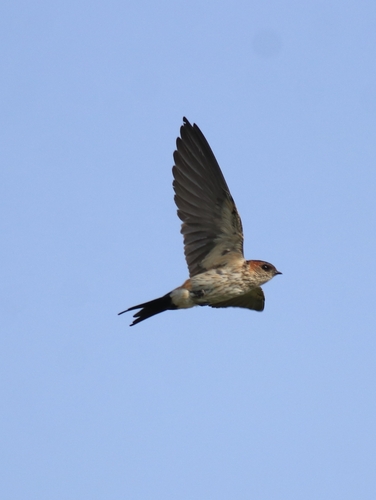 european/african/eastern red-rumped swallow
Em resumo
A marca de campo mais confiável para separar andorinha-de-bando de european/african/eastern european/african/eastern european/african/eastern red-rumped swallow é a combinação do padrão das partes inferiores e da região do rabo: andorinha-de-bando adulta apresenta uma garganta e testa rufas limpas, uma faixa peitoral azul-preta e partes inferiores brancas (não estriadas), enquanto a european/african/eastern european/african/eastern european/african/eastern red-rumped swallow tem partes inferiores brancas fortemente estriadas com linhas escuras e uma distinta mancha de rabo castanho. Em voo, a cauda da andorinha-de-bando é profundamente bifurcada com longas fitas (especialmente nos adultos), enquanto a cauda da european/african/eastern european/african/eastern european/african/eastern red-rumped swallow é menos bifurcada e a região do rabo é mais conspícua. Andorinhas-de-bando juvenis podem ser confundidas com a european/african/eastern european/african/eastern european/african/eastern red-rumped swallow devido às caudas mais curtas, mas ainda carecem da forte estriação nas partes inferiores e têm uma mancha de rabo menos distinta. Preste atenção especial à região do rabo e à estriação das partes inferiores ao observar aves em voo ou empoleiradas.
Dicas de identificação
- Estriação das partes inferiores: A european/african/eastern european/african/eastern european/african/eastern red-rumped swallow sempre apresenta forte estriação escura nas partes inferiores brancas (todas as idades), enquanto as partes inferiores da andorinha-de-bando são limpas e off-white (adultos) ou apenas levemente marcadas (juvenis).
- Cor da região do rabo: A european/african/eastern european/african/eastern european/african/eastern red-rumped swallow tem uma mancha de rabo castanha ou rufa, às vezes estriada ou mais clara em juvenis/subespécies, sempre contrastando com as costas azuis. A região do rabo da andorinha-de-bando é azul, combinando com as partes superiores.
- Garganta e testa: A andorinha-de-bando tem uma testa, queixo e garganta rufos ricos, separados das partes inferiores por uma faixa peitoral azul escura. O rosto da european/african/eastern european/african/eastern european/african/eastern red-rumped swallow é branco ou claro com um colar avermelhado fraco ou ausente, e sem uma faixa peitoral forte.
- Forma e comprimento da cauda: A andorinha-de-bando adulta tem fitas de cauda muito longas e profundamente bifurcadas (especialmente os machos), com uma linha de manchas brancas na cauda externa. A cauda da european/african/eastern european/african/eastern european/african/eastern red-rumped swallow é menos bifurcada, com fitas mais curtas e manchas brancas menos distintas.
- Confusão juvenil: A andorinha-de-bando juvenil carece de longas fitas de cauda e é mais marrom na parte superior, mas ainda carece de forte estriação nas partes inferiores e tem uma região do rabo azul (não rufa). A european/african/eastern european/african/eastern european/african/eastern red-rumped swallow juvenil é mais opaca no geral, mas sempre apresenta alguma mancha de rabo castanha e estriação nas partes inferiores.
- Faixa peitoral: A andorinha-de-bando tem uma ampla faixa peitoral azul escura que separa a garganta rufa do ventre branco. A european/african/eastern european/african/eastern european/african/eastern red-rumped swallow não tem faixa peitoral; a garganta se funde nas partes inferiores estriadas.
- Padrão do rosto: O rosto rufu da andorinha-de-bando é distintivo. A european/african/eastern european/african/eastern european/african/eastern red-rumped swallow tem um rosto claro ou branco com um possível colar avermelhado fraco.
- Postura empoleirada: A andorinha-de-bando frequentemente parece mais alongada e esbelta devido às suas longas fitas de cauda, especialmente quando empoleirada. A european/african/eastern european/african/eastern european/african/eastern red-rumped swallow parece mais compacta com uma cauda mais curta.
- Voo: O voo da andorinha-de-bando é mais acrobático e gracioso, com longas fitas de cauda se arrastando atrás. O voo da european/african/eastern european/african/eastern european/african/eastern red-rumped swallow é ligeiramente mais direto e menos 'parecido com andorinha' devido à cauda mais curta.
- Contexto de habitat: Em áreas urbanas ou agrícolas, a andorinha-de-bando é muito mais provável de ser vista. Em áreas rurais, montanhosas ou levemente arborizadas, especialmente longe de edifícios, verifique a presença da european/african/eastern european/african/eastern european/african/eastern red-rumped swallow.
- Locais de nidificação: A andorinha-de-bando faz ninhos em edifícios, sob beirais ou até mesmo sob ninhos de gaviões. A european/african/eastern european/african/eastern european/african/eastern red-rumped swallow prefere penhascos, pontes ou estruturas rurais.
- Vocalização: A andorinha-de-bando é mais vocal, especialmente perto dos ninhos. A european/african/eastern european/african/eastern european/african/eastern red-rumped swallow é mais silenciosa e menos propensa a chamar de forma conspícua.
- Diferenças sexuais: A fêmea da andorinha-de-bando tem fitas de cauda mais curtas e partes inferiores mais claras do que o macho, mas ainda apresenta o mesmo padrão básico. Os sexos da european/african/eastern european/african/eastern european/african/eastern red-rumped swallow são semelhantes.
- Variação entre subespécies: Algumas subespécies da european/african/eastern european/african/eastern european/african/eastern red-rumped swallow (por exemplo, C. d. erythropygia) têm uma região do rabo castanha uniforme sem estrias e uma bifurcação de cauda rasa; outras têm uma região do rabo mais clara e estriada. Sempre verifique a estriação das partes inferiores e a cor da região do rabo.
- Armadilhas: Em luz fraca ou à distância, a andorinha-de-bando juvenil pode parecer semelhante à european/african/eastern european/african/eastern european/african/eastern red-rumped swallow devido à cauda curta e plumagem mais opaca, mas a falta de estriação nas partes inferiores e uma região do rabo azul são fundamentais. Sempre tente ver claramente a região do rabo e do ventre.
Tamanho
Ambas as espécies são semelhantes em comprimento total (andorinha-de-bando 17–19 cm incluindo fitas de cauda, european/african/eastern european/african/eastern european/african/eastern red-rumped swallow cerca de 19 cm), mas as fitas de cauda da andorinha-de-bando podem fazê-la parecer mais longa e esbelta, especialmente em machos adultos. As envergaduras também são semelhantes (andorinha-de-bando 32–34,5 cm). O peso não é separável de forma confiável em campo. O tamanho sozinho não é um forte separador, mas a andorinha-de-bando frequentemente parece mais esbelta e alongada devido à sua cauda.
Plumagem
- Aves juvenis/imaturas: A andorinha-de-bando juvenil é mais marrom na parte superior, com um rosto rufu mais claro, partes inferiores mais brancas e carece de longas fitas de cauda. A european/african/eastern european/african/eastern european/african/eastern red-rumped swallow juvenil é mais opaca e marrom, com uma região do rabo mais clara e penas de cauda externa mais curtas, mas sempre apresenta forte estriação escura nas partes inferiores e alguma forma de mancha de rabo castanha (às vezes estriada ou mais clara dependendo da subespécie).
- Adultos: A andorinha-de-bando adulta tem partes superiores azul aço, uma testa, queixo e garganta rufos, uma ampla faixa peitoral azul-preta e partes inferiores limpas off-white. A cauda é profundamente bifurcada com longas fitas de cauda externas e uma linha de manchas brancas na cauda externa. A european/african/eastern european/african/eastern european/african/eastern red-rumped swallow adulta tem partes superiores azuis, uma região do rabo rufa ou castanha (às vezes estriada), partes inferiores brancas com forte estriação escura e uma cauda menos bifurcada. O rosto é branco e o colar avermelhado pode ser fraco ou ausente. As manchas brancas na cauda são menos distintas do que na andorinha-de-bando.
- Contraste chave: A estriação das partes inferiores e a cor da região do rabo são as marcas de campo mais consistentes em todas as idades.
Comportamento
Ambas as espécies são insetívoras aéreas e frequentemente forrageiam em áreas abertas. A andorinha-de-bando é mais provável de ser vista em estreita associação com assentamentos humanos, frequentemente nidificando em edifícios ou sob beirais, e frequentemente se empoleirando em fios em grupos. A european/african/eastern european/african/eastern european/african/eastern red-rumped swallow prefere áreas abertas, montanhosas ou levemente arborizadas, frequentemente longe de habitação humana densa, e pode nidificar em penhascos ou sob pontes. Ambas as espécies podem ser vistas voando baixo sobre campos ou água, mas a andorinha-de-bando tende a ser mais confiante e visível em áreas urbanas.
Habitat
A andorinha-de-bando é extremamente ampla e adaptável, comumente encontrada em áreas abertas, terras agrícolas e perto de assentamentos humanos em grande parte do mundo. A european/african/eastern european/african/eastern european/african/eastern red-rumped swallow prefere áreas abertas, frequentemente montanhosas ou levemente arborizadas, às vezes com cultivo, e está menos ligada a edifícios ou proximidade humana. Na Ásia, a european/african/eastern european/african/eastern european/african/eastern red-rumped swallow é mais provável de ser encontrada em paisagens montanhosas ou rurais, enquanto a andorinha-de-bando é ubíqua em vilarejos, cidades e fazendas.
Voz
A andorinha-de-bando tem uma variedade de chamadas, incluindo um suave 'witt' ou 'witt-witt', um alto 'splee-plink' quando excitada, e chamadas de alarme agudas. A voz da european/african/eastern european/african/eastern european/african/eastern red-rumped swallow não é descrita em detalhes nas notas, mas é geralmente mais silenciosa e menos vocal do que a andorinha-de-bando. As vocalizações não são a marca de campo mais confiável para separação, mas a andorinha-de-bando é mais provável de ser ouvida chamando, especialmente perto dos ninhos.
andorinha-de-bando · european/african/eastern red-rumped swallow · Minhas aves difíceis