

inhambu-anhangaí vs taczanowski's tinamou
Crypturellus bartletti versus Nothoprocta taczanowskii
Jogue um quiz com inhambu-anhangaí e taczanowski's tinamou
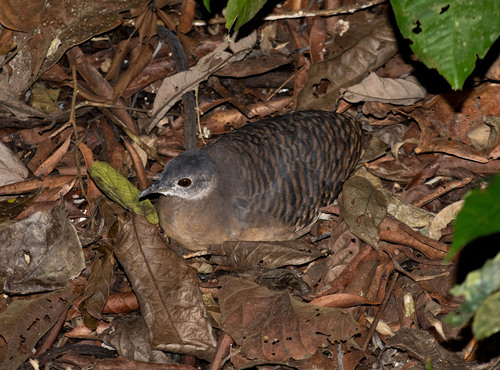 inhambu-anhangaí
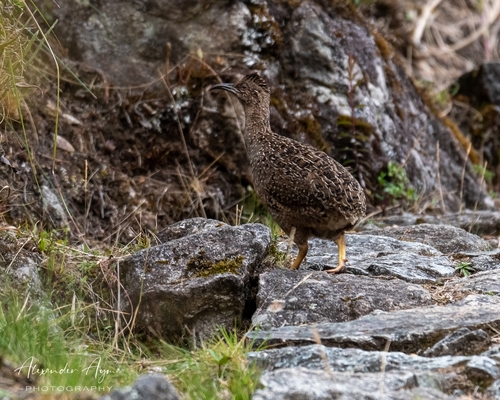 taczanowski's tinamou
Em resumo
A separação de campo mais confiável entre o inhambu-anhangaí e o taczanowski's tinamou é o padrão geral da plumagem e o contexto do habitat. O taczanowski's é um tinamou maior, escuro e finamente marcado, com marcas faciais distintas em cinza e preto, partes inferiores em cor de palha e listradas, e um bico longo, curvado e escuro—características não vistas no inhambu-anhangaí. O inhambu-anhangaí é menor, mais simples e encontrado em florestas de planície, enquanto o taczanowski's é restrito aos Andes altos. Os taczanowski's imaturos são de um marrom mais rico, mas ainda mostram o padrão característico. Se você ver um tinamou em uma densa floresta de planície, é quase certamente o inhambu-anhangaí; em gramados ou arbustos altos dos Andes, é o taczanowski's.
Dicas de identificação
- O habitat é frequentemente decisivo: O inhambu-anhangaí é um especialista em florestas de planície, enquanto o taczanowski's é encontrado apenas em gramados e encostas altas dos Andes. Sempre verifique sua elevação e habitat primeiro.
- Tamanho e estrutura: O taczanowski's é muito maior e mais robusto que o inhambu-anhangaí, com um bico escuro, mais longo e mais curvado. O inhambu-anhangaí é menor e mais compacto.
- Padrão facial: O taczanowski's tem uma cabeça e pescoço cinzas marcantes, com coroa e marcas faciais escuras e uma garganta pálida em cinza-claro. O inhambu-anhangaí não possui esses fortes contrastes faciais e é, no geral, mais simples.
- Partes superiores e coberturas das asas: O taczanowski's apresenta partes superiores escuras com finas listras em cor de palha, listras marrons e manchas em preto e palha nas coberturas das asas. O inhambu-anhangaí é muito menos padronizado acima.
- Penas de voo: O taczanowski's tem penas de voo em cor de palha listradas em preto, visíveis em voo ou quando a asa está aberta. O inhambu-anhangaí não possui listras tão fortes.
- Partes inferiores: O peito do taczanowski's é cinza com manchas em cor de palha contornadas em preto, e o restante das partes inferiores é em cor de palha, listrado em escuro. As partes inferiores do inhambu-anhangaí não são descritas como listradas ou manchadas.
- Pássaros juvenis/imaturos: Os jovens taczanowski's são de um marrom mais rico, mas ainda mostram o fino padrão de listras e manchas da espécie, especialmente nas coberturas das asas. Os jovens do inhambu-anhangaí não são descritos como distintos, então espere que sejam simples.
- Formato do bico: O taczanowski's tem um bico longo, curvado e escuro, que é uma forte pista estrutural. O inhambu-anhangaí tem um bico mais curto e menos curvado.
- Cauda: Ambos os gêneros são nomeados por sua 'cauda oculta'—não confie no comprimento ou formato da cauda para separação.
- Comportamento em contexto: O taczanowski's pode ser visto em áreas abertas, caminhando ereto em gramados ou em encostas andinas. O inhambu-anhangaí é mais propenso a ser visto se escondendo em densa cobertura florestal.
- Sem forte dimorfismo sazonal ou sexual: Nenhuma diferença de plumagem sazonal ou baseada em sexo é notada para qualquer uma das espécies, então essas marcas são confiáveis durante todo o ano.
- Sem diferenças vocais conhecidas: Nenhuma vocalização é descrita nas fontes, então não confie na voz para separação.
- Sobreposição de distribuição é mínima: Essas espécies não são propensas a serem confundidas, exceto em cativeiro ou em um quiz, pois suas distribuições e habitats não se sobrepõem na natureza.
- Quando em dúvida, confie no padrão: O taczanowski's é sempre mais listrado, manchado e marcado do que o inhambu-anhangaí, que é simples e uniforme.
Tamanho
O inhambu-anhangaí é significativamente menor, com uma massa corporal em torno de 241 g [wikidata], comparado ao taczanowski's tinamou, que tem uma média de cerca de 36 cm de comprimento e é visivelmente mais robusto em campo [wikipedia]. O taczanowski's também tem um bico visivelmente mais longo e mais curvado. Se você tiver uma comparação direta ou estiver familiarizado com os tamanhos dos tinamou, o taczanowski's parecerá muito maior e mais pesado.
Plumagem
- Juvenil/Imaturo: Os jovens taczanowski's tinamou são geralmente de um marrom mais rico no geral, mas ainda mostram o fino padrão característico da espécie, especialmente nas coberturas das asas. O inhambu-anhangaí não menciona qualquer padrão juvenil distinto e é, no geral, muito mais simples em todas as idades.
- Adulto: O taczanowski's tinamou é escuro e finamente marcado: a cabeça e o pescoço são cinzas com marcas escuras na coroa e no rosto, uma garganta pálida em cinza-claro, e as partes superiores são escuras com finas listras em cor de palha e listras marrons pouco visíveis. As coberturas das asas são manchadas em preto e palha, e as penas de voo são em cor de palha listradas em preto. O peito é cinza com manchas em cor de palha contornadas em preto, e o restante das partes inferiores é em cor de palha, listrado em escuro. O inhambu-anhangaí, em contraste, é muito mais simples e não possui as fortes listras, manchas e padrão facial do taczanowski's. Nenhum padrão distinto de asa ou de voo é notado para o inhambu-anhangaí.
Comportamento
Ambas as espécies são tinamús que habitam o solo, mas seu comportamento é moldado pelo habitat: o inhambu-anhangaí é um pássaro de floresta de planície, provavelmente visto caminhando silenciosamente em densa vegetação, enquanto o taczanowski's é adaptado a encostas e gramados abertos dos Andes, frequentemente visto em terrenos mais abertos. O taczanowski's pode parecer mais ereto e alerta em áreas abertas, enquanto o inhambu-anhangaí é mais secreto e escondido.
Habitat
O habitat é um forte separador: o inhambu-anhangaí é encontrado em florestas de planície da América do Sul, preferindo ambientes densos e úmidos. O taczanowski's tinamou é restrito aos Andes orientais do Peru (Junín, Cuzco, Apurímac, Ayacucho, Puno) e à Bolívia adjacente, em gramados de alta elevação, arbustos e encostas. Se você estiver em uma floresta de planície, você está quase certamente vendo o inhambu-anhangaí; em terreno alto andino, é o taczanowski's.
inhambu-anhangaí · taczanowski's tinamou · Minhas aves difíceis