

abetarda-real vs viúva-verde
Neotis denhami versus Terpsiphone viridis
Jogue um quiz com abetarda-real e viúva-verde
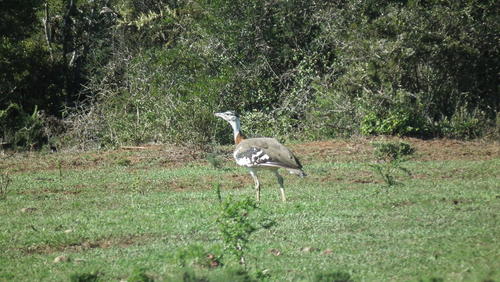 abetarda-real
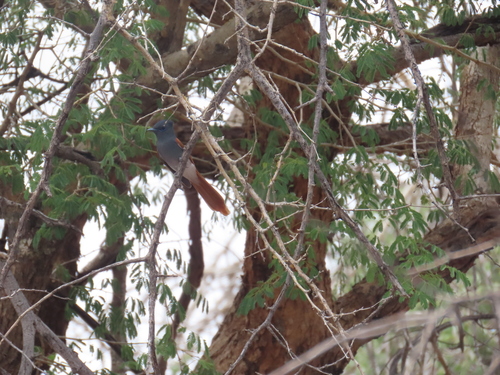 viúva-verde
Em resumo
A abetarda-real e a viúva-verde são dramaticamente diferentes em tamanho, estrutura e estilo de voo, mas a confusão pode surgir com vistas distantes ou breves, especialmente de fêmeas ou imaturos. A marca de campo mais confiável é o tamanho e a forma geral: a abetarda-real é uma ave terrestre maciça, de pernas longas e corpo robusto, enquanto a viúva-verde é um pequeno pássaro cantor esbelto, frequentemente com longas penas na cauda nos machos. Em voo, a abetarda-real exibe padrões de asas brancos, marrons e pretos (especialmente em machos adultos), enquanto a viúva tem asas castanhas com uma faixa branca (em machos adultos) e um voo muito mais delicado e leve. A sobreposição de habitat é possível em áreas abertas, mas seu comportamento e aparência são distintos. As vocalizações também são um forte separador: a viúva é barulhenta e repreensiva, enquanto a abetarda é geralmente silenciosa.
Dicas de identificação
- Tamanho e forma: A abetarda-real é maciça, com longas pernas e uma postura pesada e ereta; a viúva-verde é pequena, esbelta e se empoleira ereta com uma construção delicada. O tamanho sozinho é diagnóstico, exceto a grandes distâncias.
- Estilo de voo: A abetarda voa com batidas lentas e profundas das asas e asas largas, frequentemente baixo sobre o solo; a viúva tem um voo leve, ágil e mais delicado, frequentemente saindo de poleiros.
- Cauda: O macho da viúva tem penas na cauda extremamente longas e estreitas (mais do que o dobro do comprimento do corpo); a abetarda tem uma cauda larga e curta em relação ao tamanho do corpo. A fêmea da viúva tem uma cauda de comprimento médio, ainda muito mais curta do que a bulk da abetarda.
- Padrão de asas em voo: O macho adulto da abetarda-real exibe branco, marrom e preto nas asas, com extensos painéis brancos; fêmeas e juvenis têm menos branco. O macho da viúva tem uma pequena faixa branca nas asas castanhas; a fêmea não tem faixa.
- Plumagem (empoleirada): A abetarda tem um pescoço cinza pálido com nuca laranja, costas marrons, partes inferiores brancas e um padrão facial preto e branco. O macho da viúva é castanho por cima, com cabeça e partes inferiores pretas brilhantes, faixa branca; a fêmea é mais marron, mais pálida embaixo, e não tem faixa.
- Cor das pernas: A abetarda tem pernas longas e amarelas pálidas; a viúva tem pernas curtas e escuras (frequentemente não visíveis em campo).
- Bico: A abetarda tem um bico grosso e de cor chifre pálido; a viúva tem um bico pequeno, fino e escuro, adequado para capturar insetos.
- Comportamento: A abetarda anda no chão, raramente se empoleira; a viúva está quase sempre empoleirada ou voando entre árvores e arbustos.
- Voz: A viúva é barulhenta, com chamados ásperos e repreensivos; a abetarda é quase sempre silenciosa.
- Contexto de habitat: A abetarda em campos abertos ou agrícolas, sempre no chão; a viúva em florestas, bordas de florestas ou savanas, geralmente acima do solo.
- Armadilhas de sexo/idade: Fêmeas e juvenis de viúva não têm penas longas e são mais apagadas, mas ainda são muito menores e mais arbóreas do que qualquer abetarda. Fêmeas e jovens de abetarda são mais marrons e menos marcadas do que os machos, mas ainda são enormes e habitam o solo.
- Exibição de cortejo: Apenas a abetarda infla a garganta e se exibe com um balão branco de penas; a viúva se exibe abrindo a cauda e batendo as asas, mas nunca com a inflação da garganta.
- Comportamento alimentar: A abetarda forrageia no chão por insetos, pequenos vertebrados e plantas; a viúva captura insetos em voo ou coleta de folhagens.
- Bandos mistos: A viúva pode se juntar a bandos de espécies mistas em florestas; a abetarda é solitária ou em pequenos grupos, nunca em bandos mistos.
- Risco de confusão: Apenas provável com aves distantes e mal vistas, ou com fêmeas/imaturos de viúva sem penas longas. Sempre verifique primeiro o tamanho, habitat e comportamento.
Tamanho
A abetarda-real está entre as maiores aves terrestres africanas, com machos atingindo 100–116 cm (39–46 in) de comprimento e pesando 9–10 kg (20–22 lb), e fêmeas ainda grandes com 80–87 cm (31–34 in) e 3–4 kg (6.6–8.8 lb) [wikipedia, avonet]. Em contraste, a viúva-verde é um pequeno passeriforme: os machos têm cerca de 17 cm (6.7 in) de comprimento corporal, mas com penas na cauda podem parecer até 34 cm (13 in); as fêmeas são semelhantes em tamanho corporal, mas não têm penas longas. A abetarda é mais robusta do que qualquer rapina ou cegonha, enquanto a viúva é menor do que um tordo e muito mais leve em construção.
Plumagem
Os juvenis e fêmeas de abetarda-real são mais simples, marrons por cima e brancos por baixo, com menos branco nas asas do que os machos adultos. Em voo, o macho adulto da abetarda-real exibe um padrão impressionante de marrom, branco e preto nas asas, com o branco mais proeminente nos machos; fêmeas e aves jovens têm menos branco e um padrão mais apagado. O macho adulto da viúva-verde é castanho por cima, com cabeça e partes inferiores pretas brilhantes, uma faixa branca e longas penas na cauda; as fêmeas são mais marrons, não têm a faixa e as penas longas, e são mais apagadas no geral. Os juvenis de viúva se assemelham às fêmeas, mas são ainda menos vibrantes. O pescoço cinza pálido da abetarda com nuca laranja e padrão facial preto e branco é único, enquanto a cabeça preta brilhante da viúva (macho) ou a cabeça marrom mais pálida (fêmea) e partes inferiores azul-cinzentas são distintas à queima-roupa. Não há sobreposição no padrão das asas: as abetardas têm marcas de asas ousadas e blocadas, enquanto as viúvas têm uma pequena e organizada faixa branca (apenas machos).
Comportamento
A abetarda-real é geralmente solitária ou em pequenos grupos, andando lentamente no chão em campos abertos ou agrícolas, e raramente se empoleira. Seu voo é pesado e direto, com asas largas e batidas lentas. Durante o cortejo, o macho infla a garganta e se exibe com um balão branco de penas. A viúva-verde é ativa, inquieta e frequentemente vista saindo para pegar insetos de poleiros, com um voo leve e ágil. Ela se empoleira ereta, frequentemente em galhos de nível médio, e é muito mais arbórea. A viúva é barulhenta e conspícua, enquanto a abetarda é geralmente silenciosa e cautelosa.
Habitat
Ambas as espécies podem ocorrer em habitats abertos, mas a abetarda-real prefere campos abertos, planícies alagadas e, às vezes, terras agrícolas, raramente se aventurando em florestas densas. Pode ser encontrada em altitudes de até 3.000 m. A viúva-verde prefere florestas abertas, bordas de florestas e savanas, e é mais provável de ser encontrada em árvores ou arbustos. Embora ambas possam estar presentes em mosaicos de savana, a abetarda está sempre no chão, enquanto a viúva está quase sempre em árvores ou arbustos.
Voz
A abetarda-real é geralmente silenciosa, mesmo durante a exibição, embora os machos possam chamar suavemente ao se exibir. A viúva-verde é barulhenta, com um chamado áspero e repreensivo que é frequentemente ouvido antes que o pássaro seja visto. Se você ouvir um escândalo ou tagarelice alto e repetido, é quase certamente a viúva.