

African Yellow-Warbler vs Mountain Yellow-Warbler
Iduna natalensis versus Iduna similis
Play a quiz with African Yellow-Warbler and Mountain Yellow-Warbler
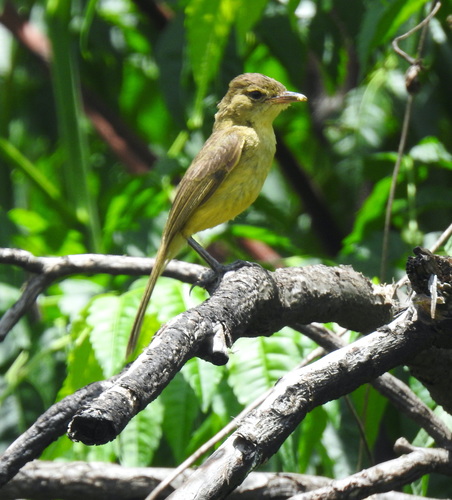 African Yellow-Warbler
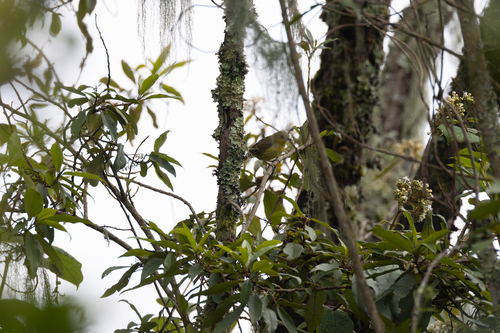 Mountain Yellow-Warbler
In short
The most reliable field mark between African Yellow-Warbler and Mountain Yellow-Warbler is the tone and distribution of olive versus yellow on the upperparts: African Yellow-Warbler shows yellowish-brown upperparts with a yellower rump and brownish crown, while Mountain Yellow-Warbler has a more uniform olive-green head and back. Both species have bright yellow underparts, but African Yellow-Warbler often shows an olive wash on the flanks and lower belly, whereas Mountain Yellow-Warbler’s yellow is more vibrant and less washed. Bill color and structure also help: African Yellow-Warbler has a pale upper mandible and blackish lower, while Mountain Yellow-Warbler’s bill is short and uniformly dark brown. Juveniles of both are duller, but Mountain Yellow-Warbler immatures are notably browner and paler below. In the field, focus on the overall olive versus yellow impression on the upperparts and bill color for the most consistent separation.
Identification tips
- Upperparts color (all ages): African Yellow-Warbler has yellowish-brown upperparts with a yellower rump and a slightly browner crown, while Mountain Yellow-Warbler’s head and back are a more uniform olive-green. This is the most consistent field mark in perched birds.
- Underparts color: Both species have bright yellow underparts, but African Yellow-Warbler often shows an olive wash on the sides of the breast, flanks, and lower belly, making the yellow less pure. Mountain Yellow-Warbler’s yellow is more vibrant and unwashed.
- Bill color and structure: African Yellow-Warbler’s bill is pale above and blackish below, while Mountain Yellow-Warbler’s bill is very short and uniformly dark brown. Bill color can be hard to see at a distance, but is diagnostic at close range.
- Juvenile plumage: Juvenile Mountain Yellow-Warblers are browner above and paler yellow below than adults, while juvenile African Yellow-Warblers are buffier but still show the yellowish-brown/yellow contrast. If the bird looks especially brown and pale, Mountain is more likely.
- Sex differences: Female African Yellow-Warblers are duller below, but this is subtle. Mountain Yellow-Warbler shows little sexual dimorphism; both sexes look alike.
- Leg color: African Yellow-Warbler has blackish legs, while Mountain Yellow-Warbler’s leg color is not specified, but is unlikely to be as dark as African Yellow-Warbler’s.
- Flight views: No distinctive wing or tail pattern is described for either species, so do not rely on flight marks.
- Habitat context: If you are in strictly montane (highland) areas, Mountain Yellow-Warbler is more likely. In lowland or mixed habitats, check plumage carefully.
- Behavior: Mountain Yellow-Warbler is described as very territorial, but this is not a reliable field mark unless observed over time.
- Bill length: Mountain Yellow-Warbler’s bill is notably short for a warbler, which can help if you have prolonged views.
- Crown color: African Yellow-Warbler’s crown is slightly browner than the rest of the upperparts, while Mountain Yellow-Warbler’s crown blends with the olive-green back.
- Rump color: African Yellow-Warbler has a yellower rump contrasting with the rest of the upperparts; Mountain Yellow-Warbler’s back and rump are more uniform.
- Edge of wing feathers: African Yellow-Warbler’s brown wing feathers are edged with yellow, but this is subtle and may not be visible in the field.
- Voice: No vocal differences are described in the sources; do not rely on song or call for separation.
- Overall impression: If the bird looks more olive-green above and pure yellow below, favor Mountain Yellow-Warbler. If it looks yellowish-brown above with a yellower rump and some olive wash on the flanks, favor African Yellow-Warbler.
Size
Both species are medium-sized warblers, and there is no meaningful size difference in the field. African Yellow-Warbler measures about 13 cm in length and weighs 10–15 g [wikipedia], but no distinct size advantage is noted for Mountain Yellow-Warbler. Structure is similar, so size should not be relied upon for separation.
Plumage
-
Juvenile/Immature: Both species have duller, browner, and paler plumage as juveniles. Mountain Yellow-Warbler juveniles are especially browner above and paler yellow below, while African Yellow-Warbler juveniles are buffier versions of the adult but still show yellowish-brown upperparts and yellow underparts. No distinctive upperwing pattern is described for either species at any age, so focus on overall color impression.
-
Adult (all seasons): African Yellow-Warbler: yellowish-brown upperparts, slightly browner crown, yellower rump, brown wings edged with yellow, bright yellow underparts with olive wash on flanks and lower belly. Mountain Yellow-Warbler: olive-green head and back, vibrant yellow underparts, bill very short and dark brown. Both sexes are similar in Mountain Yellow-Warbler; female African Yellow-Warblers are duller below.
-
Bill and legs: African Yellow-Warbler has a pale upper mandible and blackish lower mandible, with blackish legs. Mountain Yellow-Warbler’s bill is very short and uniformly dark brown.
Behaviour
Mountain Yellow-Warbler is noted for being very territorial. Both species are active insectivores, but there are no strong behavioral differences described that would help with field identification. Feeding behavior (flycatching, gleaning) and general warbler activity are similar.
Habitat
African Yellow-Warbler is not described in detail here, but Mountain Yellow-Warbler is specifically noted as native to the eastern Afromontane regions. Both can occur in similar habitats, but if you are in montane or highland areas, Mountain Yellow-Warbler is more likely. Habitat is only weakly diagnostic unless you are in a strictly montane context.
African Yellow-Warbler · Mountain Yellow-Warbler · My Tricky Birds