

Chinese Sparrowhawk vs Japanese Sparrowhawk
Tachyspiza soloensis versus Tachyspiza gularis
Play a quiz with Chinese Sparrowhawk and Japanese Sparrowhawk
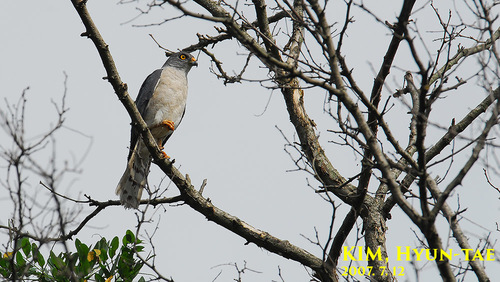 Chinese Sparrowhawk
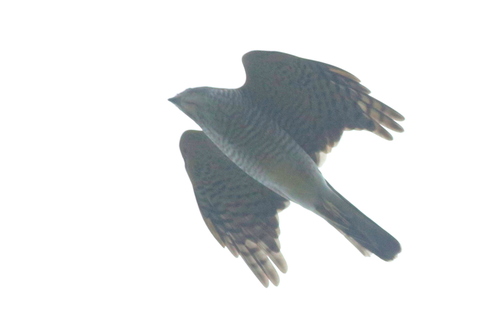 Japanese Sparrowhawk
In short
The most reliable field mark between Chinese Sparrowhawk and Japanese Sparrowhawk is the pattern and color of the underwing and breast, especially in juveniles and females. Juvenile Chinese Sparrowhawks show streaked underparts and less prominent black wingtips, while juvenile Japanese Sparrowhawks have cream underparts with red-brown streaking and a clear throat stripe. Adult males differ in underpart color: Chinese Sparrowhawk males are white below with no barring, while Japanese Sparrowhawk males have grey-brown and red-brown barring. Eye color is also helpful: adult male Chinese Sparrowhawks have red eyes, females and juveniles have yellow, while Japanese Sparrowhawks have red-orange (male) or yellow (female) eyes, and juveniles have brown. In flight, note the Chinese Sparrowhawk’s prominent black wingtips (adults) versus the Japanese Sparrowhawk’s thinly barred flight feathers and throat stripe.
Identification tips
- Juvenile underpart pattern: Juvenile Chinese Sparrowhawks have streaked upper underparts and barred thighs, while juvenile Japanese Sparrowhawks show cream underparts with red-brown streaking on the breast, spots on the abdomen, and a clear throat stripe. Use this for immatures in autumn or winter.
- Adult underwing pattern: Adult Chinese Sparrowhawks have prominent black wingtips, especially visible in flight; Japanese Sparrowhawks lack this, instead showing thinly barred flight feathers and brown-grey bars on wing-linings and flanks.
- Throat stripe: Japanese Sparrowhawks (all ages) have a distinct throat stripe, most obvious in females and juveniles. Chinese Sparrowhawks lack a strong throat stripe.
- Adult male underparts: Chinese Sparrowhawk males are white below with no barring; Japanese Sparrowhawk males have grey-brown and red-brown barring on the underparts and a faint red-brown wash on the chest.
- Adult female underparts: Chinese Sparrowhawk females have rufous on breast and underwing coverts; Japanese Sparrowhawk females have brown-grey barring but no rufous or red-brown on underparts or sides.
- Eye color: Adult male Chinese Sparrowhawks have red eyes; females and juveniles have yellow. Japanese Sparrowhawk males have red-orange eyes, females yellow, and juveniles brown. This can help at close range.
- Tail pattern (juveniles): Japanese Sparrowhawk juveniles have thinly barred tails; Chinese Sparrowhawk juveniles have less distinctive tail barring.
- Upperparts (adults): Chinese Sparrowhawk males are grey above, while Japanese Sparrowhawk males are black-slate with a white nape. Females: Chinese are plainer, Japanese are brown.
- Size: Chinese Sparrowhawk is larger overall, but beware overlap with large female Japanese Sparrowhawks and small male Chinese Sparrowhawks.
- Feet color (juveniles): Japanese Sparrowhawk juveniles have yellow-green feet; Chinese Sparrowhawk juveniles have yellow feet.
- Cheek patches: Japanese Sparrowhawk males have brown-grey cheek patches, which are absent in Chinese Sparrowhawk.
- Flight shape: Japanese Sparrowhawk has broader, rounder wings and a shorter tail, giving a more compact look in flight compared to the slightly longer, more pointed wings of Chinese Sparrowhawk.
- Habitat: Not reliably diagnostic, but Japanese Sparrowhawk is more likely in northern East Asia during breeding season, while Chinese Sparrowhawk is more southerly.
- Vocalizations: Japanese Sparrowhawk may give a chattering "kiki-kik-kik..." or "kwu" during display, but voice is rarely diagnostic in the field.
- Context: If seen during migration, both species are possible in East Asia; use plumage and structure for separation, not location alone.
Size
Chinese Sparrowhawk is generally larger, measuring 30–36 cm in length, while Japanese Sparrowhawk is smaller at 23–30 cm. Both species show sexual size dimorphism, with females larger than males. Japanese Sparrowhawk males have a wingspan of 46–58 cm and weigh 92–142 g, while females are heavier (111–193 g). Chinese Sparrowhawk’s mass and wingspan are not specified, but the length difference is reliable in the field when seen side-by-side. However, size overlap can occur, especially with female Japanese Sparrowhawks and small male Chinese Sparrowhawks, so size alone is not diagnostic.
Plumage
- Juveniles:
- Chinese Sparrowhawk juveniles have a grey face, brown upperparts, yellow eyes, streaked upper underparts, barred thighs, and streaked underwings (except coverts). Black wingtips are less prominent than in adults.
- Japanese Sparrowhawk juveniles are dark brown above with buff or red-brown sides, cream underparts with red-brown streaking on the breast, spots on the abdomen, barring on the sides, a white supercilium and nape, thin bars on the tail, a throat stripe, brown eyes, and yellow-green feet.
- Adult males:
- Chinese Sparrowhawk: grey above, white below, prominent black wingtips, red eyes.
- Japanese Sparrowhawk: black-slate upperparts, white nape, whitish underparts with grey-brown and red-brown barring, red-orange eyes, brown-grey cheek patches, thinly barred flight feathers, faint red-brown wash on chest, throat stripe.
- Adult females:
- Chinese Sparrowhawk: rufous on breast and underwing coverts, yellow eyes.
- Japanese Sparrowhawk: brown upperparts, white body and wing-linings with brown-grey barring, yellow eyes, prominent throat stripe, no red-brown barring on underparts or sides.
- In flight:
- Chinese Sparrowhawk adults show prominent black wingtips; juveniles less so, with streaked underwings.
- Japanese Sparrowhawk adults have thinly barred flight feathers, brown-grey bars on wing-linings and flanks, and a throat stripe visible from below.
Behaviour
Both species are agile woodland raptors, often seen perched or making quick dashes through trees. Japanese Sparrowhawk is described as having broader and rounder wings and a shorter tail compared to other sparrowhawks, which might make its flight appear more compact and less elongated than Chinese Sparrowhawk. Both perform aerial displays during breeding season, but these are not typically diagnostic in the field.
Habitat
Both species occur in East Asia and can overlap in range, especially during migration. Japanese Sparrowhawk breeds in Russia, Korea, Japan, and China, and is protected in China. Both are woodland birds, but habitat is not reliably diagnostic between these two in most field situations.
Voice
Japanese Sparrowhawk occasionally gives a chattering "kiki-kik-kik..." and a "kwu" sound during displays. No distinctive vocalization is described for Chinese Sparrowhawk in the provided notes, so voice is not a reliable separator.
Chinese Sparrowhawk · Japanese Sparrowhawk · My Tricky Birds