

Common Ground Dove vs Zenaida Dove
Columbina passerina versus Zenaida aurita
Play a quiz with Common Ground Dove and Zenaida Dove
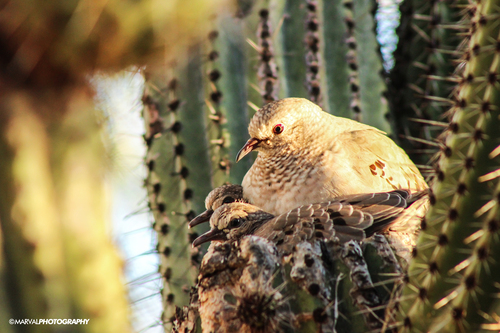 Common Ground Dove
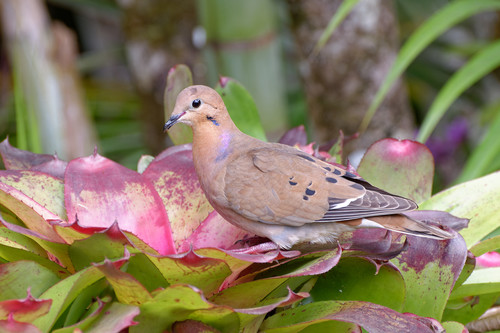 Zenaida Dove
In short
The most reliable way to separate Common Ground Dove from Zenaida Dove is by size and structure: Common Ground Dove is exceptionally tiny, barely half the length and a fraction of the mass of Zenaida Dove. In flight, Common Ground Dove flashes chestnut wing panels and borders, while Zenaida Dove shows a white trailing edge to the wing—these marks are visible in adults and immatures. Perched, Common Ground Dove is compact with a short tail and scaly head/breast, while Zenaida Dove is much bulkier, longer-tailed, and lacks the scaly pattern. Voice, habitat, and behavior also differ, but size and flight marks are usually decisive.
Identification tips
- Size is the single most decisive mark: Common Ground Dove is tiny—less than half the length and a quarter the mass of Zenaida Dove. If the bird looks sparrow-sized, it's a Common Ground Dove; if pigeon-sized, it's Zenaida Dove. This works for all ages and sexes.
- Flight marks: Watch for chestnut primaries and wing borders in Common Ground Dove when flushed; Zenaida Dove never shows chestnut but instead flashes a white trailing edge to the wing. These marks are visible in both adults and immatures and are best seen in strong light or when birds are startled.
- Tail shape and length: Common Ground Dove has a very short tail, barely projecting beyond the wings when perched. Zenaida Dove's tail is much longer and more rounded, often obvious in flight and when perched.
- Head and breast pattern: Only Common Ground Dove has a scaly appearance on the head and upper breast, from pale feather edges. Zenaida Dove's head and breast are smooth and uniform.
- Bill color: Common Ground Dove has a yellow bill with a black tip (most subspecies), while Zenaida Dove's bill is dark with no yellow.
- Overall color: Zenaida Dove is generally darker and more uniformly brownish, while Common Ground Dove is paler, especially in males. Subspecies variation can affect this, but the difference is usually clear.
- Sexual dimorphism: Male Common Ground Doves have a slate-gray crown and pinkish underparts; females are grayer. Zenaida Dove shows little sexual difference in the field.
- Jizz and posture: Common Ground Dove is compact, short-necked, and often crouched low to the ground. Zenaida Dove stands taller, is bulkier, and appears more upright.
- Behavior: Common Ground Dove is almost always on the ground, moving with a quick, shuffling walk. Zenaida Dove forages on the ground but perches in trees and shrubs more often and is more likely to flush to a high perch.
- Habitat context: If you are in a dry, open, or weedy area in the southern US or Caribbean, Common Ground Dove is likely. In wetter, more vegetated, or urban areas, especially near water, Zenaida Dove is more likely.
- Vocalizations: Listen for the Common Ground Dove's soft, rising 'whoop' notes versus Zenaida Dove's faster, mournful cooing. If you hear a dove call that is higher-pitched and repetitive, suspect Common Ground Dove.
- Flock size: Common Ground Dove is usually alone or in pairs; Zenaida Dove can be in larger flocks, especially near water or food sources.
- Confusion with Mourning Dove: If you suspect Mourning Dove, remember Zenaida Dove is smaller and darker, but still much larger than Common Ground Dove.
- Subspecies variation: Be aware that some Common Ground Dove subspecies can be darker or have more white on the belly, but the structural and flight marks remain reliable.
- When marks fail: In poor light or at great distance, rely on size and jizz first, then habitat and behavior. If the bird is flushed, prioritize the wing and tail pattern.
Size
Common Ground Dove is one of the smallest doves in the world, measuring just 15–18 cm in length and weighing 26–40 g [wikipedia]. In contrast, Zenaida Dove is much larger—almost twice as long at 28–30 cm, and with a body mass of 159 g [wikidata]. In the field, this size gap is striking: Zenaida Dove is pigeon-sized, while Common Ground Dove is sparrow-sized. Even at a distance or in mixed flocks, the Common Ground Dove appears tiny and compact, while Zenaida Dove is robust and long-bodied.
Plumage
-
In flight (all ages): Common Ground Dove shows chestnut primaries and wing borders, not visible when perched but obvious when the bird takes off. Zenaida Dove lacks chestnut in the wing but instead shows a distinctive white trailing edge to the wing, a key mark in flight for both adults and immatures.
-
Perched: Common Ground Dove has a scaly pattern on the head and upper breast (from feather edges), a yellow bill with a black tip, and a very short tail matching the back color. Zenaida Dove lacks the scaly pattern, has a longer, more rounded tail, and is generally darker overall, with no yellow on the bill.
-
Sex/age differences: Male Common Ground Doves have a slate-gray crown and pink-gray belly, while females are grayer and more evenly colored. Zenaida Dove shows less sexual dimorphism in the field. Subspecies variation in both can affect darkness and bill color, but the core field marks above remain reliable.
Behaviour
Common Ground Dove spends most of its time walking on the ground, often in open, weedy areas or bare patches, and is typically seen singly or in pairs. Its flight is low and direct, with rapid wingbeats and a quick drop back to cover. Zenaida Dove also forages on the ground but is more likely to be seen in flocks, especially near water or in open scrub, and takes longer, stronger flights with a more pigeon-like, powerful jizz. Zenaida Dove is less strictly terrestrial and will perch in trees and shrubs more readily.
Habitat
Common Ground Dove favors open, dry, or weedy habitats—fields, roadsides, scrub, and disturbed ground—especially in the southern US, Caribbean, and northern South America. It avoids dense forest and is rarely found far from open ground. Zenaida Dove is widespread in the Caribbean and Yucatan, using a broader range of open and semi-open habitats, including coastal plains, mangroves, beaches, city parks, and even higher elevations in some islands. Zenaida Dove is more likely in wetter or more vegetated areas and adapts well to urban and agricultural settings.
Voice
Common Ground Dove gives a soft, repetitive series of rising 'whoop' notes, quite distinct and higher-pitched than the deep, mournful cooing of Zenaida Dove. Zenaida Dove's call is a rapid, mournful 'cooOOoo-coo-coo-coo', similar to Mourning Dove but faster. While both are vocal, their calls are quite different in rhythm and tone if heard well.