
Motmot

Eurasian Nightjar vs Freckled Nightjar

Caprimulgus europaeus versus Caprimulgus tristigma

Play a quiz with Eurasian Nightjar and Freckled Nightjar
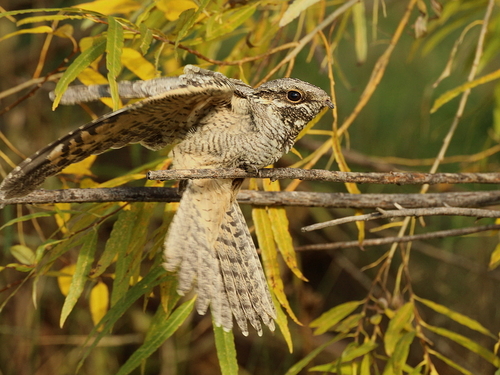
Eurasian Nightjar (Caprimulgus europaeus) Eurasian Nightjar
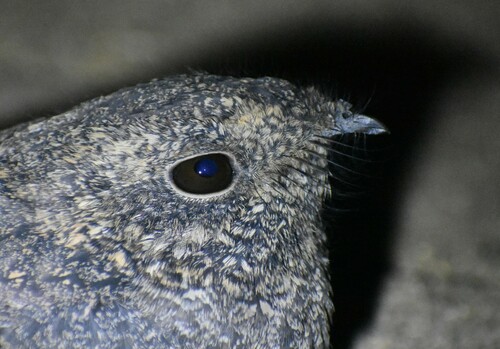
Freckled Nightjar (Caprimulgus tristigma) Freckled Nightjar

Media

Loading…

In short

The most reliable field mark between Eurasian Nightjar and Freckled Nightjar is the pattern of white in the wings and tail during flight, especially in adult males. Eurasian Nightjar males show a bold white patch on three primaries and white tips to the two outer tail feathers, while Freckled Nightjar males have smaller white spots on four outer primaries and white tips only on the outer tail feathers; females of both species lack white in the tail, but Freckled Nightjar females have smaller white spots on the primaries. Freckled Nightjar appears much darker overall, often nearly blackish from a distance, and lacks the pale hindneck collar and prominent facial markings of Eurasian Nightjar. Structure is also helpful: Freckled Nightjar is more powerfully built with a shorter tail and longer wings, and is usually seen on rocky ground. Habitat and context can help: Eurasian Nightjar is found in open woodlands and heath across Europe and Asia, while Freckled Nightjar is tied to rocky habitats in sub-Saharan Africa.

Identification tips

  1. White in wing and tail (adult males): Eurasian Nightjar males have a bold white patch across three primaries and white tips to the two outer tail feathers. Freckled Nightjar males have smaller white spots on four outer primaries and white tips only on the outer tail feathers. This is most reliable in adult males seen in flight.
  2. White in wing and tail (females): Eurasian Nightjar females lack white in the tail and have less conspicuous wing markings. Freckled Nightjar females have 3–4 small white spots on the outer primaries but no white in the tail. In both species, the white is much less obvious in females and may be missed in poor light.
  3. Overall coloration: Freckled Nightjar appears much darker overall, often nearly blackish from a distance, while Eurasian Nightjar is paler grey-brown with a more patterned appearance.
  4. Facial and neck markings: Eurasian Nightjar shows a pale buff hindneck collar and a white moustachial line, which are lacking in Freckled Nightjar.
  5. Perched appearance: Freckled Nightjar's white wing spots are usually not visible when perched, and its plumage blends with rocky backgrounds. Eurasian Nightjar is more likely to show its patterned upperparts and pale collar when perched on the ground or a branch.
  6. Structure: Freckled Nightjar is bulkier, with longer wings and a shorter tail relative to body size. Eurasian Nightjar is more slender and has a more balanced wing-to-tail ratio.
  7. Habitat: Eurasian Nightjar is found in open woodland, heath, and clearings across Europe and Asia. Freckled Nightjar is strongly tied to rocky outcrops, boulder fields, and arid, broken ground in sub-Saharan Africa.
  8. Flight style: Both have buoyant, silent flight, but Freckled Nightjar often makes short sallies from rocks and glides back, while Eurasian Nightjar may be seen flying over open ground or woodland edges.
  9. Juvenile/immature plumage: No detailed flight pattern differences are described for immatures, but both species' young are cryptic and resemble adult females.
  10. Voice: If a long, mechanical churring trill is heard, it is Eurasian Nightjar. Freckled Nightjar's voice is not described here; absence of churring does not confirm Freckled.
  11. Geographic context: Eurasian Nightjar is absent from sub-Saharan Africa; Freckled Nightjar does not occur in Europe or Asia. Location is a strong clue if range is known.
  12. Camouflage: Freckled Nightjar's dark, freckled plumage is specialized for rocky habitats, while Eurasian Nightjar's more patterned, paler plumage suits woodland and heath.
  13. Bill and gape: Freckled Nightjar has a notably large gape (the largest among nightjars), but this is rarely visible in the field.
  14. Sexual dimorphism: Both species show sexual differences in wing and tail markings, but these are subtle in females and can be missed without good views.
  15. Seasonal context: Eurasian Nightjar is migratory, present in Europe and Asia during the breeding season; Freckled Nightjar is resident or locally migratory within Africa.

Size

Both species are similar in overall size, but Freckled Nightjar is described as large and powerfully built, with a typical body mass around 79 g [wikidata]. Eurasian Nightjar has a variable mass (male: 51–101 g, female: 67–95 g [wikipedia]), but is generally more slender and less robust in appearance. Freckled Nightjar has relatively longer wings and a shorter tail compared to Eurasian Nightjar, which has a more balanced wing-to-tail ratio. In the field, Freckled Nightjar may appear bulkier, especially when perched.

Plumage

Juvenile and immature plumage is not described in detail for Freckled Nightjar, but both species' young are well camouflaged and resemble adults. For adults, Eurasian Nightjar is greyish-brown above with dark streaking, a pale buff hindneck collar, a white moustachial line, and buff spotting on the closed wing. Males have a bold white wing patch and white tail tips; females lack white in the tail and have less conspicuous wing markings. Freckled Nightjar adults are dark gray to nearly black at a distance, with white, cinnamon, and pale buff freckling visible up close. Underparts are dark brown with whitish and cinnamon barring. In flight, Freckled Nightjar males show small white spots on four outer primaries and white tips to the two outer tail feathers; females have 3–4 smaller white spots on primaries and no white in the tail. When perched, Freckled Nightjar's white spots are usually not visible, and its overall darker, less contrasting plumage stands out from Eurasian Nightjar's paler, more patterned look.

Behaviour

Both species are crepuscular and nocturnal, hawking insects in flight. Eurasian Nightjar has a buoyant, silent flight and often sings from perches at dusk and dawn. Freckled Nightjar forages with short sallies from boulders or rocky banks, gliding back to its perch, and is adapted to rocky, open landscapes. Eurasian Nightjar is more likely to be found in open woodland or heath, often roosting on the ground or low branches, while Freckled Nightjar is almost always associated with rocky outcrops and bare ground.

Habitat

Eurasian Nightjar breeds across Europe and the Palearctic into Mongolia and northwestern China, favoring open woodlands, heath, and clearings. Freckled Nightjar is restricted to sub-Saharan Africa and is strongly associated with rocky habitats, such as boulder fields, rocky hillsides, and outcrops. If seen on bare rock or in arid, broken ground, Freckled Nightjar is far more likely; Eurasian Nightjar is rarely found in such settings.

Voice

Eurasian Nightjar males produce a long, churring trill from a perch, sometimes ending with a bubbling trill and wing-clapping. The song is ventriloquial and can be heard at a distance. Both sexes give a short 'cuick, cuick' call in flight and a variety of alarm and threat sounds. Freckled Nightjar's vocalizations are not described in the provided notes, so voice is not a reliable separator unless Eurasian Nightjar's distinctive churring song is heard.

Submit a better description

Use the same sections as the comparison. Your text is published immediately.

The most reliable field mark between Eurasian Nightjar and Freckled Nightjar is the pattern of white in the wings and tail during flight, especially in adult males. Eurasian Nightjar males show a bold white patch on three primaries and white tips to the two outer tail feathers, while Freckled Nightjar males have smaller white spots on four outer primaries and white tips only on the outer tail feathers; females of both species lack white in the tail, but Freckled Nightjar females have smaller white spots on the primaries. Freckled Nightjar appears much darker overall, often nearly blackish from a distance, and lacks the pale hindneck collar and prominent facial markings of Eurasian Nightjar. Structure is also helpful: Freckled Nightjar is more powerfully built with a shorter tail and longer wings, and is usually seen on rocky ground. Habitat and context can help: Eurasian Nightjar is found in open woodlands and heath across Europe and Asia, while Freckled Nightjar is tied to rocky habitats in sub-Saharan Africa.

  1. White in wing and tail (adult males): Eurasian Nightjar males have a bold white patch across three primaries and white tips to the two outer tail feathers. Freckled Nightjar males have smaller white spots on four outer primaries and white tips only on the outer tail feathers. This is most reliable in adult males seen in flight.
  2. White in wing and tail (females): Eurasian Nightjar females lack white in the tail and have less conspicuous wing markings. Freckled Nightjar females have 3–4 small white spots on the outer primaries but no white in the tail. In both species, the white is much less obvious in females and may be missed in poor light.
  3. Overall coloration: Freckled Nightjar appears much darker overall, often nearly blackish from a distance, while Eurasian Nightjar is paler grey-brown with a more patterned appearance.
  4. Facial and neck markings: Eurasian Nightjar shows a pale buff hindneck collar and a white moustachial line, which are lacking in Freckled Nightjar.
  5. Perched appearance: Freckled Nightjar's white wing spots are usually not visible when perched, and its plumage blends with rocky backgrounds. Eurasian Nightjar is more likely to show its patterned upperparts and pale collar when perched on the ground or a branch.
  6. Structure: Freckled Nightjar is bulkier, with longer wings and a shorter tail relative to body size. Eurasian Nightjar is more slender and has a more balanced wing-to-tail ratio.
  7. Habitat: Eurasian Nightjar is found in open woodland, heath, and clearings across Europe and Asia. Freckled Nightjar is strongly tied to rocky outcrops, boulder fields, and arid, broken ground in sub-Saharan Africa.
  8. Flight style: Both have buoyant, silent flight, but Freckled Nightjar often makes short sallies from rocks and glides back, while Eurasian Nightjar may be seen flying over open ground or woodland edges.
  9. Juvenile/immature plumage: No detailed flight pattern differences are described for immatures, but both species' young are cryptic and resemble adult females.
  10. Voice: If a long, mechanical churring trill is heard, it is Eurasian Nightjar. Freckled Nightjar's voice is not described here; absence of churring does not confirm Freckled.
  11. Geographic context: Eurasian Nightjar is absent from sub-Saharan Africa; Freckled Nightjar does not occur in Europe or Asia. Location is a strong clue if range is known.
  12. Camouflage: Freckled Nightjar's dark, freckled plumage is specialized for rocky habitats, while Eurasian Nightjar's more patterned, paler plumage suits woodland and heath.
  13. Bill and gape: Freckled Nightjar has a notably large gape (the largest among nightjars), but this is rarely visible in the field.
  14. Sexual dimorphism: Both species show sexual differences in wing and tail markings, but these are subtle in females and can be missed without good views.
  15. Seasonal context: Eurasian Nightjar is migratory, present in Europe and Asia during the breeding season; Freckled Nightjar is resident or locally migratory within Africa.

Both species are similar in overall size, but Freckled Nightjar is described as large and powerfully built, with a typical body mass around 79 g [wikidata]. Eurasian Nightjar has a variable mass (male: 51–101 g, female: 67–95 g [wikipedia]), but is generally more slender and less robust in appearance. Freckled Nightjar has relatively longer wings and a shorter tail compared to Eurasian Nightjar, which has a more balanced wing-to-tail ratio. In the field, Freckled Nightjar may appear bulkier, especially when perched.

Juvenile and immature plumage is not described in detail for Freckled Nightjar, but both species' young are well camouflaged and resemble adults. For adults, Eurasian Nightjar is greyish-brown above with dark streaking, a pale buff hindneck collar, a white moustachial line, and buff spotting on the closed wing. Males have a bold white wing patch and white tail tips; females lack white in the tail and have less conspicuous wing markings. Freckled Nightjar adults are dark gray to nearly black at a distance, with white, cinnamon, and pale buff freckling visible up close. Underparts are dark brown with whitish and cinnamon barring. In flight, Freckled Nightjar males show small white spots on four outer primaries and white tips to the two outer tail feathers; females have 3–4 smaller white spots on primaries and no white in the tail. When perched, Freckled Nightjar's white spots are usually not visible, and its overall darker, less contrasting plumage stands out from Eurasian Nightjar's paler, more patterned look.

Both species are crepuscular and nocturnal, hawking insects in flight. Eurasian Nightjar has a buoyant, silent flight and often sings from perches at dusk and dawn. Freckled Nightjar forages with short sallies from boulders or rocky banks, gliding back to its perch, and is adapted to rocky, open landscapes. Eurasian Nightjar is more likely to be found in open woodland or heath, often roosting on the ground or low branches, while Freckled Nightjar is almost always associated with rocky outcrops and bare ground.

Eurasian Nightjar breeds across Europe and the Palearctic into Mongolia and northwestern China, favoring open woodlands, heath, and clearings. Freckled Nightjar is restricted to sub-Saharan Africa and is strongly associated with rocky habitats, such as boulder fields, rocky hillsides, and outcrops. If seen on bare rock or in arid, broken ground, Freckled Nightjar is far more likely; Eurasian Nightjar is rarely found in such settings.

Eurasian Nightjar males produce a long, churring trill from a perch, sometimes ending with a bubbling trill and wing-clapping. The song is ventriloquial and can be heard at a distance. Both sexes give a short 'cuick, cuick' call in flight and a variety of alarm and threat sounds. Freckled Nightjar's vocalizations are not described in the provided notes, so voice is not a reliable separator unless Eurasian Nightjar's distinctive churring song is heard.

Discard your changes?

You have unsaved edits. If you leave now, those changes will be lost.

Eurasian Nightjar · Freckled Nightjar · My Tricky Birds