

Ferruginous Duck vs European Greenfinch
Aythya nyroca versus Chloris chloris
Play a quiz with Ferruginous Duck and European Greenfinch
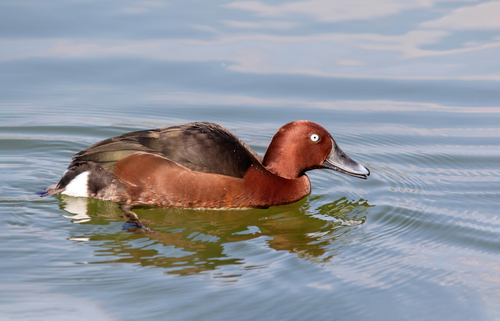 Ferruginous Duck
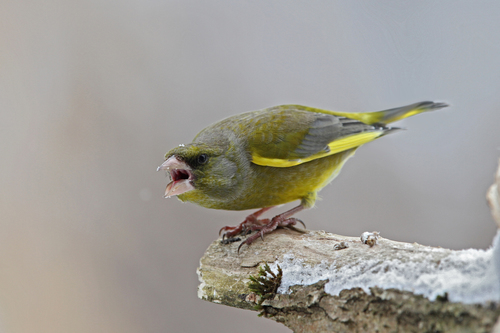 European Greenfinch
In short
Ferruginous Duck and European Greenfinch are extremely different in both structure and plumage, but confusion may arise with distant or poor views, especially of immatures or in flight. The most reliable field mark is overall shape and size: Ferruginous Duck is a medium-sized, heavy-bodied diving duck with a dark chestnut plumage and white undertail, while European Greenfinch is a small, chunky songbird with green and yellow tones and a thick conical bill. In flight, Ferruginous Duck shows a white belly and underwing patch, while Greenfinch flashes yellow in the wings and tail. Even in dull light or at a distance, bill shape and body structure are unmistakable if seen well.
Identification tips
- Overall size and structure: Ferruginous Duck is a medium-sized, heavy-bodied duck; European Greenfinch is a small, compact finch. If the bird is sparrow-sized, it's a Greenfinch; if it's pigeon-sized or larger, it's the duck.
- Bill shape: Ferruginous Duck has a broad, flat bill typical of ducks. Greenfinch has a thick, conical seed-eater's bill. Bill shape is diagnostic if seen well.
- Flight pattern and wing markings: In flight, Ferruginous Duck shows a white belly and white underwing patch (all ages/sexes). Greenfinch flashes yellow in the wings and tail, never white. If you see yellow in the wings/tail, it's a Greenfinch; white underwing or belly points to Ferruginous Duck.
- Perched posture: Greenfinch perches upright on branches, wires, or bushes. Ferruginous Duck is almost never seen perched above water; it sits low on the water or stands on the shore.
- Plumage color: Ferruginous Duck is rich chestnut (male) or dull brown (female/immature) with a white undertail. Greenfinch is greenish with yellow in the wings and tail; females/immatures are duller but still show yellow.
- Eye color: Male Ferruginous Duck has a yellow eye; female has a dark eye. Greenfinch has a dark eye in both sexes.
- Undertail pattern: Ferruginous Duck always has a pure white undertail, visible when swimming or in flight. Greenfinch undertail is not white.
- Habitat: Ferruginous Duck is found on water; Greenfinch is found in trees, hedges, or gardens, rarely near open water.
- Behavior: Ferruginous Duck dives or dabbles for food; Greenfinch feeds on seeds, often on the ground or in trees, and never dives.
- Group composition: Ferruginous Duck may be in mixed flocks with other ducks. Greenfinch may flock with other finches or sparrows, rarely with waterbirds.
- Vocalization: Greenfinch sings a trilling, twittering song; Ferruginous Duck is generally silent or gives low quacks.
- Tail shape: Greenfinch has a short, notched tail with yellow sides. Ferruginous Duck has a broad, rounded tail, usually not prominent.
- Display: Greenfinch males perform slow, fluttering "butterfly" display flights, which are unique among these two species.
- Sex/age confusion: Female/immature Ferruginous Ducks are duller but still have white undertail and underwing in flight. Female/immature Greenfinches are browner but always show yellow in wings/tail.
- Common pitfalls: Distant views of Ferruginous Duck on water may appear dark and featureless; check for white undertail and bill shape. Dull Greenfinches may seem brownish but will always show yellow in flight or when stretching wings.
Size
Ferruginous Duck is vastly larger and heavier (body mass ~551.5g [wikidata]) than European Greenfinch, which is similar in size to a House Sparrow (length ~15 cm, wingspan 24.5–27.5 cm [wikipedia]). The duck is a robust, broad-bodied waterbird, while the greenfinch is a small, compact finch. Even at a distance, the duck's bulk and longer neck are obvious compared to the finch's small, rounded silhouette.
Plumage
-
Juvenile/immature/first-winter birds: No detailed age-specific wing pattern is described for either species in the sources, but flight views are still very distinctive. Ferruginous Duck (all ages) shows a white belly and a white underwing patch in flight, with otherwise rich chestnut or brown tones. European Greenfinch (all ages) is mainly greenish but always shows yellow flashes in the wings and tail during flight; young birds are duller and browner overall but retain the yellow in the wings and tail.
-
Adult males: Ferruginous Duck males are rich, dark chestnut with a pure white undertail and yellow eye. Greenfinch males are bright green with yellow in the wings and tail, and a thick pale bill.
-
Females/immatures: Female Ferruginous Ducks are duller brown with a dark eye, but still have the white undertail and white underwing patch in flight. Female and young Greenfinches are duller and browner than males but always show yellow in the wings and tail and lack any white undertail.
Behaviour
Ferruginous Duck is a diving duck, often seen diving or dabbling for food, and sometimes upending in the water. It is gregarious but less so than other Aythya ducks, and forms flocks in winter. European Greenfinch is a perching songbird, often seen feeding on seeds in trees, bushes, or on the ground, and is more likely to be seen in flocks during the non-breeding season. Greenfinches perform display flights with slow, fluttering wingbeats ("butterfly" display). The duck is never seen perching in trees, while the greenfinch rarely if ever swims.
Habitat
Ferruginous Duck is found on lakes, marshes, and other bodies of water, often among emergent vegetation. It nests close to or on water, sometimes on floating nests. European Greenfinch prefers woodland edges, farmland hedges, and gardens with thick vegetation, and nests in trees or bushes. Seeing a bird on open water or diving is a strong indicator of Ferruginous Duck; a bird in a hedge, tree, or garden is almost certainly a Greenfinch.
Voice
No vocalizations are described for Ferruginous Duck in the notes. European Greenfinch has a distinctive song with trills, twitters, and wheezes, and is often heard singing from a perch or during display flights. If you hear a complex, twittering song, it's a Greenfinch; Ferruginous Duck is generally silent or gives only low quacks.