

Great Grey Shrike vs Lesser Grey Shrike
Lanius excubitor versus Lanius minor
Play a quiz with Great Grey Shrike and Lesser Grey Shrike
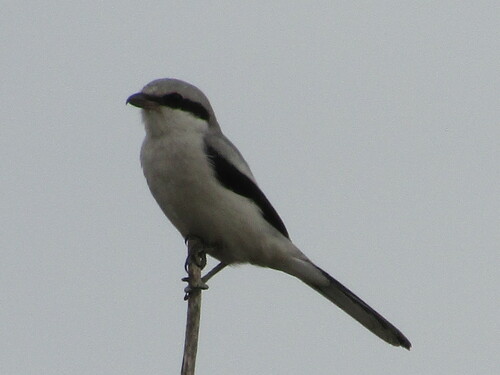 Great Grey Shrike
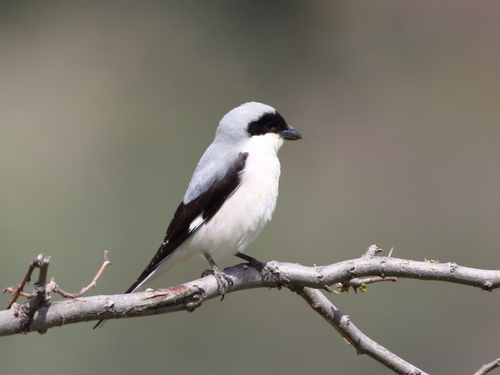 Lesser Grey Shrike
In short
The most reliable field mark between Great Grey Shrike and Lesser Grey Shrike is the head pattern: Lesser Grey Shrike shows a solid black forehead and front crown (in adult males), while Great Grey Shrike has a paler grey crown with only a black mask through the eye. Juveniles of both are browner, but Lesser Grey Shrike juveniles lack the grey back and rump of Great Grey Shrike, instead showing pale brown and faint barring. In flight, both species show black-and-white wings and tail, but Lesser Grey Shrike has relatively longer wings and a more extensive black forehead. Size is also a clue: Great Grey Shrike is distinctly bulkier. Both can be seen perched prominently, but Lesser Grey Shrike is more likely in open lowlands and is a rare visitor in much of western Europe.
Identification tips
- Head Pattern (Adults): Look for a solid black forehead and crown front in adult male Lesser Grey Shrike; Great Grey Shrike has a pale grey crown with only a black eye-mask. This is the most consistent separation in adults.
- Juvenile Upperparts: Juvenile Lesser Grey Shrike is pale brown above with faint barring and lacks grey on the back and rump; Great Grey Shrike juveniles are greyer above, with a pearly tone and a black mask.
- Underparts (Adults): Lesser Grey Shrike (especially males) often shows a pinkish flush on the lower breast and belly, absent in Great Grey Shrike, which has clean white underparts.
- Size and Structure: Great Grey Shrike is larger and bulkier (body mass ~63g vs 46g), with a more powerful jizz; Lesser Grey Shrike is smaller, more slender, and has relatively longer wings for its size.
- Wing and Tail Pattern: Both show black-and-white wings and tail, but Lesser Grey Shrike's primaries have buff tips and white bases, and its secondaries lack white bases. The tail of Lesser Grey Shrike has more white towards the outer feathers, with the central pair tipped and based white.
- Sex Differences: Female Lesser Grey Shrike is duller than the male, with a dark grey head (not black), brownish-grey upperparts, and less pink below. Great Grey Shrike sexes are similar.
- Flight Style: Great Grey Shrike's flight is heavy and undulating, with repeated hovering possible; Lesser Grey Shrike's flight is low, undulating, sometimes gliding, and ends with an upward swoop to perch.
- Perching Behavior: Both perch conspicuously, but Lesser Grey Shrike is often seen on wires in open lowlands, while Great Grey Shrike prefers scattered trees or shrubs.
- Habitat Context: In western Europe, Lesser Grey Shrike is a rare vagrant, so context and season matter—most shrikes in winter or outside migration are Great Grey.
- Bill and Legs: Both have black bills and legs, but Lesser Grey Shrike's bill is brownish-black with a paler base to the lower mandible; not usually diagnostic at range.
- Tail Shape: Great Grey Shrike's tail is described as wedge-shaped with white borders; Lesser Grey Shrike's tail pattern is more complex, with increasing white outwards.
- Behavioral Displays: Both fan and flick their tails when excited, but Great Grey Shrike may gather in small winter groups, while Lesser Grey Shrike is notably pugnacious at the nest.
- Ground Behavior: Lesser Grey Shrike hops briefly on the ground to pick up prey but does not linger; Great Grey Shrike's ground behavior is less emphasized.
- Moult Timing: Not directly diagnostic in the field, but note that fledgling Great Grey Shrikes moult part of their juvenile plumage before first winter, which may affect appearance.
- Pitfalls: Beware of dull female Lesser Grey Shrike, which can appear similar to Great Grey Shrike but always check for the extent of black on the head and the presence or absence of pinkish underparts.
Size
Great Grey Shrike is noticeably larger and heavier, with a body mass of about 63.4g compared to Lesser Grey Shrike's 46.0g. Lesser Grey Shrike is also slightly shorter in length (about 20 cm) and has a shorter tarsus and wing. In the field, Great Grey Shrike often appears more robust and powerful, while Lesser Grey Shrike is more slender and compact, with proportionally longer wings for its size.
Plumage
- Juveniles/First-years: Juvenile Lesser Grey Shrike is overall browner, lacking the grey back and rump of Great Grey Shrike juveniles; instead, it shows pale brown upperparts with faint barring and cream/white underparts without pink. Juvenile Great Grey Shrike is greyer above, with a pearly tone and a black mask, and white underparts.
- Adults: Adult Lesser Grey Shrike males have a distinctive black forehead, crown front, and face, with a pale bluish-grey hind crown and back, and a pinkish flush on the lower breast and belly. Great Grey Shrike adults are pearly grey above, with a black eye-mask but no black on the forehead or crown, and clean white underparts. Female Lesser Grey Shrike is duller, with a dark grey (not black) head and brownish-grey upperparts, and less pink below. Both species have black-and-white wings and tail, but Lesser Grey Shrike's primaries have buff tips and white bases, and its secondaries lack white bases. The tail of Lesser Grey Shrike has increasing white from the center outward, with the central pair tipped and based white, while Great Grey Shrike's tail is described as wedge-shaped with white borders.
Behaviour
Both species perch conspicuously and use similar hunting tactics, but Great Grey Shrike often displays a heavier, more undulating flight and is capable of repeated hovering. Lesser Grey Shrike's flight is low, undulating, and sometimes includes gliding with extended wings, ending with an upward swoop to a perch. On the ground, Lesser Grey Shrike hops briefly to pick up prey. Both species fan and flick their tails when excited. Great Grey Shrike may gather in small winter groups for roosting, while Lesser Grey Shrike is noted for its pugnacity and vigorous nest defense.
Habitat
Great Grey Shrike is widespread in northern and central Eurasia, often found in open country with scattered trees or shrubs. Lesser Grey Shrike breeds in South and Central Europe and western Asia, preferring dry open lowlands and is often seen on wires. In western Europe, Lesser Grey Shrike is a scarce vagrant, usually appearing as a spring or autumn wanderer, while Great Grey Shrike is a regular breeder or winter visitor in suitable habitats.