
Motmot

Greater Short-toed Lark vs Mediterranean Short-toed Lark

Calandrella brachydactyla versus Alaudala rufescens

Play a quiz with Greater Short-toed Lark and Mediterranean Short-toed Lark
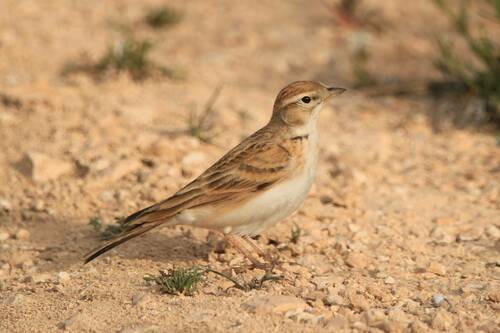
Greater Short-toed Lark (Calandrella brachydactyla) Greater Short-toed Lark
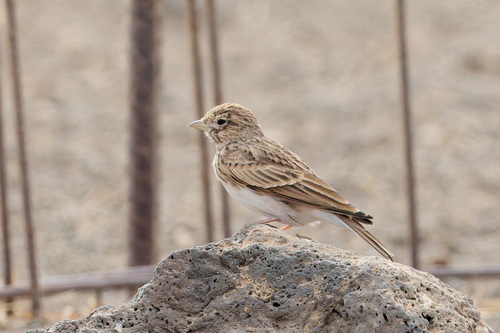
Mediterranean Short-toed Lark (Alaudala rufescens) Mediterranean Short-toed Lark

Media

Loading…

In short

The most reliable field mark between Greater Short-toed Lark and Mediterranean Short-toed Lark is the presence or absence of dark neck patches: Greater Short-toed Lark shows distinct dark patches on the sides of its neck, while Mediterranean Short-toed Lark lacks these. Mediterranean Short-toed Lark also has a more finely streaked breast and a noticeably shorter, blunter bill with a rounder head. Both are small, pale larks with similar overall coloration and structure, but careful attention to head pattern, bill shape, and breast streaking is essential, especially in variable light or at a distance. Subtle differences in song and flocking behavior may help, but are less reliable than plumage and structural cues.

Identification tips

  1. Check for dark neck patches: Greater Short-toed Lark always shows distinct dark patches on the sides of the neck; Mediterranean Short-toed Lark lacks these. This is the most reliable field mark for all ages and seasons.
  2. Assess breast streaking: Mediterranean Short-toed Lark has finer, more extensive streaking across the breast, while Greater Short-toed Lark's breast is cleaner and whiter with less streaking. This is useful in all plumages.
  3. Examine bill shape: Greater Short-toed Lark has a strong, pointed, and slightly longer bill (pinkish with a grey culmen), while Mediterranean Short-toed Lark's bill is shorter, blunter, and less conical. Bill color is not diagnostic, but shape and length are.
  4. Look at head shape: Mediterranean Short-toed Lark has a more rounded, smaller head compared to the slightly larger and more angular head of Greater Short-toed Lark. This is subtle but can be helpful in direct comparison.
  5. Supercilium: Both species have a pale supercilium, so this is not useful for separation.
  6. Crown color: Some Greater Short-toed Larks (especially western birds) may show a rufous crown, but this overlaps with Mediterranean and is not reliable alone.
  7. Tail pattern: Both have a dark tail; tail pattern is not a separator.
  8. Flocking behavior: In winter, Greater Short-toed Lark may form larger, more synchronized flocks than Mediterranean, but this is only a weak clue.
  9. Flight views: No distinctive upperwing or flight pattern differences are noted for these species, so do not rely on wing panels or trailing edges.
  10. Song: Mediterranean Short-toed Lark's song is richer and more varied, but both can be imitative and variable; use with caution.
  11. Habitat: Both occur in similar open, dry habitats; do not use habitat alone for identification.
  12. Size: Both are similar in size; do not use size as a separator.
  13. Sex and age: Sexes are similar in both species, and no age-specific marks are noted beyond general breast streaking and neck patches.
  14. Plumage variability: Both species show considerable variation across their ranges; always use a combination of marks, not a single feature.
  15. Pitfalls: Beware of worn or dirty birds, which may obscure neck patches or breast streaking; always try to get multiple views and check several individuals in a flock if possible.

Size

Both species are very similar in size, with Mediterranean Short-toed Lark measured at 13–14 cm in length. There is no strong size difference in the field, and both sexes are alike in size and appearance. Do not rely on size to separate these two.

Plumage

For all ages and seasons, the key plumage distinction is the presence of dark patches on the sides of the neck in Greater Short-toed Lark, which are absent in Mediterranean Short-toed Lark. Both species are dark-streaked greyish-brown above and white below, but Mediterranean Short-toed Lark is generally duller overall, with finer and more extensive streaking across the breast. Crown color can be rufous in some Greater Short-toed Larks, especially in western populations, but this is variable and overlaps with Mediterranean. Both have a pale supercilium and a dark tail, but the breast streaking is more pronounced and finer in Mediterranean, while Greater Short-toed Lark tends to have a cleaner, whiter breast with less streaking. No age-specific upperwing or flight pattern differences are noted in the sources, so focus on head and breast pattern for all plumages.

Behaviour

Greater Short-toed Lark is noted for forming large, compact flocks in winter that fly in synchrony, often moving together to water in the mornings and roosting in open ground in the evenings. Mediterranean Short-toed Lark's behavior is not described in detail, but both species are gregarious and can be seen in groups. Flocking behavior alone is not diagnostic, but the tight, synchronized flocks of Greater Short-toed Lark may be a subtle clue in winter.

Habitat

Both species occupy open, dry habitats across southern Europe, North Africa, and parts of the Middle East. Mediterranean Short-toed Lark is widespread around the Mediterranean Basin, including the Canary Islands, Iberia, and North Africa. Greater Short-toed Lark breeds in southern and eastern Europe, North Africa, and parts of Asia, with some subspecies wintering in Africa and South Asia. Habitat overlap is extensive, so context is not a reliable separator.

Voice

The songs are similar, but Mediterranean Short-toed Lark's song is described as richer, more varied, and more imitative than Greater Short-toed Lark's, which ranges from a dry twittering to a more varied melody. Both can be variable and imitative, so song is best used as a supporting clue rather than a primary separator.

Submit a better description

Use the same sections as the comparison. Your text is published immediately.

The most reliable field mark between Greater Short-toed Lark and Mediterranean Short-toed Lark is the presence or absence of dark neck patches: Greater Short-toed Lark shows distinct dark patches on the sides of its neck, while Mediterranean Short-toed Lark lacks these. Mediterranean Short-toed Lark also has a more finely streaked breast and a noticeably shorter, blunter bill with a rounder head. Both are small, pale larks with similar overall coloration and structure, but careful attention to head pattern, bill shape, and breast streaking is essential, especially in variable light or at a distance. Subtle differences in song and flocking behavior may help, but are less reliable than plumage and structural cues.

  1. Check for dark neck patches: Greater Short-toed Lark always shows distinct dark patches on the sides of the neck; Mediterranean Short-toed Lark lacks these. This is the most reliable field mark for all ages and seasons.
  2. Assess breast streaking: Mediterranean Short-toed Lark has finer, more extensive streaking across the breast, while Greater Short-toed Lark's breast is cleaner and whiter with less streaking. This is useful in all plumages.
  3. Examine bill shape: Greater Short-toed Lark has a strong, pointed, and slightly longer bill (pinkish with a grey culmen), while Mediterranean Short-toed Lark's bill is shorter, blunter, and less conical. Bill color is not diagnostic, but shape and length are.
  4. Look at head shape: Mediterranean Short-toed Lark has a more rounded, smaller head compared to the slightly larger and more angular head of Greater Short-toed Lark. This is subtle but can be helpful in direct comparison.
  5. Supercilium: Both species have a pale supercilium, so this is not useful for separation.
  6. Crown color: Some Greater Short-toed Larks (especially western birds) may show a rufous crown, but this overlaps with Mediterranean and is not reliable alone.
  7. Tail pattern: Both have a dark tail; tail pattern is not a separator.
  8. Flocking behavior: In winter, Greater Short-toed Lark may form larger, more synchronized flocks than Mediterranean, but this is only a weak clue.
  9. Flight views: No distinctive upperwing or flight pattern differences are noted for these species, so do not rely on wing panels or trailing edges.
  10. Song: Mediterranean Short-toed Lark's song is richer and more varied, but both can be imitative and variable; use with caution.
  11. Habitat: Both occur in similar open, dry habitats; do not use habitat alone for identification.
  12. Size: Both are similar in size; do not use size as a separator.
  13. Sex and age: Sexes are similar in both species, and no age-specific marks are noted beyond general breast streaking and neck patches.
  14. Plumage variability: Both species show considerable variation across their ranges; always use a combination of marks, not a single feature.
  15. Pitfalls: Beware of worn or dirty birds, which may obscure neck patches or breast streaking; always try to get multiple views and check several individuals in a flock if possible.

Both species are very similar in size, with Mediterranean Short-toed Lark measured at 13–14 cm in length. There is no strong size difference in the field, and both sexes are alike in size and appearance. Do not rely on size to separate these two.

For all ages and seasons, the key plumage distinction is the presence of dark patches on the sides of the neck in Greater Short-toed Lark, which are absent in Mediterranean Short-toed Lark. Both species are dark-streaked greyish-brown above and white below, but Mediterranean Short-toed Lark is generally duller overall, with finer and more extensive streaking across the breast. Crown color can be rufous in some Greater Short-toed Larks, especially in western populations, but this is variable and overlaps with Mediterranean. Both have a pale supercilium and a dark tail, but the breast streaking is more pronounced and finer in Mediterranean, while Greater Short-toed Lark tends to have a cleaner, whiter breast with less streaking. No age-specific upperwing or flight pattern differences are noted in the sources, so focus on head and breast pattern for all plumages.

Greater Short-toed Lark is noted for forming large, compact flocks in winter that fly in synchrony, often moving together to water in the mornings and roosting in open ground in the evenings. Mediterranean Short-toed Lark's behavior is not described in detail, but both species are gregarious and can be seen in groups. Flocking behavior alone is not diagnostic, but the tight, synchronized flocks of Greater Short-toed Lark may be a subtle clue in winter.

Both species occupy open, dry habitats across southern Europe, North Africa, and parts of the Middle East. Mediterranean Short-toed Lark is widespread around the Mediterranean Basin, including the Canary Islands, Iberia, and North Africa. Greater Short-toed Lark breeds in southern and eastern Europe, North Africa, and parts of Asia, with some subspecies wintering in Africa and South Asia. Habitat overlap is extensive, so context is not a reliable separator.

The songs are similar, but Mediterranean Short-toed Lark's song is described as richer, more varied, and more imitative than Greater Short-toed Lark's, which ranges from a dry twittering to a more varied melody. Both can be variable and imitative, so song is best used as a supporting clue rather than a primary separator.

Discard your changes?

You have unsaved edits. If you leave now, those changes will be lost.

Greater Short-toed Lark · Mediterranean Short-toed Lark · My Tricky Birds