
Motmot

Hammond's Flycatcher vs Dusky Flycatcher

Empidonax hammondii versus Empidonax oberholseri

Play a quiz with Hammond's Flycatcher and Dusky Flycatcher
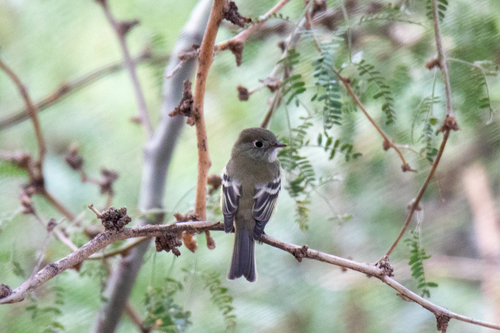
Hammond's Flycatcher (Empidonax hammondii) Hammond's Flycatcher
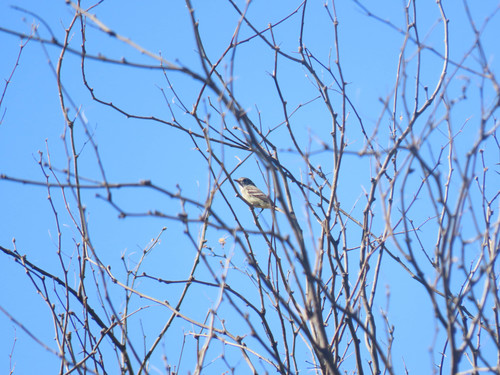
Dusky Flycatcher (Empidonax oberholseri) Dusky Flycatcher

Media

Loading…

In short

Hammond's and Dusky Flycatchers are infamously similar, but the most reliable field mark is structure: Hammond's has a noticeably shorter tail and smaller bill, while Dusky shows a medium-length tail and a mostly dark, slightly longer bill. Both have olive-gray upperparts, whitish underparts, and white eye rings, but subtle differences in breast and belly color, as well as bill shape, can help. Juveniles of both species are very similar, though Hammond's may show broader, buffier wing bars. Voice, habitat, and range are often more useful than plumage alone, but careful attention to structure and subtle color differences can separate them in the field.

Identification tips

  1. Tail length: Hammond's Flycatcher has a noticeably short tail, while Dusky's is medium-length. Compare to nearby Empidonax if possible; this is most useful on perched birds.
  2. Bill shape and color: Hammond's shows a small bill (females especially short and wide), while Dusky's is longer, medium in width, and mostly dark. Bill color is subtle but can help with good views.
  3. Breast and belly color: Hammond's has a gray-washed breast and yellowish flanks, while Dusky's breast is olive-gray with less yellow on the sides. This is subtle and can be affected by light.
  4. Eye ring: Both have white eye rings, but Hammond's is often described as more conspicuous, while Dusky's is medium-width. Overlap is common; use as a supporting mark only.
  5. Wing bars (immatures): Juvenile and first-year Hammond's may show broader, more buffy wing bars than Dusky, but this is variable and not always reliable.
  6. Size impression: Hammond's is slightly smaller and more compact, but this is subtle and best used in direct comparison.
  7. Perched posture: Hammond's often appears more upright and compact, while Dusky may look longer-tailed and slightly more elongated.
  8. Habitat context: Hammond's is more likely in dense, mature coniferous forest; Dusky is more tolerant of open woods, shrubby areas, and forest edges. Habitat is supportive, not diagnostic.
  9. Song: Hammond's song is multi-versed and hoarse; Dusky's is simpler and drier. Learn both by ear for best results.
  10. Call: Hammond's gives a sharp 'peek'; Dusky a dry 'whit.' Calls are similar but can be distinguished with practice.
  11. Seasonal context: Both species overlap in migration, but breeding habitat can be a strong clue—Hammond's in mature forest, Dusky in brushier or more open areas.
  12. Sex differences: Female Hammond's may have a shorter, wider bill than males, but this is not usually diagnostic in the field.
  13. Jizz in flight: No strong differences noted, but Hammond's may appear more compact and acrobatic, especially in the canopy.
  14. Range overlap: Both species can occur together in parts of the West; do not rely on range alone.
  15. Plumage pitfalls: Both species are extremely similar in all plumages; structure and voice are more reliable than color or pattern.

Size

Hammond's Flycatcher is slightly smaller overall, measuring 12–14 cm in length and weighing 8–12 g [wikipedia]. Dusky Flycatcher is a bit larger than Hammond's but smaller than Gray Flycatcher, putting it in the middle of the Empidonax size range. Both are small flycatchers, and size alone is rarely diagnostic in the field, but Hammond's generally appears more petite, especially with its shorter tail and smaller bill.

Plumage

For both species, adults have olive-gray upperparts, darker wings and tail, whitish underparts, and white wing bars. Hammond's Flycatcher shows a gray-washed breast and yellowish sides to the belly, while Dusky's breast is washed with olive-gray and lacks strong yellow on the flanks. The eye ring is conspicuous in Hammond's and medium-width in Dusky, but both are white and can overlap in appearance. Immature Hammond's Flycatchers have broader, more buffy wing bars than adults, a feature also seen in young Duskys but reportedly more pronounced in Hammond's. Bill color and shape differ: Hammond's has a small bill (females especially short and wide), while Dusky's is medium-length and mostly dark. Tail length is shorter in Hammond's and medium in Dusky. No distinctive juvenile upperwing pattern (such as a black W or contrasting panels) is noted for either species, so age-specific separation is subtle and relies on wing bar width and overall structure.

Behaviour

Both species sally from perches to catch insects and can hover-glean from foliage. Hammond's is often seen higher in the canopy, especially in mature coniferous forests, while Dusky may use more open or edge habitats. Both can be difficult to observe for long periods, but Hammond's may appear more active and acrobatic in the upper branches, whereas Dusky often perches lower and may seem more deliberate in movement.

Habitat

Hammond's Flycatcher prefers mature coniferous and mixed forests, especially dense fir, conifer, and aspen stands in western North America. Dusky Flycatcher also uses coniferous and mixed habitats but is more likely to be found in shrubby areas, forest edges, or more open woodland. Overlap occurs, but Hammond's is more strictly tied to mature, dense forest, while Dusky tolerates more open and brushy settings.

Voice

Vocalizations are among the best field clues. Hammond's Flycatcher gives a multi-versed, hoarse song (ssilit, greeep, silit, pweet) and a sharp 'peek' call. Dusky Flycatcher sings a three-part song and gives a dry 'whit' call, sometimes a sad 'dew-hic.' Both can sound similar to the untrained ear, but Hammond's song is more varied and hoarse, while Dusky's is simpler and drier. Calls are best learned by ear in the field.

Submit a better description

Use the same sections as the comparison. Your text is published immediately.

Hammond's and Dusky Flycatchers are infamously similar, but the most reliable field mark is structure: Hammond's has a noticeably shorter tail and smaller bill, while Dusky shows a medium-length tail and a mostly dark, slightly longer bill. Both have olive-gray upperparts, whitish underparts, and white eye rings, but subtle differences in breast and belly color, as well as bill shape, can help. Juveniles of both species are very similar, though Hammond's may show broader, buffier wing bars. Voice, habitat, and range are often more useful than plumage alone, but careful attention to structure and subtle color differences can separate them in the field.

  1. Tail length: Hammond's Flycatcher has a noticeably short tail, while Dusky's is medium-length. Compare to nearby Empidonax if possible; this is most useful on perched birds.
  2. Bill shape and color: Hammond's shows a small bill (females especially short and wide), while Dusky's is longer, medium in width, and mostly dark. Bill color is subtle but can help with good views.
  3. Breast and belly color: Hammond's has a gray-washed breast and yellowish flanks, while Dusky's breast is olive-gray with less yellow on the sides. This is subtle and can be affected by light.
  4. Eye ring: Both have white eye rings, but Hammond's is often described as more conspicuous, while Dusky's is medium-width. Overlap is common; use as a supporting mark only.
  5. Wing bars (immatures): Juvenile and first-year Hammond's may show broader, more buffy wing bars than Dusky, but this is variable and not always reliable.
  6. Size impression: Hammond's is slightly smaller and more compact, but this is subtle and best used in direct comparison.
  7. Perched posture: Hammond's often appears more upright and compact, while Dusky may look longer-tailed and slightly more elongated.
  8. Habitat context: Hammond's is more likely in dense, mature coniferous forest; Dusky is more tolerant of open woods, shrubby areas, and forest edges. Habitat is supportive, not diagnostic.
  9. Song: Hammond's song is multi-versed and hoarse; Dusky's is simpler and drier. Learn both by ear for best results.
  10. Call: Hammond's gives a sharp 'peek'; Dusky a dry 'whit.' Calls are similar but can be distinguished with practice.
  11. Seasonal context: Both species overlap in migration, but breeding habitat can be a strong clue—Hammond's in mature forest, Dusky in brushier or more open areas.
  12. Sex differences: Female Hammond's may have a shorter, wider bill than males, but this is not usually diagnostic in the field.
  13. Jizz in flight: No strong differences noted, but Hammond's may appear more compact and acrobatic, especially in the canopy.
  14. Range overlap: Both species can occur together in parts of the West; do not rely on range alone.
  15. Plumage pitfalls: Both species are extremely similar in all plumages; structure and voice are more reliable than color or pattern.

Hammond's Flycatcher is slightly smaller overall, measuring 12–14 cm in length and weighing 8–12 g [wikipedia]. Dusky Flycatcher is a bit larger than Hammond's but smaller than Gray Flycatcher, putting it in the middle of the Empidonax size range. Both are small flycatchers, and size alone is rarely diagnostic in the field, but Hammond's generally appears more petite, especially with its shorter tail and smaller bill.

For both species, adults have olive-gray upperparts, darker wings and tail, whitish underparts, and white wing bars. Hammond's Flycatcher shows a gray-washed breast and yellowish sides to the belly, while Dusky's breast is washed with olive-gray and lacks strong yellow on the flanks. The eye ring is conspicuous in Hammond's and medium-width in Dusky, but both are white and can overlap in appearance. Immature Hammond's Flycatchers have broader, more buffy wing bars than adults, a feature also seen in young Duskys but reportedly more pronounced in Hammond's. Bill color and shape differ: Hammond's has a small bill (females especially short and wide), while Dusky's is medium-length and mostly dark. Tail length is shorter in Hammond's and medium in Dusky. No distinctive juvenile upperwing pattern (such as a black W or contrasting panels) is noted for either species, so age-specific separation is subtle and relies on wing bar width and overall structure.

Both species sally from perches to catch insects and can hover-glean from foliage. Hammond's is often seen higher in the canopy, especially in mature coniferous forests, while Dusky may use more open or edge habitats. Both can be difficult to observe for long periods, but Hammond's may appear more active and acrobatic in the upper branches, whereas Dusky often perches lower and may seem more deliberate in movement.

Hammond's Flycatcher prefers mature coniferous and mixed forests, especially dense fir, conifer, and aspen stands in western North America. Dusky Flycatcher also uses coniferous and mixed habitats but is more likely to be found in shrubby areas, forest edges, or more open woodland. Overlap occurs, but Hammond's is more strictly tied to mature, dense forest, while Dusky tolerates more open and brushy settings.

Vocalizations are among the best field clues. Hammond's Flycatcher gives a multi-versed, hoarse song (ssilit, greeep, silit, pweet) and a sharp 'peek' call. Dusky Flycatcher sings a three-part song and gives a dry 'whit' call, sometimes a sad 'dew-hic.' Both can sound similar to the untrained ear, but Hammond's song is more varied and hoarse, while Dusky's is simpler and drier. Calls are best learned by ear in the field.

Discard your changes?

You have unsaved edits. If you leave now, those changes will be lost.

Hammond's Flycatcher · Dusky Flycatcher · My Tricky Birds