
Herring Gull vs Great Black-backed Gull
Larus argentatus versus Larus marinus
Play a quiz with Herring Gull and Great Black-backed Gull
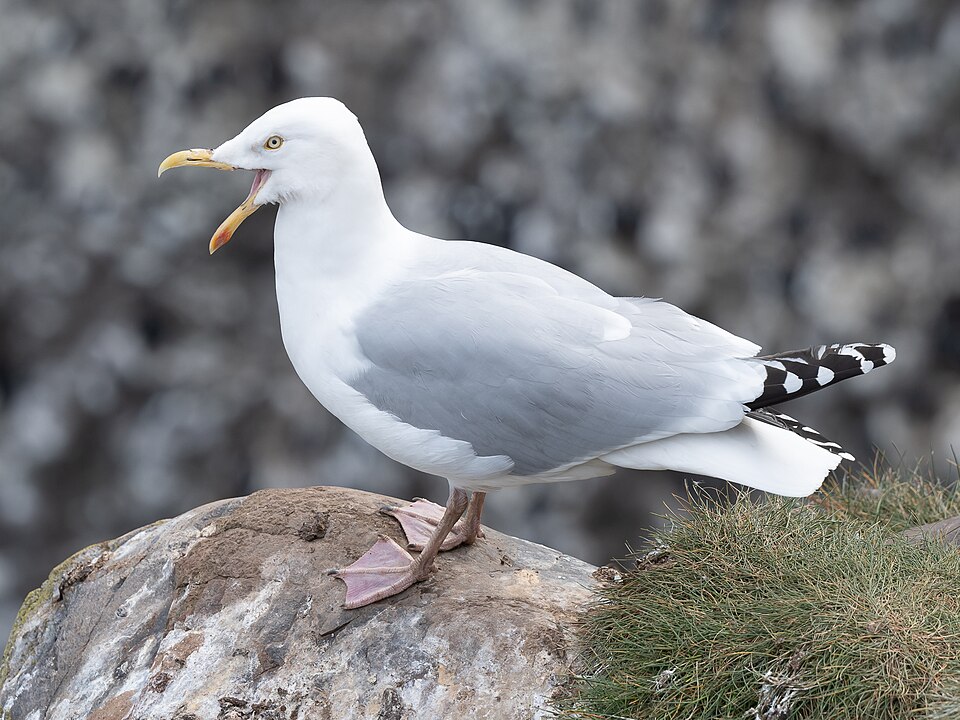 Herring Gull
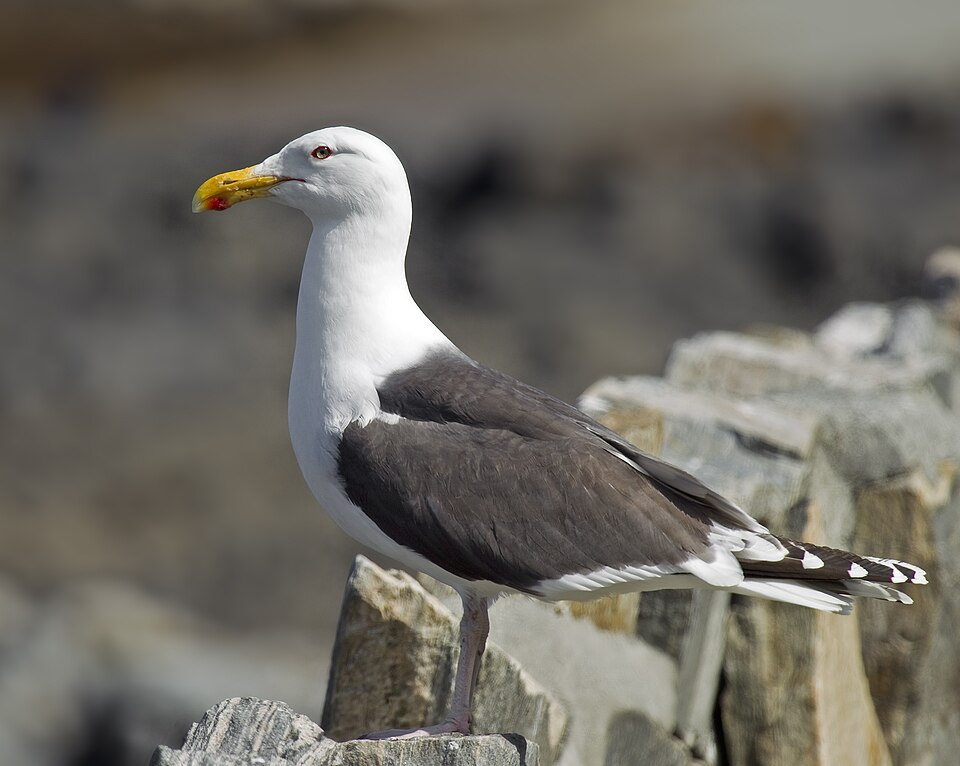 Great Black-backed Gull
In short
The most reliable field mark between Herring Gull and Great Black-backed Gull is the adult's mantle and upperwing color: Great Black-backed Gull has a strikingly dark, almost black back and upperwings, while Herring Gull is much paler grey. For immatures, focus on the upperwing and tail patterns in flight—Great Black-backed Gull juveniles show a bold, checkered pattern with a distinctive white tail base and a strong black tail band, while Herring Gull immatures are more evenly brown and less contrasting. Great Black-backed Gull is also noticeably bulkier and more powerful-looking, with a stouter bill and heavier build. Both species can be found together, especially along coasts, so careful attention to these details is essential.
Identification tips
- Adult mantle color: Great Black-backed Gull adults have a blackish back and upperwings, much darker than the pale grey of Herring Gull adults. This is the most reliable mark when birds are perched or at rest.
- Size and structure: Great Black-backed Gull is much larger, bulkier, and more powerful-looking than Herring Gull. Look for a thick neck, deep chest, and a large, heavy bill in Great Black-backed. Herring Gull is slimmer and more graceful.
- Bill: Great Black-backed Gull's bill is stouter and more robust. Both species have a yellow bill with a red spot as adults, but the sheer size and depth of Great Black-backed's bill is distinctive up close.
- Leg color: Herring Gull usually has pink legs (occasionally yellowish in some populations), while Great Black-backed Gull's legs are pinkish but can appear duller or bluish-grey in immatures. Leg color is most useful for adults.
- Juvenile upperwing and tail pattern: Juvenile Great Black-backed Gull shows a bold, checkered pattern on the upperwing coverts and a white tail base with a strong, broken black band near the tip. Herring Gull juveniles are more evenly brown and streaky, with a less contrasting tail pattern.
- Immature overall tone: Great Black-backed Gull immatures look dirtier, streakier, and more contrasting, while Herring Gull immatures are paler and more uniform brown.
- Flight jizz: In flight, Great Black-backed Gull appears broader-winged and heavier, with slower, deeper wingbeats. Herring Gull is more buoyant and agile.
- Wingtips (adults): Both have black wingtips with white 'mirrors,' but the contrast with the mantle is much greater in Great Black-backed Gull.
- Eye color: Adult Herring Gull has a pale eye with a yellow orbital ring; Great Black-backed Gull's eye is also pale but may appear more menacing due to the bird's overall size and head shape.
- Head streaking (non-breeding): Herring Gull adults show brown streaks on the head and neck in winter, while Great Black-backed Gull is less streaked but can look 'dirty' in immatures.
- Habitat context: If seen inland, especially at landfills or urban areas, Herring Gull is more likely. Great Black-backed Gull is more strictly coastal but can occur inland at large water bodies.
- Behavior: Great Black-backed Gull is more aggressive, often dominating feeding sites and chasing or attacking other birds. Herring Gull is less dominant in mixed flocks.
- Vocalization: Great Black-backed Gull's call is deeper and more resonant; Herring Gull's is higher-pitched. Use with caution unless you are familiar with both.
- Mixed flocks: When both species are present, the size and darkness of Great Black-backed Gull make it stand out, often towering over nearby Herring Gulls.
- Pitfalls: Beware of size overlap in lone birds, and note that immature plumages can be confusing—focus on the upperwing and tail pattern in flight, and overall structure and mantle color when perched.
Size
Great Black-backed Gull is the largest gull species, significantly bulkier and heavier than Herring Gull. Adult Great Black-backed Gulls reach up to 79 cm in length with a wingspan of 150–170 cm, while Herring Gulls are smaller at 55–67 cm long and a wingspan of 125–155 cm [wikipedia][avonet]. In the field, Great Black-backed Gull appears much more massive, with a thick neck, deep chest, and a large, powerful bill. Herring Gull, while still large, is noticeably slimmer and more lightly built. If both species are seen together, the size difference is usually obvious.
Plumage
Juvenile and immature plumages are key for separation.
-
Juvenile/First-winter: Great Black-backed Gull juveniles have a bold, checkered black-brown pattern on the upperparts, a paler face and nape, and a distinctive white tail base with a broken black band near the tip. Their flight feathers are blackish-brown, and the legs are dark bluish-grey with some pink. Herring Gull juveniles are more uniformly brown and streaky overall, lacking the crisp checkered look, and have a dark bill and eyes with pink legs. The tail is more evenly barred or mottled, not as sharply patterned as in Great Black-backed.
-
Second/Third-year: Great Black-backed immatures retain a dirtier, streakier version of the adult's dark upperparts, while Herring Gulls become paler, with more grey on the back and less streaking on the head and underparts.
-
Adults: Great Black-backed Gull adults have a blackish back and upperwings, contrasting strongly with the white head and underparts. Herring Gull adults are much paler grey above, with black wingtips and white 'mirrors' on the primaries. Leg color is also useful: Herring Gull usually has pink legs (rarely yellowish in some populations), while Great Black-backed Gull's legs are pinkish but can appear duller or with a bluish-grey cast in immatures.
Behaviour
Great Black-backed Gull is more aggressive and predatory, often behaving like a raptor—hunting, killing, and eating other birds, including fledglings and even adult birds of various species. It also scavenges but is more likely to be seen actively hunting or pirating food from other birds. Herring Gull is omnivorous and opportunistic, feeding on a wide range of items including refuse, invertebrates, and fish, and is less likely to hunt large prey. Both species scavenge at dumps and along the coast, but Great Black-backed Gull's dominance and aggression are notable when both are present.
Habitat
Both species occur along northern Atlantic coasts, often together on beaches, harbors, and estuaries. Herring Gull is more likely to be found inland, at landfills, fields, and urban areas, while Great Black-backed Gull is more strictly coastal but can also be found at large inland lakes. In mixed flocks, Great Black-backed Gull is usually less numerous and stands out due to its size and dark mantle.
Voice
Great Black-backed Gull has a deeper, more resonant call, described as a 'laughing' cry (kaa-ga-ga), with the first note sometimes drawn out and bovid-like. Herring Gull's call is higher-pitched and less deep. In the field, the difference is subtle and not always diagnostic, but Great Black-backed's voice is distinctly deeper than most other gulls.