
Motmot

Laysan Albatross vs Short-tailed Albatross

Phoebastria immutabilis versus Phoebastria albatrus

Play a quiz with Laysan Albatross and Short-tailed Albatross
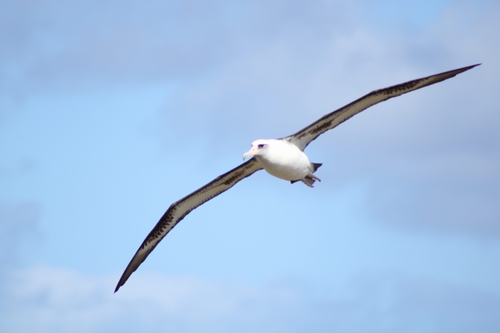
Laysan Albatross (Phoebastria immutabilis) Laysan Albatross

Short-tailed Albatross (Phoebastria albatrus) Short-tailed Albatross

Media

Loading…

In short

The most reliable field mark between Laysan and Short-tailed Albatross is the overall head and bill color in adults: Short-tailed is much larger, with a bulky, long pink bill (often with a blue tip in older birds) and a yellow-washed nape and crown, while Laysan is smaller, with a slimmer pink bill with a dark tip and a white head marked by a dark eye smudge. Juvenile Short-tailed Albatross are entirely dark brown, whereas juvenile Laysan show a two-toned look with white underparts and dark upperparts. In flight, adults of both species show mostly white underwings with black margins, but Short-tailed is bulkier and whiter overall. If you see a truly massive, white-bodied albatross with a big pink bill and yellowish head, it's Short-tailed; a smaller, gull-like bird with a dark eye patch is Laysan.

Identification tips

  1. Juvenile/immature plumage: Juvenile Short-tailed Albatross is entirely dark brown, lacking any white on the head or underparts; juvenile Laysan is two-toned, with white underparts and head and dark upperparts. This is the most reliable mark for young birds in flight or at rest.
  2. Adult head and nape color: Adult Short-tailed has a white head with a yellow-stained nape and crown; Laysan's head is white with a dark smudge around the eye and no yellow wash.
  3. Bill size and color: Short-tailed has a massive, long, pink bill (often with a blue tip in older birds); Laysan's bill is slimmer, pink with a dark tip. Bill size is especially obvious when perched or at close range.
  4. Overall size and bulk: Short-tailed is much larger and bulkier, with a longer wingspan and heavier build. Laysan is smaller and more slender, appearing more gull-like in flight and on the water.
  5. Underwing pattern: Both show mostly white underwings with black margins, but Laysan's underwing pattern is variable and can show more black in the coverts, while Short-tailed is whiter overall with black limited to flight feathers.
  6. Back and mantle color: Laysan has blackish-gray upperwing, mantle, back, and tail; Short-tailed is white-backed with black flight feathers and a black terminal tail bar.
  7. Tail: Despite the name, Short-tailed does not have a shorter tail than Laysan; in fact, its tail is slightly longer. Tail length is not a useful field mark.
  8. Eye mark: Laysan has a distinctive dark smudge around the eye; Short-tailed lacks this feature.
  9. Perched posture: Short-tailed appears heavier and sits more solidly, with a thick neck and huge bill; Laysan is more lightly built and upright.
  10. Flight style: Short-tailed is slower and more ponderous in flight due to its size; Laysan is quicker and more agile, with a lighter jizz.
  11. Habitat and abundance: Laysan is vastly more common, especially in Hawaii and the central North Pacific; Short-tailed is a major rarity anywhere, so context matters.
  12. Sex and season: No significant seasonal or sexual dimorphism in either species; all field marks apply year-round to both sexes.
  13. Hybrid confusion: Laysan and Black-footed Albatross can hybridize, but hybrids with Short-tailed are not reported; focus on the marks above.
  14. Bill tip color in older Short-tailed: Look for a bluish tinge at the bill tip in mature Short-tailed, never shown by Laysan.
  15. When marks fail: Distant or silhouetted birds may be impossible to separate without a clear view of bill size, head pattern, or overall size; always try for multiple field marks.

Size

Short-tailed Albatross is distinctly larger in every dimension: 84–94 cm length and 213–240 cm wingspan, compared to Laysan's 81 cm length and 195–203 cm wingspan. Short-tailed is also much heavier (4.3–8.5 kg vs. 1.9–4.1 kg for Laysan). In the field, Short-tailed appears bulkier and longer-winged, with a notably massive bill, while Laysan is more slender and gull-like. If seen together, the size difference is striking, but lone birds require attention to structure and plumage.

Plumage

Juvenile/immature birds are most easily separated: juvenile Short-tailed Albatross are uniformly dark brown, lacking any white on the head or underparts, while juvenile Laysan Albatross already show a two-toned pattern with white underparts and head, and dark upperparts and wings. In adults, Short-tailed is overall white with black flight feathers and a yellow-stained nape and crown; Laysan is white-headed (with a dark eye smudge), white underparts, and blackish-gray upperwings, mantle, back, and tail. The underwing pattern in Laysan is variable but always two-toned, while Short-tailed is whiter overall with black confined to flight feathers and a terminal tail bar. Bill color is also key: Short-tailed has a large pink bill (often bluish at the tip in older birds), Laysan has a slimmer pink bill with a dark tip. There is no seasonal or breeding plumage difference in either species.

Behaviour

Both species are classic oceanic albatrosses, gliding low over the waves with long, stiff-winged flight. Short-tailed Albatross, being larger and heavier, appears more ponderous and powerful in flight, with deeper wingbeats when flapping. Laysan is more agile and gull-like, with quicker, lighter movements. When perched, Short-tailed's bulk and huge bill are obvious, while Laysan sits more lightly on the ground. Both are colonial nesters, but you are far more likely to see Laysan in large groups.

Habitat

Laysan Albatross is abundant and widespread in the North Pacific, especially around the Northwestern Hawaiian Islands, and is the second-most common seabird there. Short-tailed Albatross is rare, with a tiny breeding range (mainly Torishima and a few other Japanese islands) and very few individuals seen at sea. If you are in Hawaii, almost any albatross is likely Laysan; Short-tailed is a major rarity throughout its range. Both species are pelagic outside the breeding season.

Submit a better description

Use the same sections as the comparison. Your text is published immediately.

The most reliable field mark between Laysan and Short-tailed Albatross is the overall head and bill color in adults: Short-tailed is much larger, with a bulky, long pink bill (often with a blue tip in older birds) and a yellow-washed nape and crown, while Laysan is smaller, with a slimmer pink bill with a dark tip and a white head marked by a dark eye smudge. Juvenile Short-tailed Albatross are entirely dark brown, whereas juvenile Laysan show a two-toned look with white underparts and dark upperparts. In flight, adults of both species show mostly white underwings with black margins, but Short-tailed is bulkier and whiter overall. If you see a truly massive, white-bodied albatross with a big pink bill and yellowish head, it's Short-tailed; a smaller, gull-like bird with a dark eye patch is Laysan.

  1. Juvenile/immature plumage: Juvenile Short-tailed Albatross is entirely dark brown, lacking any white on the head or underparts; juvenile Laysan is two-toned, with white underparts and head and dark upperparts. This is the most reliable mark for young birds in flight or at rest.
  2. Adult head and nape color: Adult Short-tailed has a white head with a yellow-stained nape and crown; Laysan's head is white with a dark smudge around the eye and no yellow wash.
  3. Bill size and color: Short-tailed has a massive, long, pink bill (often with a blue tip in older birds); Laysan's bill is slimmer, pink with a dark tip. Bill size is especially obvious when perched or at close range.
  4. Overall size and bulk: Short-tailed is much larger and bulkier, with a longer wingspan and heavier build. Laysan is smaller and more slender, appearing more gull-like in flight and on the water.
  5. Underwing pattern: Both show mostly white underwings with black margins, but Laysan's underwing pattern is variable and can show more black in the coverts, while Short-tailed is whiter overall with black limited to flight feathers.
  6. Back and mantle color: Laysan has blackish-gray upperwing, mantle, back, and tail; Short-tailed is white-backed with black flight feathers and a black terminal tail bar.
  7. Tail: Despite the name, Short-tailed does not have a shorter tail than Laysan; in fact, its tail is slightly longer. Tail length is not a useful field mark.
  8. Eye mark: Laysan has a distinctive dark smudge around the eye; Short-tailed lacks this feature.
  9. Perched posture: Short-tailed appears heavier and sits more solidly, with a thick neck and huge bill; Laysan is more lightly built and upright.
  10. Flight style: Short-tailed is slower and more ponderous in flight due to its size; Laysan is quicker and more agile, with a lighter jizz.
  11. Habitat and abundance: Laysan is vastly more common, especially in Hawaii and the central North Pacific; Short-tailed is a major rarity anywhere, so context matters.
  12. Sex and season: No significant seasonal or sexual dimorphism in either species; all field marks apply year-round to both sexes.
  13. Hybrid confusion: Laysan and Black-footed Albatross can hybridize, but hybrids with Short-tailed are not reported; focus on the marks above.
  14. Bill tip color in older Short-tailed: Look for a bluish tinge at the bill tip in mature Short-tailed, never shown by Laysan.
  15. When marks fail: Distant or silhouetted birds may be impossible to separate without a clear view of bill size, head pattern, or overall size; always try for multiple field marks.

Short-tailed Albatross is distinctly larger in every dimension: 84–94 cm length and 213–240 cm wingspan, compared to Laysan's 81 cm length and 195–203 cm wingspan. Short-tailed is also much heavier (4.3–8.5 kg vs. 1.9–4.1 kg for Laysan). In the field, Short-tailed appears bulkier and longer-winged, with a notably massive bill, while Laysan is more slender and gull-like. If seen together, the size difference is striking, but lone birds require attention to structure and plumage.

Juvenile/immature birds are most easily separated: juvenile Short-tailed Albatross are uniformly dark brown, lacking any white on the head or underparts, while juvenile Laysan Albatross already show a two-toned pattern with white underparts and head, and dark upperparts and wings. In adults, Short-tailed is overall white with black flight feathers and a yellow-stained nape and crown; Laysan is white-headed (with a dark eye smudge), white underparts, and blackish-gray upperwings, mantle, back, and tail. The underwing pattern in Laysan is variable but always two-toned, while Short-tailed is whiter overall with black confined to flight feathers and a terminal tail bar. Bill color is also key: Short-tailed has a large pink bill (often bluish at the tip in older birds), Laysan has a slimmer pink bill with a dark tip. There is no seasonal or breeding plumage difference in either species.

Both species are classic oceanic albatrosses, gliding low over the waves with long, stiff-winged flight. Short-tailed Albatross, being larger and heavier, appears more ponderous and powerful in flight, with deeper wingbeats when flapping. Laysan is more agile and gull-like, with quicker, lighter movements. When perched, Short-tailed's bulk and huge bill are obvious, while Laysan sits more lightly on the ground. Both are colonial nesters, but you are far more likely to see Laysan in large groups.

Laysan Albatross is abundant and widespread in the North Pacific, especially around the Northwestern Hawaiian Islands, and is the second-most common seabird there. Short-tailed Albatross is rare, with a tiny breeding range (mainly Torishima and a few other Japanese islands) and very few individuals seen at sea. If you are in Hawaii, almost any albatross is likely Laysan; Short-tailed is a major rarity throughout its range. Both species are pelagic outside the breeding season.

Discard your changes?

You have unsaved edits. If you leave now, those changes will be lost.

Laysan Albatross · Short-tailed Albatross · My Tricky Birds