
Motmot

Lincoln's Sparrow vs Hooded Warbler

Melospiza lincolnii versus Setophaga citrina

Play a quiz with Lincoln's Sparrow and Hooded Warbler
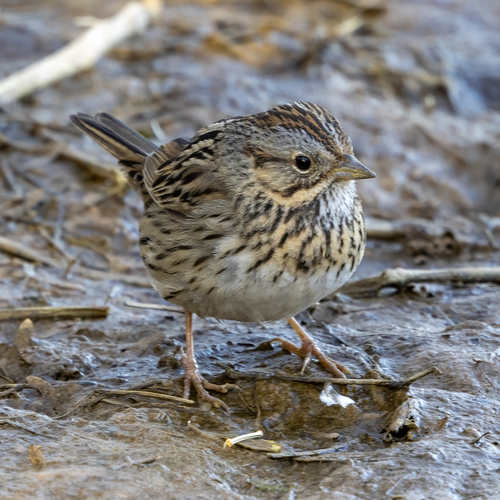
Lincoln's Sparrow (Melospiza lincolnii) Lincoln's Sparrow
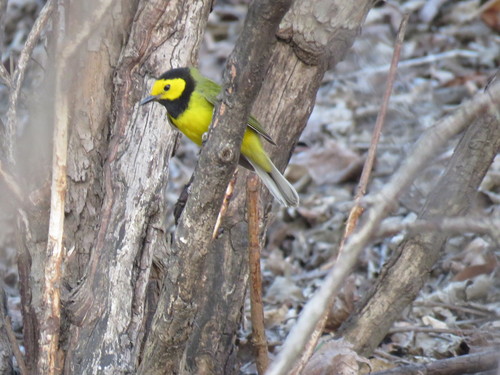
Hooded Warbler (Setophaga citrina) Hooded Warbler

Media

Loading…

In short

The most reliable field mark to separate Lincoln's Sparrow from Hooded Warbler is the presence of fine, crisp streaking on the breast and flanks of Lincoln's Sparrow (all ages), versus the clean, unmarked yellow underparts of Hooded Warbler. Lincoln's Sparrow is a secretive, streaky sparrow with a buffy, gray-streaked face and brown upperparts, while Hooded Warbler is a more active, olive-backed warbler with bright yellow underparts and, in adult males, a striking black hood. Females and immature Hooded Warblers lack the black hood but still show plain yellow underparts and a plain olive-green cap, never streaked. Structurally, Lincoln's Sparrow is bulkier with a heavier bill, while Hooded Warbler is slimmer and more delicate. Voice and habitat also differ significantly, but the breast pattern is the fastest field check.

Identification tips

  1. Breast Streaking: Lincoln's Sparrow always shows fine, crisp streaks on a buffy or light brown breast, while Hooded Warbler of any age or sex has clean, unmarked yellow underparts. This is the fastest and most reliable field mark.
  2. Facial Pattern: Lincoln's Sparrow has a gray face with brown cheeks, a buffy mustache, a brown eye-line, and a narrow eye ring. Hooded Warbler males have a striking black hood surrounding the yellow face; females and immatures have a plain olive-green cap and yellow face, lacking any streaks or mustache.
  3. Crown and Cap: Lincoln's Sparrow shows a brown crown with a central gray stripe. Hooded Warbler males have a black cap (as part of the hood), while females and immatures have an olive-green cap that does not reach the face or throat.
  4. Back and Upperparts: Lincoln's Sparrow is streaked and olive-brown above; Hooded Warbler is plain olive/green-brown above, never streaked.
  5. Tail Pattern: Hooded Warbler has white outer tail feathers (rectrices) visible in flight or when flicking the tail; Lincoln's Sparrow has a narrow, brown tail without white.
  6. Bill Shape: Lincoln's Sparrow has a heavier, conical sparrow bill suited for seeds; Hooded Warbler has a slimmer, pointed warbler bill for insect catching.
  7. Structure and Jizz: Lincoln's Sparrow appears stocky and compact, often hunched and low to the ground. Hooded Warbler is slimmer, more upright, and active, often flicking its tail and moving through low vegetation.
  8. Juvenile Pitfalls: Juvenile Lincoln's Sparrow is streaky below and may resemble other streaky sparrows, but never shows the plain yellow underparts of Hooded Warbler. Juvenile Hooded Warbler is plain below, like the adult female.
  9. Song: Lincoln's Sparrow sings a sweet, complex, gurgling song; Hooded Warbler's song is clearer and more rhythmic ('wheeta wheeta whee-tee-oh').
  10. Call Notes: Lincoln's Sparrow gives a flat 'tup' or soft 'zeet'; Hooded Warbler gives a loud, sharp 'chip.'
  11. Habitat: Lincoln's Sparrow is found in dense, low, often wet cover; Hooded Warbler prefers broadleaved forest with dense understory.
  12. Behavior: Lincoln's Sparrow is shy, skulking, and rarely flycatches; Hooded Warbler is active, often flycatching and flicking its tail.
  13. Sex Differences: Only adult male Hooded Warbler has a black hood; females and immatures lack it but are still plain below. Lincoln's Sparrow shows no sexual dimorphism in plumage.
  14. Size: Lincoln's Sparrow is heavier and bulkier; Hooded Warbler is lighter and more delicate, though similar in length.
  15. Seasonal Confusion: In migration, both may be in brushy areas, but Lincoln's Sparrow will always show streaked underparts and a sparrow's structure, while Hooded Warbler remains plain below and more active.

Size

Lincoln's Sparrow is noticeably heavier and more robust, with a body mass around 18.8 g, compared to the lighter Hooded Warbler (9–12 g). Both species are similar in length (about 13–15 cm), but Lincoln's Sparrow has a slightly longer wingspan (19–22 cm) versus Hooded Warbler's 17.5 cm. In the field, Lincoln's Sparrow appears stockier and more compact, while Hooded Warbler is slimmer and more agile.

Plumage

For all ages, Lincoln's Sparrow shows fine, dark streaks on a buffy or light brown breast, a white belly, and a gray face with a buffy mustache and brown cheeks. The crown is brown with a central gray stripe, and the upperparts are olive-brown and streaked. Juvenile Lincoln's Sparrows are streaky below, similar to juvenile swamp sparrows, but rarely have a plain crown. In contrast, Hooded Warbler of all ages has plain, unmarked yellow underparts and a plain olive/green-brown back. Adult males have a bold black hood surrounding the yellow face; females and immatures lack the hood, showing an olive-green cap that does not extend to the face or throat. The outer tail feathers of Hooded Warbler have whitish vanes, visible in flight or when the tail is flicked. There is no streaking anywhere on the underparts of Hooded Warbler at any age.

Behaviour

Lincoln's Sparrow is shy and tends to stay hidden in dense ground cover, often only glimpsed as it skulks or briefly perches to sing. It is less likely to be seen in the open except during singing bouts. Hooded Warbler is more active and conspicuous, foraging in low vegetation and frequently flicking its tail to reveal white outer feathers. It is more likely to be seen flycatching or moving through the understory. Lincoln's Sparrow rarely flycatches and is less active above ground level.

Habitat

Lincoln's Sparrow prefers dense, often wet ground cover, such as thickets, willow tangles, or sphagnum bogs, usually close to the ground. Hooded Warbler breeds in broadleaved woodlands with dense undergrowth, often in the eastern U.S. and southern Canada, and is more likely to be found in forested habitats with a well-developed shrub layer. Lincoln's Sparrow is less likely to be found in mature forest interiors, favoring brushy edges or wet meadows.

Voice

Lincoln's Sparrow sings a sweet, wrenlike, gurgling song with rapid, high-pitched introductory notes and a complex, multisyllabic pattern. Its calls include a flat 'tup' or 'chip' and a soft, high-pitched buzzy 'zeet.' Hooded Warbler's song is a series of musical notes, often rendered as 'wheeta wheeta whee-tee-oh,' and its call is a loud, sharp 'chip.' Lincoln's Sparrow's song is more complex and less musical than Hooded Warbler's, which is clearer and more rhythmic. Only male Lincoln's Sparrows sing, and they are often secretive even when vocalizing.

Submit a better description

Use the same sections as the comparison. Your text is published immediately.

The most reliable field mark to separate Lincoln's Sparrow from Hooded Warbler is the presence of fine, crisp streaking on the breast and flanks of Lincoln's Sparrow (all ages), versus the clean, unmarked yellow underparts of Hooded Warbler. Lincoln's Sparrow is a secretive, streaky sparrow with a buffy, gray-streaked face and brown upperparts, while Hooded Warbler is a more active, olive-backed warbler with bright yellow underparts and, in adult males, a striking black hood. Females and immature Hooded Warblers lack the black hood but still show plain yellow underparts and a plain olive-green cap, never streaked. Structurally, Lincoln's Sparrow is bulkier with a heavier bill, while Hooded Warbler is slimmer and more delicate. Voice and habitat also differ significantly, but the breast pattern is the fastest field check.

  1. Breast Streaking: Lincoln's Sparrow always shows fine, crisp streaks on a buffy or light brown breast, while Hooded Warbler of any age or sex has clean, unmarked yellow underparts. This is the fastest and most reliable field mark.
  2. Facial Pattern: Lincoln's Sparrow has a gray face with brown cheeks, a buffy mustache, a brown eye-line, and a narrow eye ring. Hooded Warbler males have a striking black hood surrounding the yellow face; females and immatures have a plain olive-green cap and yellow face, lacking any streaks or mustache.
  3. Crown and Cap: Lincoln's Sparrow shows a brown crown with a central gray stripe. Hooded Warbler males have a black cap (as part of the hood), while females and immatures have an olive-green cap that does not reach the face or throat.
  4. Back and Upperparts: Lincoln's Sparrow is streaked and olive-brown above; Hooded Warbler is plain olive/green-brown above, never streaked.
  5. Tail Pattern: Hooded Warbler has white outer tail feathers (rectrices) visible in flight or when flicking the tail; Lincoln's Sparrow has a narrow, brown tail without white.
  6. Bill Shape: Lincoln's Sparrow has a heavier, conical sparrow bill suited for seeds; Hooded Warbler has a slimmer, pointed warbler bill for insect catching.
  7. Structure and Jizz: Lincoln's Sparrow appears stocky and compact, often hunched and low to the ground. Hooded Warbler is slimmer, more upright, and active, often flicking its tail and moving through low vegetation.
  8. Juvenile Pitfalls: Juvenile Lincoln's Sparrow is streaky below and may resemble other streaky sparrows, but never shows the plain yellow underparts of Hooded Warbler. Juvenile Hooded Warbler is plain below, like the adult female.
  9. Song: Lincoln's Sparrow sings a sweet, complex, gurgling song; Hooded Warbler's song is clearer and more rhythmic ('wheeta wheeta whee-tee-oh').
  10. Call Notes: Lincoln's Sparrow gives a flat 'tup' or soft 'zeet'; Hooded Warbler gives a loud, sharp 'chip.'
  11. Habitat: Lincoln's Sparrow is found in dense, low, often wet cover; Hooded Warbler prefers broadleaved forest with dense understory.
  12. Behavior: Lincoln's Sparrow is shy, skulking, and rarely flycatches; Hooded Warbler is active, often flycatching and flicking its tail.
  13. Sex Differences: Only adult male Hooded Warbler has a black hood; females and immatures lack it but are still plain below. Lincoln's Sparrow shows no sexual dimorphism in plumage.
  14. Size: Lincoln's Sparrow is heavier and bulkier; Hooded Warbler is lighter and more delicate, though similar in length.
  15. Seasonal Confusion: In migration, both may be in brushy areas, but Lincoln's Sparrow will always show streaked underparts and a sparrow's structure, while Hooded Warbler remains plain below and more active.

Lincoln's Sparrow is noticeably heavier and more robust, with a body mass around 18.8 g, compared to the lighter Hooded Warbler (9–12 g). Both species are similar in length (about 13–15 cm), but Lincoln's Sparrow has a slightly longer wingspan (19–22 cm) versus Hooded Warbler's 17.5 cm. In the field, Lincoln's Sparrow appears stockier and more compact, while Hooded Warbler is slimmer and more agile.

For all ages, Lincoln's Sparrow shows fine, dark streaks on a buffy or light brown breast, a white belly, and a gray face with a buffy mustache and brown cheeks. The crown is brown with a central gray stripe, and the upperparts are olive-brown and streaked. Juvenile Lincoln's Sparrows are streaky below, similar to juvenile swamp sparrows, but rarely have a plain crown. In contrast, Hooded Warbler of all ages has plain, unmarked yellow underparts and a plain olive/green-brown back. Adult males have a bold black hood surrounding the yellow face; females and immatures lack the hood, showing an olive-green cap that does not extend to the face or throat. The outer tail feathers of Hooded Warbler have whitish vanes, visible in flight or when the tail is flicked. There is no streaking anywhere on the underparts of Hooded Warbler at any age.

Lincoln's Sparrow is shy and tends to stay hidden in dense ground cover, often only glimpsed as it skulks or briefly perches to sing. It is less likely to be seen in the open except during singing bouts. Hooded Warbler is more active and conspicuous, foraging in low vegetation and frequently flicking its tail to reveal white outer feathers. It is more likely to be seen flycatching or moving through the understory. Lincoln's Sparrow rarely flycatches and is less active above ground level.

Lincoln's Sparrow prefers dense, often wet ground cover, such as thickets, willow tangles, or sphagnum bogs, usually close to the ground. Hooded Warbler breeds in broadleaved woodlands with dense undergrowth, often in the eastern U.S. and southern Canada, and is more likely to be found in forested habitats with a well-developed shrub layer. Lincoln's Sparrow is less likely to be found in mature forest interiors, favoring brushy edges or wet meadows.

Lincoln's Sparrow sings a sweet, wrenlike, gurgling song with rapid, high-pitched introductory notes and a complex, multisyllabic pattern. Its calls include a flat 'tup' or 'chip' and a soft, high-pitched buzzy 'zeet.' Hooded Warbler's song is a series of musical notes, often rendered as 'wheeta wheeta whee-tee-oh,' and its call is a loud, sharp 'chip.' Lincoln's Sparrow's song is more complex and less musical than Hooded Warbler's, which is clearer and more rhythmic. Only male Lincoln's Sparrows sing, and they are often secretive even when vocalizing.

Discard your changes?

You have unsaved edits. If you leave now, those changes will be lost.

Lincoln's Sparrow · Hooded Warbler · My Tricky Birds