
Pine Bunting vs Cretzschmar's Bunting
Emberiza leucocephalos versus Emberiza caesia
Play a quiz with Pine Bunting and Cretzschmar's Bunting
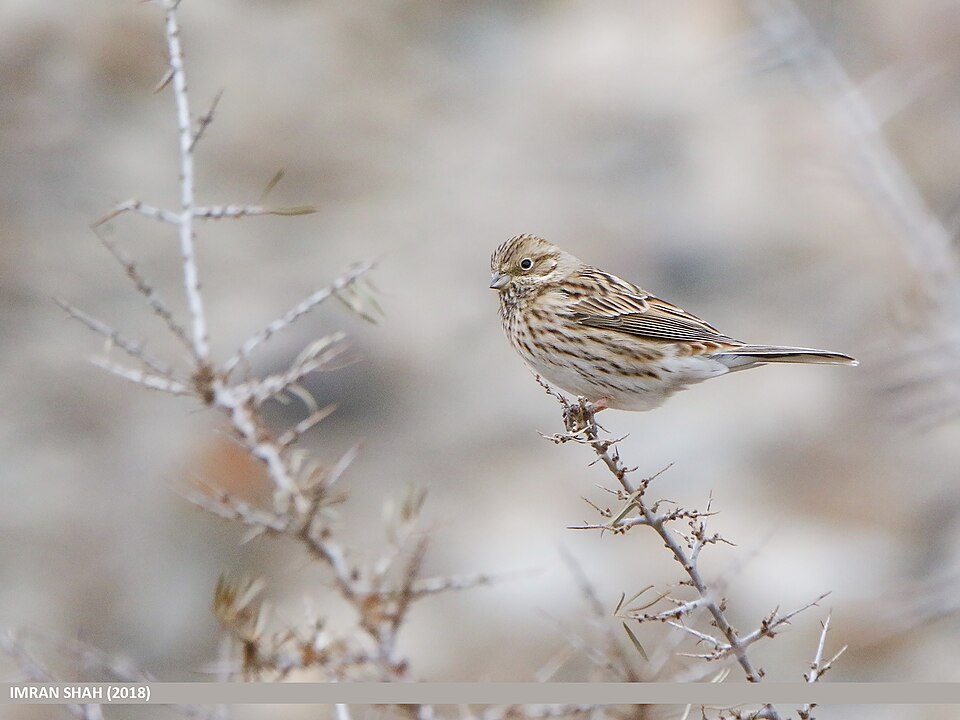 Pine Bunting
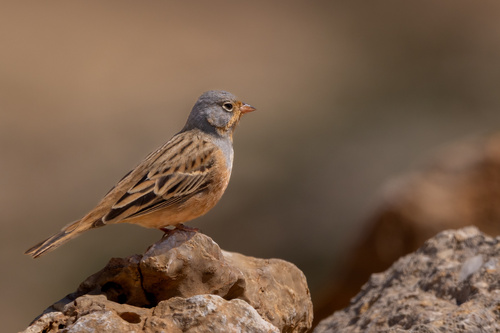 Cretzschmar's Bunting
In short
The most reliable field mark between Pine Bunting and Cretzschmar's Bunting is the head and underpart coloration in adult males: Pine Bunting males show a white crown and cheeks with a chestnut throat, while Cretzschmar's Bunting males have a grey head with orange moustaches and rusty orange underparts. Females and immatures of both species are much duller and can be confusing, but Cretzschmar's Bunting typically shows a warm brown rump and a white eye-ring, while Pine Bunting females are more heavily streaked below and lack the warm tones. In flight or at a distance, focus on the head pattern and rump color for the best separation. Both species are robust buntings with thick bills, but subtle differences in structure and plumage are key, especially outside the breeding season.
Identification tips
- Adult male head pattern: Pine Bunting males have a white crown and cheeks with a chestnut throat and forehead; Cretzschmar's Bunting males have a grey head with orange moustaches. This is the single best mark in spring and early summer.
- Underparts color (male): Pine Bunting males have paler, less colorful underparts, while Cretzschmar's Bunting males show rich rusty orange below.
- Rump color (all ages): Cretzschmar's Bunting shows a warm brown rump, especially obvious in flight or when preening; Pine Bunting's rump is not distinctly colored and blends with the back.
- Eye-ring (female/immature): Female and immature Cretzschmar's Buntings have a noticeable white eye-ring, lacking in Pine Bunting.
- Streaking below (female/immature): Pine Bunting females and immatures are more heavily streaked on the underparts than Cretzschmar's, which appear warmer and less streaked.
- Bill color: Cretzschmar's Bunting has a pink bill, especially in breeding plumage, while Pine Bunting's bill is not specifically described as pink but is thick and seed-eater shaped.
- Cheek and throat color (female/immature): Pine Bunting females have pale, streaked cheeks and throat, lacking the warm tones of Cretzschmar's.
- Non-breeding confusion: In non-breeding plumage, Pine Bunting resembles a Yellowhammer with all yellow replaced by white; Cretzschmar's remains warmer and browner, especially on the rump.
- Hybrid caution: Some Pine Buntings may show yellow fringes on the primaries due to hybridization with Yellowhammer; this does not apply to Cretzschmar's Bunting, but can confuse identification if expecting pure white in Pine Bunting.
- Size and structure: Pine Bunting is slightly larger and more robust; Cretzschmar's is smaller and more delicate, but size is a subtle clue unless both are seen together.
- Habitat context: If in Eurosiberia, Pine Bunting is expected; in southeast Europe or Mediterranean rocky scrub, Cretzschmar's is more likely.
- Flight views: In flight, look for the warm brown rump and white eye-ring of Cretzschmar's; Pine Bunting lacks both features and appears paler overall.
- Song: If heard singing and the song is Yellowhammer-like, Pine Bunting is more likely, but this is not a strong separator with current information.
- Back streaking: Both species have heavily streaked brown backs, so this is not a useful mark for separation.
- Pitfall: Females and immatures of both species can be very similar; focus on rump color and eye-ring for the safest separation in these ages.
Size
Both species are medium-sized buntings, but Pine Bunting is slightly larger and more robust (16–17.5 cm) compared to Cretzschmar's Bunting, which is smaller than Ortolan Bunting (exact measurement not provided, but generally smaller and more delicate in appearance). Both have thick, seed-eater bills, though Cretzschmar's Bunting's bill is described as pink and stout. In the field, size difference is subtle and not the most reliable mark unless seen side by side.
Plumage
-
Juvenile/First-winter/Immature: No detailed wing pattern or upperwing marks are described for either species at these ages, so separation relies on general coloration and streaking. Cretzschmar's Bunting immatures and females show a weaker head pattern but are distinguished by a warm brown rump and a white eye-ring. Pine Bunting females and immatures are more heavily streaked below and lack the warm brown rump, appearing overall paler and colder.
-
Adult male breeding: Pine Bunting males have a striking white crown and cheeks, chestnut forehead and throat, and a heavily streaked brown back. Cretzschmar's Bunting males have a grey head with orange moustaches, brown streaked upperparts except for the rump, and rusty orange underparts. The rump is a key difference: brown and warm in Cretzschmar's, not distinctive in Pine Bunting.
-
Non-breeding: Pine Bunting in non-breeding plumage resembles Yellowhammer but with all yellow replaced by white. Cretzschmar's Bunting females and non-breeding birds remain warmer overall, especially on the rump, and retain the white eye-ring.
Behaviour
Both species are typical buntings in behavior, often seen perched on exposed branches or foraging on the ground. No distinctive behavioral differences are noted in the sources for field separation. Both may show similar feeding and flight habits.
Habitat
Pine Bunting is found in Eurosiberia east of the Urals, typically in open woodland or edge habitats with scattered trees. Cretzschmar's Bunting's habitat is not detailed here, but it is generally found in southeast Europe and the eastern Mediterranean, often in rocky hillsides and scrub. If you are in Eurosiberia, Pine Bunting is far more likely; in southeast Europe or the Mediterranean, expect Cretzschmar's Bunting.
Voice
Pine Bunting's song and calls are similar to Yellowhammer, with no unique vocal differences described here for separation from Cretzschmar's Bunting. No vocal description is provided for Cretzschmar's Bunting in these notes, so voice is not a reliable separator based on current information.