

Serín Verdecillo vs Jilguero Lúgano
Serinus serinus frente a Spinus spinus
Juega un quiz con Serín Verdecillo y Jilguero Lúgano
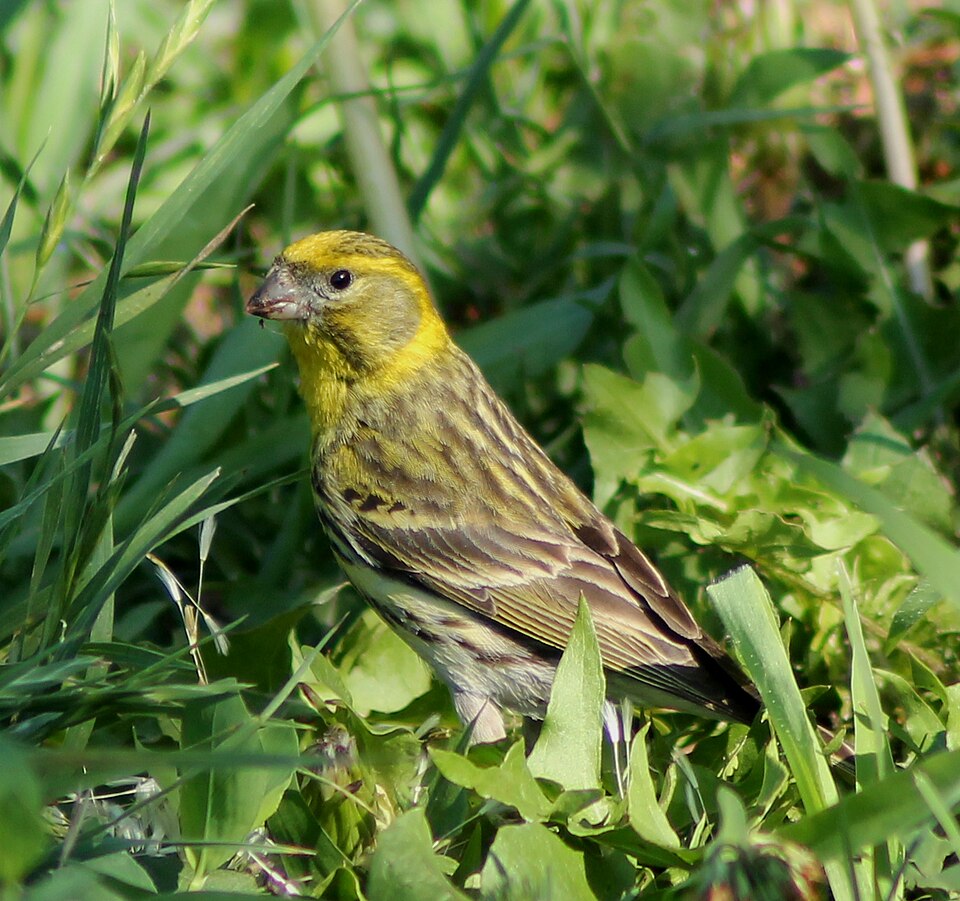 Serín Verdecillo
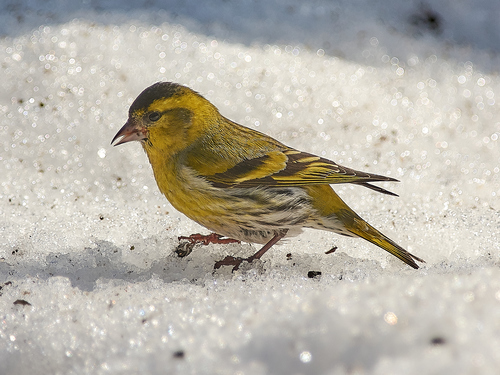 Jilguero Lúgano
En breve
La marca de campo más confiable para separar el Serín Verdecillo del Jilguero Lúgano es la presencia de una gorra y babero negros en los Jilgueros Lúganos machos adultos, que los Serines nunca muestran. Ambos son pequeños, con manchas en el plumaje y amarillo, pero los machos Jilgueros Lúganos tienen una gorra y babero negros llamativos, mientras que los Serines tienen una cara y pecho amarillos simples con un fuerte moteado. En vuelo, los Jilgueros Lúganos muestran una franja amarilla audaz en las alas y lados amarillos en la cola, mientras que los Serines tienen barras amarillas en las alas pero carecen del contraste negro y amarillo del Jilguero Lúgano. Los juveniles y las hembras de ambas especies pueden ser confusos, pero los Serines son más compactos y de cola corta, con una apariencia moteada más uniforme y menos contraste en las alas. Prestar atención cuidadosa al patrón de la cabeza, marcas en las alas y la apariencia general generalmente confirmará la identificación.
Consejos de identificación
- El macho adulto Jilguero Lúgano tiene una gorra y babero negros—el Serín nunca muestra negro en la cabeza o garganta. Esta es la marca más confiable.
- El Serín es más compacto y de cola corta que el Jilguero Lúgano, con una cola más corta y menos bifurcada—especialmente obvio cuando está posado.
- El Jilguero Lúgano muestra una franja amarilla audaz en las alas negras (todas las edades), mientras que el Serín solo tiene barras amarillas en alas más apagadas y menos contrastantes.
- En vuelo, la cola del Jilguero Lúgano es negra con lados amarillos; el Serín tiene amarillo en los lados de la cola, pero la cola es más corta y menos contrastante.
- Las partes inferiores del Serín están fuertemente moteadas (todas las edades), especialmente en el pecho y los flancos; el Jilguero Lúgano tiene menos moteado por debajo, especialmente en los machos adultos, que pueden parecer casi sin moteado en la garganta y el pecho.
- Las hembras y juveniles de Jilguero Lúgano tienen un supercilio amarillento y un vientre más pálido y menos moteado, mientras que los Serines tienen una cara y partes inferiores más uniformes y moteadas sin un supercilio claro.
- Los machos Serín tienen una cara y pecho amarillos brillantes, pero no tienen gorra ni babero negros; los machos Jilgueros Lúganos tienen ambos, además de un contraste amarillo y negro más definido.
- La forma del pico es sutilmente diferente: el pico del Jilguero Lúgano es esbelto y ligeramente curvado, adaptado para extraer semillas de conos; el pico del Serín es más corto y robusto.
- Es más probable ver al Jilguero Lúgano alimentándose acrobáticamente en los árboles, especialmente en álamos o abetos; el Serín se alimenta más a menudo más bajo, en arbustos o en el suelo.
- Escucha la canción: el Serín emite un zumbido rápido, similar al de un insecto; el Jilguero Lúgano canta una serie más musical y variada de trinos y gorjeos.
- El hábitat puede ayudar: el Jilguero Lúgano prefiere bosques de coníferas o mixtos; el Serín es más típico de bosques abiertos, tierras agrícolas o jardines con árboles dispersos.
- Composición de bandadas: en bandadas mixtas, el Jilguero Lúgano es a menudo la especie más numerosa y accesible en el norte/centro de Europa; el Serín es más común en el sur.
- Confusión juvenil: los juveniles de ambas especies son moteados y apagados, pero la franja del ala del Jilguero Lúgano siempre es más ancha y llamativa, y la cara es menos uniforme que la del Serín.
- Contexto estacional: el Jilguero Lúgano es más propenso a irrumpir en grandes números en invierno, especialmente en años con malas cosechas de conos; el Serín es más residente en el sur, con solo poblaciones del norte migrando.
- Si tienes dudas, concéntrate en el patrón de la cabeza y las marcas en las alas: la presencia o ausencia de una gorra negra y el ancho/contraste de la franja amarilla en las alas son las marcas de campo más seguras en todos menos en los juveniles más apagados.
Tamaño
Ambas especies son similares en longitud (11–12.5 cm para el Jilguero Lúgano, 11–12 cm para el Serín), pero el Jilguero Lúgano es ligeramente más pesado (promedio 13.8g frente a no listado para el Serín, pero el Serín es el pinzón europeo más pequeño). En el campo, el Serín a menudo parece aún más compacto y de cola corta que el Jilguero Lúgano. El Jilguero Lúgano puede parecer un poco más alado y menos robusto, especialmente en vuelo.
Plumaje
-
Plumaje juvenil y femenino: Ambas especies son moteadas y amarillentas, pero las hembras y juveniles de Jilguero Lúgano son más oliva por encima, con un amarillo menos vibrante y un vientre más pálido y menos moteado. El Serín de todas las edades está más fuertemente moteado por debajo, especialmente en el pecho y los flancos, y tiene una cara más apagada y uniforme sin gorra ni babero. Los juveniles y hembras de Jilguero Lúgano carecen de la gorra y babero negros, pero aún muestran un supercilio amarillento y una franja amarilla en las alas, que es más ancha y llamativa que las barras del Serín.
-
Plumaje del macho adulto: Los machos Jilgueros Lúganos son inconfundibles con una gorra y babero negros, cara amarilla brillante y una franja amarilla audaz en las alas negras. Los machos Serín tienen una cara y pecho amarillos brillantes, barras amarillas en las alas y lados amarillos en la cola, pero carecen de negro en la cabeza o garganta. El moteado del Serín es más pesado y extenso por debajo.
-
Vistas de vuelo: El Jilguero Lúgano muestra un fuerte contraste entre las alas negras y la franja amarilla en las alas, y la cola negra con lados amarillos. Las alas del Serín son menos contrastantes, con barras amarillas en las alas pero no una franja sólida, y la cola es más corta y menos profundamente bifurcada.
Comportamiento
Ambas especies son activas, sociales y a menudo se ven en bandadas, especialmente fuera de la temporada de cría. Los Jilgueros Lúganos son alimentadores acrobáticos, frecuentemente colgando boca abajo de conos o amentos, y es más probable verlos alimentándose en lo alto de los árboles. Los Serines también son activos pero tienden a forrajear más bajo, a menudo en arbustos o en el suelo. Ambas especies son conspicuas y no especialmente tímidas, pero los Jilgueros Lúganos pueden ser más confiados y accesibles en bandadas mixtas.
Hábitat
El Jilguero Lúgano prefiere bosques de coníferas y mixtos, especialmente donde hay álamos y abetos, y es común en gran parte de Europa y Eurosiberia. El Serín prefiere bosques abiertos, áreas cultivadas y lugares con algunas coníferas, pero es más típico del sur y centro de Europa y el norte de África. En invierno, ambos pueden encontrarse en una variedad de hábitats, pero el Jilguero Lúgano es más probable que esté en bosques densos o parques con árboles maduros, mientras que el Serín se encuentra más a menudo en áreas abiertas o semiabiertas.
Voz
La canción del Serín es un trino rápido y zumbante, a menudo comparado con una moneda girando o un sonido similar al de un insecto. La canción del Jilguero Lúgano es una mezcla agradable de trinos y gorjeos, más musical y variada que el zumbido monótono del Serín. Las llamadas también son diferentes: el Serín emite un 'tsee' agudo y alto, mientras que el Jilguero Lúgano tiene una llamada más suave y gorjeante. En bandadas mixtas, la voz puede ser una pista útil.