

European Serin vs Eurasian Siskin
Serinus serinus versus Spinus spinus
Play a quiz with European Serin and Eurasian Siskin
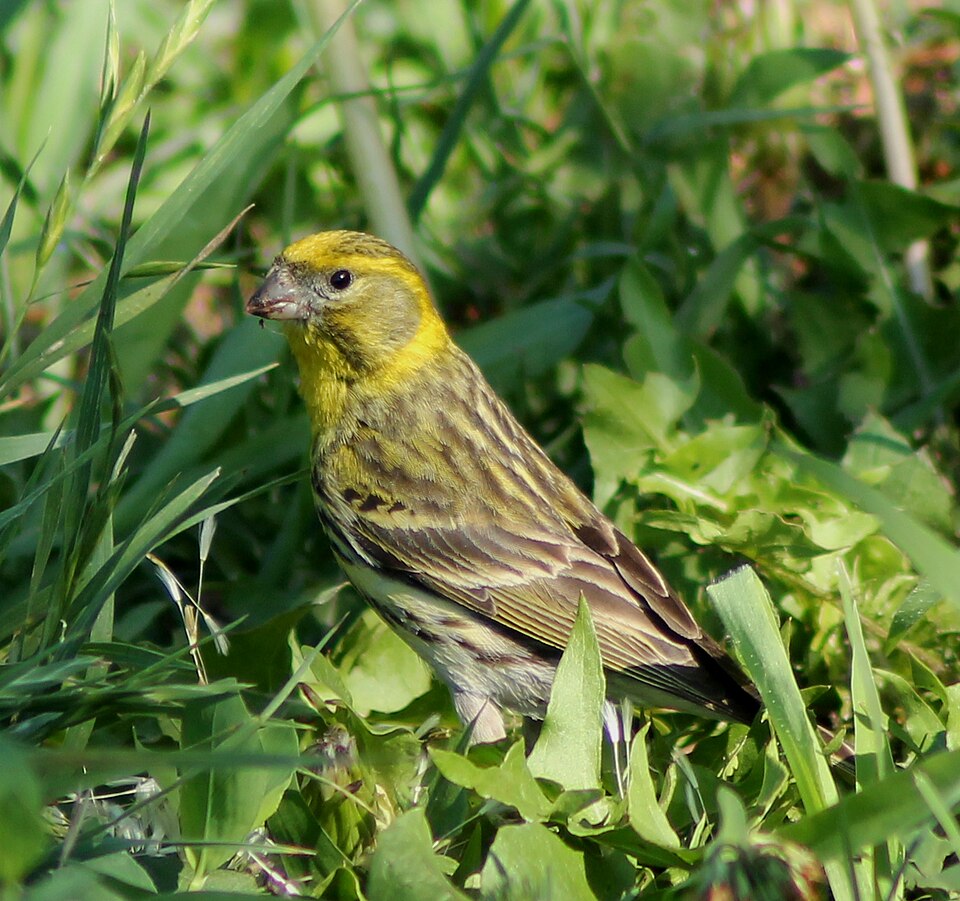 European Serin
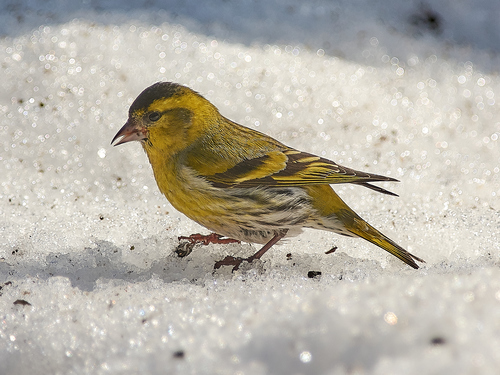 Eurasian Siskin
In short
The most reliable field mark to separate European Serin from Eurasian Siskin is the presence of a black cap and bib in adult male Siskins, which Serins never show. Both are small, streaky finches with yellow in the plumage, but Siskin males have a striking black cap and bib, while Serins have a plain yellow face and breast with heavy streaking. In flight, Siskins show a bold yellow wing stripe and yellow sides to the tail, while Serins have yellow wing bars but lack the Siskin's black-and-yellow contrast. Juveniles and females of both species can be confusing, but Serins are more compact and short-tailed, with a more uniform streaky appearance and less contrast in the wings. Careful attention to head pattern, wing markings, and overall jizz will usually clinch the ID.
Identification tips
- Adult male Siskin has a black cap and bib—Serin never shows any black on the head or throat. This is the single most reliable mark.
- Serin is more compact and short-tailed than Siskin, with a stubby, less forked tail—especially obvious when perched.
- Siskin shows a bold yellow wing stripe on black wings (all ages), while Serin only has yellow wing bars on duller, less contrasting wings.
- In flight, Siskin's tail is black with yellow sides; Serin has yellow on the tail sides but the tail is shorter and less contrasting.
- Serin's underparts are heavily streaked (all ages), especially on the breast and flanks; Siskin is less streaked below, especially in adult males, which can appear almost unstreaked on the throat and breast.
- Female and juvenile Siskins have a yellowish supercilium and a paler, less streaked belly, while Serins have a more uniform, streaky face and underparts without a clear supercilium.
- Serin males have a bright yellow face and breast, but no black cap or bib; Siskin males have both, plus a more sharply defined yellow and black contrast.
- Bill shape is subtly different: Siskin's bill is slender and slightly decurved, adapted for extracting seeds from cones; Serin's bill is shorter and stubbier.
- Siskin is more likely to be seen feeding acrobatically in trees, especially on alder or spruce; Serin is more often foraging lower, in shrubs or on the ground.
- Listen for the song: Serin gives a rapid, insect-like buzz; Siskin sings a more musical, varied series of trills and twitters.
- Habitat can help: Siskin prefers coniferous or mixed woodland; Serin is more typical of open woodland, farmland, or gardens with scattered trees.
- Flock composition: In mixed flocks, Siskin is often the more numerous and approachable species in northern/central Europe; Serin is more common in the south.
- Juvenile confusion: Both species' juveniles are streaky and dull, but Siskin's wing stripe is always broader and more striking, and the face is less uniform than Serin's.
- Seasonal context: Siskin is more likely to irrupt in large numbers in winter, especially in years with poor cone crops; Serin is more resident in the south, with only northern populations migrating.
- If in doubt, focus on head pattern and wing markings: The presence or absence of a black cap and the width/contrast of the yellow wing stripe are the safest field marks in all but the dullest juveniles.
Size
Both species are similar in length (11–12.5 cm for Siskin, 11–12 cm for Serin), but Siskin is slightly heavier (average 13.8g vs. unlisted for Serin, but Serin is the smallest European finch). In the field, Serin often appears even more compact and short-tailed than Siskin. Siskin may look a bit longer-winged and less stubby, especially in flight.
Plumage
-
Juvenile and female plumage: Both species are streaky and yellowish, but Siskin females and juveniles are more olive-toned above, with a less vibrant yellow and a paler, less streaked belly. Serin of all ages is more heavily streaked below, especially on the breast and flanks, and has a duller, more uniform face without a cap or bib. Siskin juveniles and females lack the black cap and bib, but still show a yellowish supercilium and a yellow wing stripe, which is broader and more striking than Serin's wing bars.
-
Adult male plumage: Siskin males are unmistakable with a black cap and bib, bright yellow face, and a bold yellow wing stripe on black wings. Serin males have a plain, bright yellow face and breast, yellow wing bars, and yellow tail sides, but lack any black on the head or throat. Serin's streaking is heavier and more extensive below.
-
Flight views: Siskin shows a strong contrast between black wings and yellow wing stripe, and black tail with yellow sides. Serin's wings are less contrasting, with yellow wing bars but not a solid stripe, and the tail is shorter and less deeply forked.
Behaviour
Both species are active, social, and often seen in flocks, especially outside the breeding season. Siskins are acrobatic feeders, frequently hanging upside down from cones or catkins, and are more likely to be seen feeding high in trees. Serins are also active but tend to forage lower, often in shrubs or on the ground. Both species are conspicuous and not especially shy, but Siskins may be more trusting and approachable in mixed flocks.
Habitat
Siskin favors coniferous and mixed woodland, especially where alder and spruce are present, and is common across much of Europe and Eurosiberia. Serin prefers open woodland, cultivated areas, and places with some conifers, but is more typical of southern and central Europe and North Africa. In winter, both can be found in a variety of habitats, but Siskin is more likely in dense woodland or parks with mature trees, while Serin is more often in open or semi-open areas.
Voice
Serin's song is a rapid, buzzing trill, often compared to a spinning coin or insect-like rattle. Siskin's song is a pleasant mix of tweets and trills, more musical and varied than Serin's monotonous buzz. Calls are also different: Serin gives a sharp, high-pitched 'tsee', while Siskin has a softer, twittering call. In mixed flocks, voice can be a useful clue.