

Colibrí Caribeño Gorjiverde vs Colibrí Crestado
Eulampis holosericeus frente a Orthorhyncus cristatus
Juega un quiz con Colibrí Caribeño Gorjiverde y Colibrí Crestado
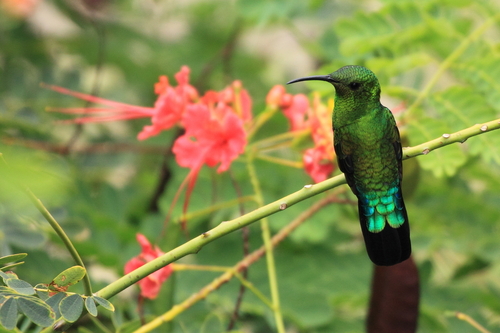 Colibrí Caribeño Gorjiverde
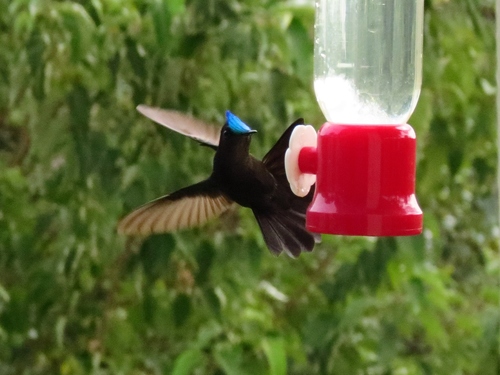 Colibrí Crestado
En breve
La marca de campo más confiable para separar estos dos es la presencia de una cresta verde o azul-verde prominente en el macho Colibrí Crestado, que está completamente ausente en el Colibrí Caribeño Gorjiverde de cualquier edad o sexo. El Colibrí Caribeño Gorjiverde también es mucho más grande y robusto, con un pico notablemente más largo y más curvado hacia abajo, especialmente en las hembras. En el campo, note el gorjeo verde brillante del Carib y el vientre negro frente a las partes inferiores sucias del Crestado (macho) o las partes inferiores gris pálido (hembra). El patrón de la cola y la forma del pico también son útiles, pero tenga cuidado con las hembras apagadas y la mala luz que puede enmascarar algunos colores. No se describen patrones de alas específicos para juveniles o inmaduros para ninguna de las especies, así que concéntrese primero en la estructura y el patrón de la cabeza.
Consejos de identificación
- Presencia de cresta (solo machos): El macho Colibrí Crestado muestra una cresta metálica verde a azul-verde prominente—sin cresta en el Colibrí Caribeño Gorjiverde de cualquier edad o sexo.
- Forma y longitud del pico: El Carib tiene un pico notablemente más largo y más curvado hacia abajo, especialmente en las hembras; el pico del Crestado es corto, recto y negro en ambos sexos. Use esto cuando los pájaros estén posados o alimentándose.
- Tamaño y estructura: El Carib es mucho más grande y robusto (6.2 g, 10.5–12 cm), con un cuerpo robusto y una apariencia más pesada. El Crestado es más pequeño, más ligero y más delicado en su construcción.
- Color del gorjeo y la garganta: El Carib de ambos sexos tiene un gorjeo verde brillante (con un borde azul en los machos, que generalmente no es obvio); los machos Crestados tienen una garganta y partes inferiores negras sucias, las hembras tienen partes inferiores gris pálido.
- Color de la espalda: Ambos tienen espaldas verdosas, pero la del Carib es más brillante y uniforme; la del Crestado es de un verde-bronze metálico apagado.
- Partes inferiores (hembras): La hembra Carib tiene un vientre oscuro; la hembra Crestada tiene partes inferiores gris pálido, a menudo contrastando con las partes superiores verde-bronze.
- Patrón de la cola: La cola del Carib es azul oscuro (a menudo parece negra), carece de puntas pálidas. La hembra Crestada muestra puntas anchas gris-blancas en cuatro plumas exteriores de la cola—único entre estos dos.
- Forma de la cola: Ambos tienen colas redondeadas, pero la del Crestado es proporcionalmente más corta y más compacta.
- Patrón de la cabeza (hembras): La hembra Crestada carece de cresta, pero tiene una frente y corona verde-bronze; las hembras Carib tienen una corona verde simple, que coincide con la espalda.
- Voz: El agudo 'chup!' o 'chuwp!' del Carib es menos musical que la serie de 'tsip/tzip' y 'tslee-tslee-tslee' del Crestado. Use con precaución, ya que los llamados pueden ser difíciles de separar en el campo.
- Comportamiento: Ambos son territoriales, pero el Crestado es especialmente agresivo, a veces atacando especies no aves. Los machos Carib defienden territorios durante todo el año, las hembras principalmente en la temporada no reproductiva.
- Estilo de vuelo: El Carib parece más pesado y poderoso en vuelo; el Crestado es más rápido y ágil.
- Hábitat: Se superponen, por lo que no son diagnósticos, pero ambos son comunes en jardines y áreas perturbadas.
- Trampas: Las hembras Carib apagadas pueden parecer menos vibrantes, y la mala luz puede oscurecer la cola azul del Carib o el gorjeo verde. Las partes inferiores pálidas y las puntas de la cola de la hembra Crestada son confiables cuando se ven bien.
- Sin patrón de alas específico por edad: Ninguna de las especies tiene una marca de ala o vuelo distintiva para juveniles/inmaduros, así que confíe en la cresta, el pico y el patrón de las partes inferiores/cola para todas las edades.
Tamaño
El Colibrí Caribeño Gorjiverde es significativamente más grande y pesado (masa corporal alrededor de 6.2 g [wikidata]) y mide 10.5–12 cm de longitud. El Colibrí Crestado es claramente más pequeño y más delicado, con un pico notablemente más corto y una apariencia más compacta. En comparación directa, el Carib se verá más robusto y fuerte, mientras que el Crestado parece pequeño y ágil.
Plumaje
- Patrón de alas juvenil/inmaduro: No se describen marcas de ala o vuelo específicas por edad para ninguna de las especies, por lo que no son confiables para la separación.
- Machos adultos: Los machos del Colibrí Caribeño Gorjiverde tienen un gorjeo verde brillante bordeado de azul (aunque el borde generalmente no es obvio), una espalda verde brillante, vientre negro, ventrículo verde y una cola azul oscura que puede parecer negra. Los machos del Colibrí Crestado tienen una cresta metálica verde a azul-verde, partes superiores de un verde-bronze metálico apagado, partes inferiores negras sucias y una cola redondeada negra. La cresta es la diferencia clave.
- Hembras adultas: Las hembras Carib son similares a los machos pero con una espalda verde más apagada y un pico más largo y más curvado hacia abajo. Sus partes inferiores permanecen oscuras. Las hembras del Colibrí Crestado carecen de cresta, tienen partes superiores verde-bronze metálico, partes inferiores gris claro y una cola negruzca con cuatro plumas exteriores ampliamente puntadas de gris claro. Esta punta de cola pálida es única entre estos dos.
- Cola: La cola del Carib es azul oscuro (a menudo parece negra), mientras que la del Crestado es negruzca y redondeada, con hembras que muestran puntas blancas distintivas en las plumas exteriores.
- Pico: El pico del Carib es más largo y más curvado (especialmente en las hembras); el del Crestado es corto, recto y negro en ambos sexos.
Comportamiento
Ambas especies son territoriales y agresivas, pero el Colibrí Crestado es conocido por atacar no solo a otros colibríes sino también a especies no aves, a veces reduciendo la diversidad local. Los machos del Colibrí Caribeño Gorjiverde defienden territorios de alimentación durante todo el año, mientras que las hembras lo hacen principalmente fuera de la temporada de reproducción. Ambas especies se alimentan de néctar y pequeños artrópodos, a menudo atrapando insectos en vuelo. En vuelo, el Carib parece más pesado y poderoso, mientras que el Crestado es más rápido y ágil.
Hábitat
Ambas especies comparten un rango desde Puerto Rico a través de las Antillas Menores y se pueden encontrar en jardines, crecimiento secundario y vegetación alrededor de hogares. El Colibrí Caribeño Gorjiverde se adapta bien a hábitats afectados por humanos y es generalmente común donde está presente. El Colibrí Crestado tiene un rango y preferencia de hábitat similar, pero también se registra como un vagabundo en Florida. El hábitat por sí solo no es un separador confiable entre estos dos.
Voz
El Colibrí Caribeño Gorjiverde emite un agudo llamado 'chup!' o 'chuwp!', y durante disputas, produce sonajeros y zumbidos de alas. Los llamados del Colibrí Crestado son notas cortas de 'tsip' o 'tzip', además de una serie más larga de 'tslee-tslee-tslee-tslee'. El llamado del Carib es más agudo y menos musical, mientras que el del Crestado es más agudo y repetitivo. Sin embargo, los llamados no siempre son diagnósticos en el campo debido a la superposición y la experiencia del observador.
Colibrí Caribeño Gorjiverde · Colibrí Crestado · Mis aves difíciles