

Green-throated Carib vs Antillean Crested Hummingbird
Eulampis holosericeus contro Orthorhyncus cristatus
Fai un quiz con Green-throated Carib e Antillean Crested Hummingbird
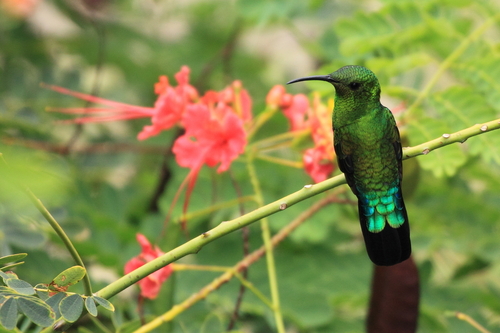 Green-throated Carib
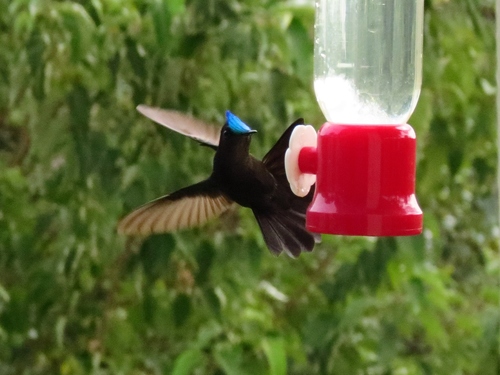 Antillean Crested Hummingbird
In breve
Il segno di campo più affidabile per separare questi due è la presenza di una cresta verde o verde-blu prominente nel maschio dell'Antillean Crested Hummingbird, che è completamente assente nel Green-throated Carib di qualsiasi età o sesso. Il Green-throated Carib è anche molto più grande e massiccio, con un becco notevolmente più lungo e più curvo, specialmente nelle femmine. Sul campo, nota il gorget verde brillante del Carib e il ventre nero rispetto alle parti inferiori nerastre (maschio) o grigie chiare (femmina) del Crested. Il modello della coda e la forma del becco sono anche utili, ma fai attenzione alle femmine opache e alla scarsa illuminazione che maschera alcuni colori. I modelli delle ali specifici per i giovani o gli immaturi non sono descritti per nessuna delle due specie, quindi concentrati prima sulla struttura e sul modello della testa.
Consigli di identificazione
- Crest presence (males only): Il maschio dell'Antillean Crested Hummingbird mostra una cresta metallica verde a verde-blu prominente—nessuna cresta nel Green-throated Carib di qualsiasi età o sesso.
- Bill shape and length: Il Carib ha un becco notevolmente più lungo e più curvo, specialmente nelle femmine; il becco del Crested è corto, dritto e nero in entrambi i sessi. Usa questo quando gli uccelli sono appollaiati o si nutrono.
- Size and structure: Il Carib è molto più grande e massiccio (6.2 g, 10.5–12 cm), con un corpo robusto e un aspetto più pesante. Il Crested è più piccolo, più leggero e più delicato nella struttura.
- Gorget and throat color: Il Carib di entrambi i sessi ha un gorget verde brillante (con un bordo blu nei maschi, di solito non ovvio); i maschi Crested hanno una gola e parti inferiori nere nerastre, le femmine hanno parti inferiori grigie chiare.
- Back color: Entrambi hanno schiene verdastre, ma quella del Carib è più brillante e uniforme; quella del Crested è di un bronzo-verde metallico opaco.
- Underparts (females): La femmina del Carib ha un ventre scuro; la femmina del Crested ha parti inferiori grigie chiare, spesso in contrasto con le parti superiori bronzo-verdi.
- Tail pattern: La coda del Carib è blu scuro (spesso appare nera), priva di punte chiare. La femmina del Crested mostra punte bianche-grigie larghe su quattro penne esterne della coda—unico tra questi due.
- Tail shape: Entrambi hanno code arrotondate, ma quella del Crested è proporzionalmente più corta e più compatta.
- Head pattern (females): La femmina del Crested non ha alcuna cresta, ma ha una fronte e una corona bronzo-verdi; le femmine del Carib hanno una corona verde semplice, che corrisponde alla schiena.
- Voice: Il 'chup!' o 'chuwp!' acuto del Carib è meno musicale rispetto alla serie 'tsip/tzip' e 'tslee-tslee-tslee' del Crested. Usa con cautela, poiché i richiami possono essere difficili da separare sul campo.
- Behavior: Entrambi sono territoriali, ma il Crested è soprattutto aggressivo, a volte attaccando specie non aviarie. I maschi del Carib difendono i territori tutto l'anno, le femmine principalmente nella stagione non riproduttiva.
- Flight style: Il Carib appare più pesante e più potente in volo; il Crested è più veloce e più agile.
- Habitat: Sovrapposti, quindi non diagnostici, ma entrambi sono comuni in giardini e aree disturbate.
- Pitfalls: Le femmine opache del Carib possono apparire meno vivaci, e la scarsa luce può oscurare la coda blu del Carib o il gorget verde. Le parti inferiori chiare e le punte della coda della femmina del Crested sono affidabili quando viste bene.
- No age-specific wing pattern: Nessuna delle due specie ha un distintivo modello di ala superiore o segno di volo per i giovani/immaturi, quindi fai affidamento su cresta, becco e modello delle parti inferiori/coda per tutte le età.
Taglia
Il Green-throated Carib è significativamente più grande e più pesante (massa corporea circa 6.2 g [wikidata]) e misura 10.5–12 cm di lunghezza. L'Antillean Crested Hummingbird è nettamente più piccolo e più delicato, con un becco notevolmente più corto e un aspetto più compatto. In confronto diretto, il Carib apparirà più massiccio e robusto, mentre il Crested appare minuto e agile.
Piumaggio
- Juvenile/immature wing pattern: Non sono descritti segni distintivi di ali superiori o segni di volo specifici per età per nessuna delle due specie, quindi questi non sono affidabili per la separazione.
- Adult males: I maschi del Green-throated Carib hanno un gorget verde brillante bordato di blu (anche se il bordo di solito non è ovvio), una schiena verde brillante, un ventre nero, un vent verde e una coda blu scura che può apparire nera. I maschi dell'Antillean Crested Hummingbird hanno una cresta verde metallica a verde-blu, parti superiori di bronzo-verde metallico opaco, parti inferiori nere nerastre e una coda arrotondata nera. La cresta è la chiave della differenza.
- Adult females: Le femmine del Carib sono simili ai maschi ma con una schiena verde più opaca e un becco più lungo e più curvo. Le loro parti inferiori rimangono scure. Le femmine dell'Antillean Crested Hummingbird non hanno una cresta, hanno parti superiori di bronzo-verde metallico, parti inferiori grigie chiare e una coda nerastra con quattro penne esterne ampiamente punteggiate di grigio-bianco. Questa punta di coda chiara è unica tra questi due.
- Tail: La coda del Carib è blu scuro (spesso appare nera), mentre quella del Crested è nerastra e arrotondata, con le femmine che mostrano punte bianche distintive sulle penne esterne.
- Bill: Il becco del Carib è più lungo e più curvo (specialmente nelle femmine); quello del Crested è corto, dritto e nero in entrambi i sessi.
Comportamento
Entrambe le specie sono territoriali e aggressive, ma l'Antillean Crested Hummingbird è noto per attaccare non solo altri colibrì ma anche specie non aviarie, a volte riducendo la diversità locale. I maschi del Green-throated Carib difendono i territori di alimentazione tutto l'anno, mentre le femmine lo fanno principalmente al di fuori della stagione riproduttiva. Entrambe le specie si nutrono di nettare e piccoli artropodi, spesso catturando insetti in volo. In volo, il Carib appare più pesante e potente, mentre il Crested è più veloce e più agile.
Habitat
Entrambe le specie condividono un'area che va da Porto Rico attraverso le Piccole Antille e possono essere trovate in giardini, crescita secondaria e vegetazione intorno alle case. Il Green-throated Carib si adatta bene agli habitat influenzati dall'uomo ed è generalmente comune dove presente. L'Antillean Crested Hummingbird ha un'area e una preferenza di habitat simili, ma è anche registrato come vagrante in Florida. L'habitat da solo non è un separatore affidabile tra questi due.
Voce
Il Green-throated Carib emette un richiamo acuto 'chup!' o 'chuwp!', e durante le dispute, produce rumori e fruscii delle ali. I richiami dell'Antillean Crested Hummingbird sono note brevi 'tsip' o 'tzip', più una serie più lunga di 'tslee-tslee-tslee-tslee'. Il richiamo del Carib è più acuto e meno musicale, mentre quello del Crested è più acuto e ripetitivo. Tuttavia, i richiami non sono sempre diagnostici sul campo a causa della sovrapposizione e dell'esperienza dell'osservatore.
Green-throated Carib · Antillean Crested Hummingbird · I miei uccelli difficili