

green-throated carib vs antillean crested hummingbird
Eulampis holosericeus versus Orthorhyncus cristatus
Jogue um quiz com green-throated carib e antillean crested hummingbird
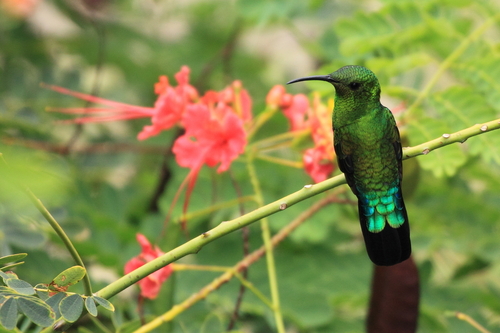 green-throated carib
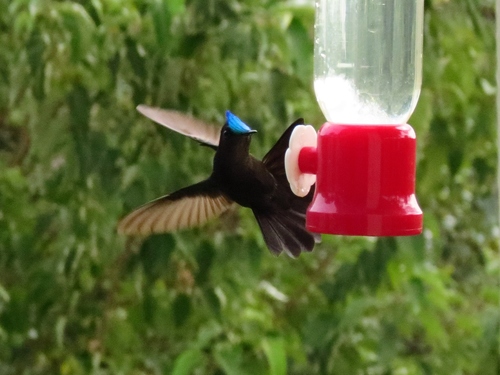 antillean crested hummingbird
Em resumo
A marca de campo mais confiável para separar esses dois é a presença de uma crista verde ou azul-esverdeada proeminente no macho antillean crested hummingbird, que está completamente ausente no green-throated carib de qualquer idade ou sexo. O green-throated carib também é muito maior e mais robusto, com um bico notavelmente mais longo e mais curvado para baixo, especialmente nas fêmeas. No campo, observe o gorget verde brilhante e a barriga preta do carib em comparação com as partes inferiores esfumaçadas do crested (macho) ou as partes inferiores cinza pálido (fêmea). O padrão da cauda e a forma do bico também são úteis, mas tenha cuidado com fêmeas apagadas e luz fraca que pode mascarar algumas cores. Padrões de asas específicos para juvenis ou imaturos não são descritos para nenhuma das espécies, então concentre-se primeiro na estrutura e no padrão da cabeça.
Dicas de identificação
- Presença de crista (somente machos): O macho antillean crested hummingbird apresenta uma crista metálica verde a azul-esverdeada proeminente—sem crista no green-throated carib de qualquer idade ou sexo.
- Forma e comprimento do bico: O carib tem um bico notavelmente mais longo e mais curvado para baixo, especialmente nas fêmeas; o bico do crested é curto, reto e preto em ambos os sexos. Use isso quando os pássaros estiverem empoleirados ou se alimentando.
- Tamanho e estrutura: O carib é muito maior e mais robusto (6,2 g, 10,5–12 cm), com um corpo robusto e uma aparência mais pesada. O crested é menor, mais leve e mais delicado em construção.
- Cor do gorget e da garganta: O carib de ambos os sexos tem um gorget verde brilhante (com uma borda azul nos machos, geralmente não óbvia); os machos crested têm uma garganta e partes inferiores pretas esfumaçadas, enquanto as fêmeas têm partes inferiores cinza pálido.
- Cor das costas: Ambos têm costas esverdeadas, mas as do carib são mais brilhantes e mais uniformes; as do crested são de um bronze-verde metálico opaco.
- Partes inferiores (fêmeas): A fêmea carib tem uma barriga escura; a fêmea crested tem partes inferiores cinza pálido, frequentemente contrastando com as partes superiores bronze-verde.
- Padrão da cauda: A cauda do carib é azul escura (frequentemente parece preta), sem pontas claras. A fêmea crested apresenta pontas amplas cinza-esbranquiçadas em quatro penas da cauda externa—único entre esses dois.
- Forma da cauda: Ambos têm caudas arredondadas, mas a do crested é proporcionalmente mais curta e mais compacta.
- Padrão da cabeça (fêmeas): A fêmea crested não tem crista, mas possui uma testa e coroa bronze-verde; as fêmeas carib têm uma coroa verde simples, combinando com as costas.
- Voz: O agudo 'chup!' ou 'chuwp!' do carib é menos musical do que a série 'tsip/tzip' e 'tslee-tslee-tslee' do crested. Use com cautela, pois os chamados podem ser difíceis de separar no campo.
- Comportamento: Ambos são territoriais, mas o crested é especialmente agressivo, às vezes atacando espécies não-aves. Os machos carib defendem territórios durante todo o ano, enquanto as fêmeas o fazem principalmente fora da temporada de reprodução.
- Estilo de voo: O carib parece mais pesado e mais poderoso em voo; o crested é mais rápido e mais ágil.
- Habitat: Sobrepondo-se, portanto, não é diagnóstico, mas ambos são comuns em jardins e áreas perturbadas.
- Armadilhas: Fêmeas carib apagadas podem parecer menos vibrantes, e a luz fraca pode obscurecer a cauda azul ou o gorget verde do carib. As partes inferiores pálidas e as pontas da cauda da fêmea crested são confiáveis quando vistas bem.
- Sem padrão de asa específico para idade: Nenhuma das espécies tem uma marca de asa ou de voo juvenil/imatura distinta, então confie na crista, bico e padrão de partes inferiores/cauda para todas as idades.
Tamanho
O green-throated carib é significativamente maior e mais pesado (massa corporal cerca de 6,2 g [wikidata]) e mede 10,5–12 cm de comprimento. O antillean crested hummingbird é distintamente menor e mais delicado, com um bico notavelmente mais curto e uma aparência mais compacta. Em comparação direta, o carib parecerá mais robusto e mais forte, enquanto o crested aparece pequeno e ágil.
Plumagem
- Padrão de asa juvenil/imaturo: Nenhum padrão de asa ou marca de voo específica para idade é descrito para nenhuma das espécies, então estes não são confiáveis para separação.
- Machos adultos: Os machos green-throated carib têm um gorget verde brilhante bordado por azul (embora a borda geralmente não seja óbvia), costas verdes brilhantes, barriga preta, ventres verdes e uma cauda azul escura que pode parecer preta. Os machos antillean crested hummingbird têm uma crista metálica verde a azul-esverdeada, partes superiores de bronze-verde metálico opaco, partes inferiores pretas esfumaçadas e uma cauda arredondada preta. A crista é a principal diferença.
- Fêmeas adultas: As fêmeas carib são semelhantes aos machos, mas com uma costa verde mais apagada e um bico mais longo e mais curvado. Suas partes inferiores permanecem escuras. As fêmeas antillean crested hummingbird não têm crista, têm partes superiores de bronze-verde metálico, partes inferiores cinza claro e uma cauda escura com quatro penas externas amplamente pontuadas de cinza claro. Esta ponta de cauda pálida é única entre esses dois.
- Cauda: A cauda do carib é azul escura (frequentemente parece preta), enquanto a do crested é escura e arredondada, com fêmeas mostrando pontas brancas distintas nas penas externas.
- Bico: O bico do carib é mais longo e mais curvado (especialmente nas fêmeas); o do crested é curto, reto e preto em ambos os sexos.
Comportamento
Ambas as espécies são territoriais e agressivas, mas o antillean crested hummingbird é conhecido por atacar não apenas outros beija-flores, mas também espécies não-aves, às vezes reduzindo a diversidade local. Os machos green-throated carib defendem territórios de alimentação durante todo o ano, enquanto as fêmeas o fazem principalmente fora da temporada de reprodução. Ambas as espécies se alimentam de néctar e pequenos artrópodes, frequentemente capturando insetos em voo. Em voo, o carib parece mais pesado e mais poderoso, enquanto o crested é mais rápido e mais ágil.
Habitat
Ambas as espécies compartilham uma faixa que vai de Porto Rico através das Pequenas Antilhas e podem ser encontradas em jardins, crescimento secundário e vegetação ao redor de casas. O green-throated carib se adapta bem a habitats afetados pelo homem e é geralmente comum onde está presente. O antillean crested hummingbird tem uma faixa e preferência de habitat semelhantes, mas também é registrado como um vagante na Flórida. O habitat sozinho não é um separador confiável entre esses dois.
Voz
O green-throated carib emite um chamado agudo 'chup!' ou 'chuwp!', e durante disputas, produz sons de chocalhos e zumbidos de asas. Os chamados do antillean crested hummingbird são notas curtas 'tsip' ou 'tzip', além de uma série mais longa 'tslee-tslee-tslee-tslee'. O chamado do carib é mais agudo e menos musical, enquanto o do crested é mais agudo e mais repetitivo. No entanto, os chamados nem sempre são diagnósticos no campo devido à sobreposição e à experiência do observador.
green-throated carib · antillean crested hummingbird · Minhas aves difíceis