

Asian House-Martin vs Nepal House-Martin
Delichon dasypus contro Delichon nipalense
Fai un quiz con Asian House-Martin e Nepal House-Martin
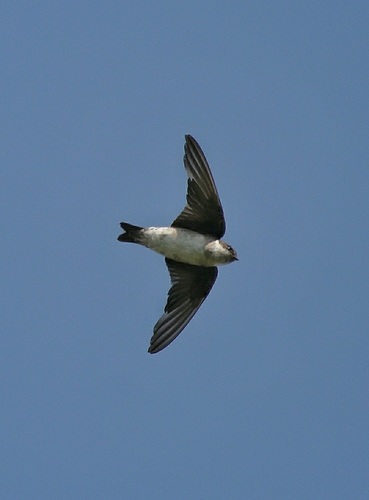 Asian House-Martin
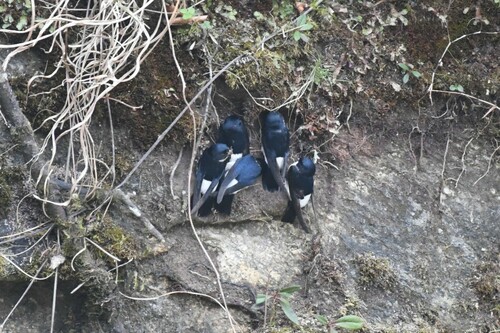 Nepal House-Martin
In breve
Il segno di campo più affidabile per separare l'Asian House-Martin dal Nepal House-Martin è la presenza di un mento nero e copritrici della coda nere nel Nepal House-Martin di tutte le età, rispetto alla gola e alla coda completamente chiare nell'Asian House-Martin. Anche la forma della coda è fondamentale: il Nepal House-Martin ha una coda molto più quadrata, mentre quella dell'Asian House-Martin è leggermente forked. I giovani di entrambe le specie sono più opachi, ma il mento nero del Nepal House-Martin rimane un indizio forte. In volo o posati, controlla sempre la gola e la coda, poi la forma della coda. Entrambe le specie condividono parti superiori blu-nerastre e un sottocoda bianco, quindi concentrati su questi contrasti, specialmente in colonie miste o habitat montani.
Consigli di identificazione
- Controlla prima la gola e le copritrici della coda: Il Nepal House-Martin mostra sempre un mento nero (l'estensione varia a seconda della sottospecie e della regione) e copritrici della coda nere, anche nei giovani. L'Asian House-Martin ha una gola e una coda chiare a tutte le età.
- La forma della coda è fondamentale: Il Nepal House-Martin ha una coda molto più quadrata, mentre la coda dell'Asian House-Martin è leggermente forked. Questo è visibile sia posato che in volo.
- Confusione nei giovani: Entrambe le specie sono più opache e meno lucide nei giovani, ma il mento nero e la coda del Nepal House-Martin rimangono chiari. I giovani dell'Asian House-Martin non hanno alcun nero sulla gola o sulla coda.
- Parti superiori e sottocoda: Entrambe le specie hanno parti superiori blu-nerastre e un sottocoda bianco. L'Asian House-Martin può essere leggermente più scuro sopra, e alcune sottospecie hanno una lucentezza blu più brillante, ma questo è sottile e inaffidabile.
- Parti inferiori: L'Asian House-Martin ha parti inferiori grigio chiaro, a volte con una sfumatura grigia, mentre le parti inferiori del Nepal House-Martin sono bianche, ma questo non è un forte separatore a causa della variazione e dell'illuminazione.
- Differenze sessuali: Entrambe le specie sono sessualmente monomorfiche, ma il maschio dell'Asian House-Martin può essere un po' più bianco sotto in piumaggio fresco. Questo non è un segno di campo forte.
- Variazione delle sottospecie: Nel Nepal House-Martin, la razza orientale (cuttingi) ha un nero più esteso sulla gola e sul petto; gli uccelli occidentali possono avere il nero limitato al mento. Controlla sempre per almeno un po' di nero al mento.
- Volo: La coda più quadrata del Nepal House-Martin può far sembrare il suo volo meno forked e leggermente più massiccio. La coda forked dell'Asian House-Martin è sottile ma presente.
- Vocalizzazioni: I richiami non sono separabili in modo affidabile sul campo; entrambi sono generalmente silenziosi e producono richiami brevi e poco notevoli.
- Sovrapposizione degli habitat: Entrambe le specie nidificano in habitat montani simili e possono nidificare su scogliere o edifici. Non fare affidamento solo sull'habitat per la separazione.
- Contesto della colonia: In colonie miste, usa il colore della gola e della coda, e la forma della coda, per separare gli individui. Non fare affidamento sulla lucentezza delle parti superiori o sulla luminosità del sottocoda.
- Becco, gambe e piedi: Entrambi hanno gambe e piedi di colore rosa-bruno coperti di piume bianche, e un becco nero. Questi non sono utili per la separazione.
- Dimensioni: Il Nepal House-Martin è leggermente più grande (13 cm contro 12 cm), ma questo non è evidente sul campo.
- Trappole di illuminazione: Le parti superiori blu-nerastre e i sottocoda bianchi possono sembrare simili in luce intensa; dai sempre priorità alla gola, alla coda e alla forma della coda.
- Confusione stagionale: L'Asian House-Martin è migratorio e può essere presente al di fuori della stagione di nidificazione, ma entrambi possono verificarsi insieme nell'Himalaya. Usa sempre piumaggio e struttura per l'identificazione.
Taglia
L'Asian House-Martin ha una lunghezza media di circa 12 cm e una massa di 18 g [wikidata], mentre il Nepal House-Martin è leggermente più grande a 13 cm, anche se la massa non è specificata. La differenza è sottile e non affidabile sul campo. Entrambi sono rondini compatte e dalle ali larghe, ma il Nepal House-Martin può apparire un po' più massiccio, specialmente nella razza orientale (D. n. cuttingi) con ali leggermente più lunghe.
Piumaggio
- Giovani/immaturi: Entrambe le specie sono meno lucide degli adulti. I giovani del Nepal House-Martin hanno una gola più scura e parti inferiori con sfumature beige, ma mantengono un mento scuro (nerastro) e copritrici della coda nere. I giovani dell'Asian House-Martin sono marroni scuri sopra, a volte con un sottocoda marrone, e hanno parti inferiori grigio-bianco senza nero sul mento o sulla coda.
- Adulti: L'Asian House-Martin è blu acciaio scuro sopra con un sottocoda bianco, parti inferiori grigio chiaro e una coda leggermente forked. Il Nepal House-Martin è blu-nerastro sopra con un sottocoda bianco puro, parti inferiori bianche, ma ha sempre un mento nero (l'estensione varia a seconda della sottospecie) e copritrici della coda nere, oltre a una coda molto più quadrata. Entrambi i sessi sono simili in entrambe le specie, anche se il maschio dell'Asian House-Martin può essere più bianco sotto in piumaggio fresco.
- Sottospecie: La razza orientale del Nepal House-Martin (D. n. cuttingi) ha il nero più esteso sulla gola e sul petto, mentre gli uccelli occidentali possono avere il nero limitato al mento. Le sottospecie dell'Asian House-Martin variano principalmente nella lucentezza delle parti superiori e nella luminosità del sottocoda, non nel colore della gola o della coda.
Comportamento
Entrambe le specie sono insetti aerei, spesso si nutrono in alto sopra il suolo. Il Nepal House-Martin è descritto come eccezionalmente veloce nel volo, ma questo non è un separatore affidabile sul campo. Entrambi nidificano colonialmente sotto sporgenze, tipicamente su scogliere, ma l'Asian House-Martin può utilizzare più facilmente edifici. Entrambe le specie costruiscono nidi di fango e possono essere viste raccogliere fango vicino all'acqua. Il loro stile di volo è simile: agile, con battiti d'ali rapidi e planate, ma la coda più quadrata del Nepal House-Martin può far sembrare il suo volo leggermente meno forked.
Habitat
Entrambe le specie nidificano nell'Himalaya e nelle montagne adiacenti, spesso in valli fluviali o su creste accidentate. L'Asian House-Martin è migratorio, nidificando in Asia centrale/orientale e svernando più a sud, mentre il Nepal House-Martin è non migratorio e residente nell'Himalaya dal NW India attraverso il Nepal fino al Vietnam settentrionale e alla Cina adiacente. Il Nepal House-Martin è più strettamente legato a scogliere ad alta quota (1.000–4.000 m), mentre l'Asian House-Martin può essere trovato a un'ampia gamma di altitudini, comprese le montagne più basse e talvolta edifici. È possibile una sovrapposizione nell'Himalaya, quindi l'habitat da solo non è diagnostico.
Voce
Entrambe le specie sono generalmente silenziose. L'Asian House-Martin emette un trill metallico ondulato o un twitter sibilante, e un cheep metallico secco, spesso con due o tre sillabe—simile al Common House-Martin ma più raspante. Il Nepal House-Martin emette un breve richiamo 'chi-i' in volo e una breve canzone di corteggiamento in tre note, ma è altrimenti silenzioso. Le differenze vocali sono sottili e non affidabili per la separazione sul campo.
Asian House-Martin · Nepal House-Martin · I miei uccelli difficili