

asian house-martin vs nepal house-martin
Delichon dasypus versus Delichon nipalense
Jogue um quiz com asian house-martin e nepal house-martin
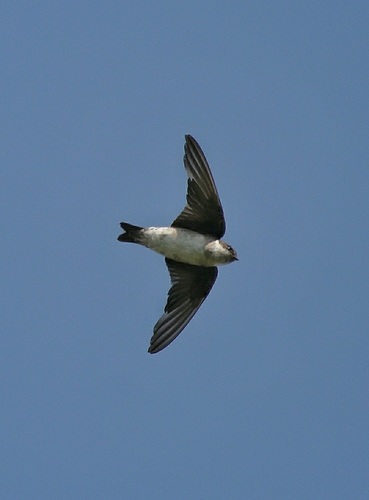 asian house-martin
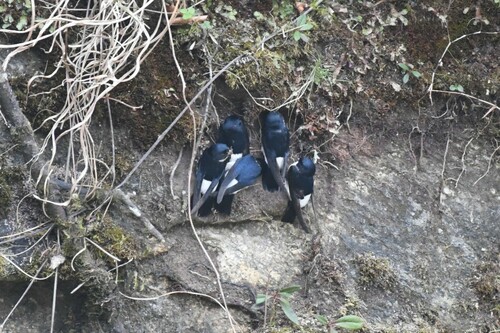 nepal house-martin
Em resumo
A marca de campo mais confiável para separar asian house-martin de nepal house-martin é a presença de um queixo preto e coberturas de cauda inferiores pretas em nepal house-martin de todas as idades, em contraste com a garganta e cauda inferiores totalmente pálidas em asian house-martin. A forma da cauda também é fundamental: nepal house-martin tem uma cauda muito mais quadrada, enquanto a de asian house-martin é ligeiramente bifurcada. Os juvenis de ambas as espécies são mais apagados, mas o queixo preto em nepal house-martin continua sendo uma pista forte. Em voo ou empoleirados, sempre verifique a garganta e a cauda inferior, depois a forma da cauda. Ambas as espécies compartilham partes superiores azul-preto e um rabo branco, então concentre-se nesses contrastes, especialmente em colônias mistas ou habitats montanhosos.
Dicas de identificação
- Verifique a garganta e as coberturas de cauda inferiores primeiro: nepal house-martin sempre apresenta um queixo preto (extensão varia por subespécie e região) e coberturas de cauda inferiores pretas, mesmo em juvenis. Asian house-martin tem uma garganta e cauda inferiores pálidas em todas as idades.
- A forma da cauda é fundamental: nepal house-martin tem uma cauda muito mais quadrada, enquanto a cauda de asian house-martin é ligeiramente bifurcada. Isso é visível tanto empoleirado quanto em voo.
- Confusão juvenil: Ambas as espécies são mais apagadas e menos brilhantes como juvenis, mas o queixo preto e a cauda inferior de nepal house-martin permanecem claros. Juvenis de asian house-martin não têm preto na garganta ou na cauda inferior.
- Partes superiores e rabo: Ambas as espécies têm partes superiores azul-preto e um rabo branco. Asian house-martin pode ser ligeiramente mais escuro acima, e algumas subespécies têm um brilho azul mais intenso, mas isso é sutil e não confiável.
- Partes inferiores: Asian house-martin tem partes inferiores cinza pálido, às vezes com um tom cinza, enquanto as partes inferiores de nepal house-martin são brancas, mas isso não é um forte separador devido à variação e iluminação.
- Diferenças sexuais: Ambas as espécies são sexualmente monomórficas, mas o macho de asian house-martin pode ser um pouco mais branco embaixo em plumagem fresca. Isso não é uma marca de campo forte.
- Variação de subespécies: Em nepal house-martin, a raça oriental (cuttingi) tem mais preto na garganta e no peito; aves ocidentais podem ter preto limitado ao queixo. Sempre procure por pelo menos um pouco de preto no queixo.
- Voo: A cauda mais quadrada de nepal house-martin pode fazer seu voo parecer menos bifurcado e ligeiramente mais robusto. A cauda bifurcada de asian house-martin é sutil, mas presente.
- Vocalizações: Chamadas não são separáveis de forma confiável em campo; ambas são geralmente silenciosas e emitem chamadas curtas e sem destaque.
- Sobreposição de habitat: Ambas as espécies nidificam em habitats montanhosos semelhantes e podem fazer ninhos em penhascos ou edifícios. Não confie apenas no habitat para separação.
- Contexto de colônia: Em colônias mistas, use a cor da garganta e da cauda inferior, e a forma da cauda, para separar indivíduos. Não confie no brilho das partes superiores ou na luminosidade do rabo.
- Bico, pernas e pés: Ambas têm pernas e pés rosa-acastanhados cobertos com penas brancas, e um bico preto. Estes não são úteis para separação.
- Tamanho: Nepal house-martin é ligeiramente maior (13 cm vs 12 cm), mas isso não é perceptível em campo.
- Armadilhas de iluminação: Partes superiores azul-preto brilhantes e rabos brancos podem parecer semelhantes em luz intensa; sempre priorize a garganta, a cauda inferior e a forma da cauda.
- Confusão sazonal: Asian house-martin é migratória e pode estar presente fora da temporada de reprodução, mas ambas podem ocorrer juntas nos Himalaias. Sempre use plumagem e estrutura para identificação.
Tamanho
Asian house-martin mede em média cerca de 12 cm de comprimento e 18 g de massa [wikidata], enquanto nepal house-martin é ligeiramente maior, com 13 cm, embora a massa não seja especificada. A diferença é sutil e não confiável em campo. Ambas são andorinhas compactas e de asas largas, mas nepal house-martin pode parecer um pouco mais robusta, especialmente na raça oriental (D. n. cuttingi) com asas ligeiramente mais longas.
Plumagem
- Juvenis/imaturos: Ambas as espécies são menos brilhantes do que os adultos. Juvenis de nepal house-martin têm uma garganta mais escura e partes inferiores com um tom amarelado, mas retêm crucialmente um queixo escuro (acinzentado) e coberturas de cauda inferiores pretas. Juvenis de asian house-martin são marrons escuros acima, às vezes com um rabo acastanhado, e têm partes inferiores cinza-brancas sem preto no queixo ou na cauda inferior.
- Adultos: Asian house-martin é azul aço escuro acima com um rabo branco, partes inferiores cinza pálido e uma cauda ligeiramente bifurcada. Nepal house-martin é azul-preto acima com um rabo branco puro, partes inferiores brancas, mas sempre um queixo preto (extensão varia por subespécie) e coberturas de cauda inferiores pretas, além de uma cauda muito mais quadrada. Ambos os sexos são semelhantes em ambas as espécies, embora o macho de asian house-martin possa ser mais branco embaixo em plumagem fresca.
- Subespécies: A raça oriental de nepal house-martin (D. n. cuttingi) tem o preto mais extenso na garganta e no peito, enquanto aves ocidentais podem ter preto limitado ao queixo. As subespécies de asian house-martin variam principalmente no brilho das partes superiores e na luminosidade do rabo, não na cor da garganta ou da cauda inferior.
Comportamento
Ambas as espécies são insetívoras aéreas, frequentemente se alimentando a grandes alturas. Nepal house-martin é descrita como excepcionalmente rápida em voo, mas isso não é uma separação confiável em campo. Ambas nidificam colonialmente sob saliências, tipicamente em penhascos, mas asian house-martin pode usar edifícios mais prontamente. Ambas as espécies constroem ninhos de barro e podem ser vistas coletando barro perto da água. Seu estilo de voo é semelhante: ágil, com batidas rápidas das asas e glissando, mas a cauda mais quadrada de nepal house-martin pode fazer seu voo parecer ligeiramente menos bifurcado.
Habitat
Ambas as espécies nidificam nos Himalaias e nas montanhas adjacentes, frequentemente em vales fluviais ou em cristas acidentadas. Asian house-martin é migratória, nidificando na Ásia central/oriental e invernando mais ao sul, enquanto nepal house-martin é não migratória e residente nos Himalaias, desde o noroeste da Índia até o Nepal, norte do Vietnã e China adjacente. Nepal house-martin está mais estritamente ligada a penhascos de alta altitude (1.000–4.000 m), enquanto asian house-martin pode ser encontrada em uma faixa mais ampla de elevações, incluindo montanhas mais baixas e, às vezes, edifícios. A sobreposição é possível nos Himalaias, então o habitat sozinho não é diagnóstico.
Voz
Ambas as espécies são geralmente silenciosas. Asian house-martin emite um trinado metálico ondulante ou um twitter sibilante, e um piado metálico seco, frequentemente com duas ou três sílabas—semelhante a common house martin, mas mais áspero. Nepal house-martin emite ocasionalmente uma chamada curta 'chi-i' em voo e uma breve canção de reprodução de três notas, mas é, de outra forma, silenciosa. As diferenças vocais são sutis e não confiáveis para separação em campo.
asian house-martin · nepal house-martin · Minhas aves difíceis