

Aziatische huiszwaluw vs Nepalese huiszwaluw
Delichon dasypus versus Delichon nipalense
Speel een quiz met Aziatische huiszwaluw en Nepalese huiszwaluw
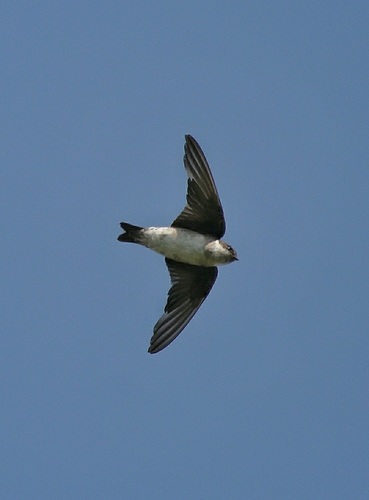 Aziatische huiszwaluw
 Nepalese huiszwaluw
Kort gezegd
Het meest betrouwbare veldkenmerk om de Aziatische huiszwaluw van de Nepalese huiszwaluw te scheiden, is de aanwezigheid van een zwarte kin en zwarte onderstaartdekken in Nepalese huiszwaluw van alle leeftijden, in tegenstelling tot de volledig bleke keel en onderstaart bij de Aziatische huiszwaluw. De vorm van de staart is ook belangrijk: de Nepalese huiszwaluw heeft een veel vierkantere staart, terwijl die van de Aziatische huiszwaluw iets gevorkt is. Juvenielen van beide soorten zijn doffer, maar de zwarte kin van de Nepalese huiszwaluw blijft een sterk aanwijzing. In de vlucht of zittend, controleer altijd de keel en onderstaart, en dan de staartvorm. Beide soorten delen blauw-zwart bovenwerk en een witte stuit, dus focus op deze contrasten, vooral in gemengde kolonies of berghabitats.
Herkenningstips
- Controleer eerst de keel en onderstaartdekken: Nepalese huiszwaluw toont altijd een zwarte kin (uitgebreidheid varieert per ondersoort en regio) en zwarte onderstaartdekken, zelfs bij juvenielen. Aziatische huiszwaluw heeft een bleke keel en onderstaart op alle leeftijden.
- Staartvorm is belangrijk: Nepalese huiszwaluw heeft een veel vierkantere staart, terwijl de staart van de Aziatische huiszwaluw iets gevorkt is. Dit is zichtbaar zowel zittend als in de vlucht.
- Verwarring bij juvenielen: Beide soorten zijn doffer en minder glanzend als juvenielen, maar de zwarte kin en onderstaart van de Nepalese huiszwaluw blijven duidelijk. Juvenielen van de Aziatische huiszwaluw missen zwart op de keel of onderstaart.
- Bovenwerk en stuit: Beide soorten hebben blauw-zwart bovenwerk en een witte stuit. De Aziatische huiszwaluw kan iets donkerder boven zijn, en sommige ondersoorten hebben een helderdere blauwe glans, maar dit is subtiel en onbetrouwbaar.
- Onderwerk: Aziatische huiszwaluw heeft bleke grijze onderwerk, soms met een grijze waas, terwijl het onderwerk van de Nepalese huiszwaluw wit is, maar dit is geen sterke scheiding door variatie en verlichting.
- Geslachtsverschillen: Beide soorten zijn seksueel monomorf, maar mannelijke Aziatische huiszwaluw kan iets witter zijn onder in verse verenkleed. Dit is geen sterk veldkenmerk.
- Variatie in ondersoorten: Bij Nepalese huiszwaluw heeft de oostelijke race (cuttingi) meer uitgebreide zwart op de keel en borst; westelijke vogels kunnen zwart hebben dat beperkt is tot de kin. Kijk altijd voor ten minste wat zwart op de kin.
- Vluchtstijl: De vierkantere staart van de Nepalese huiszwaluw kan zijn vlucht minder gevorkt en iets robuuster doen lijken. De gevorkte staart van de Aziatische huiszwaluw is subtiel maar aanwezig.
- Vocalisaties: Roepen zijn niet betrouwbaar te scheiden in het veld; beide zijn over het algemeen stil en geven korte, onopvallende roepen.
- Habitatoverlap: Beide soorten broeden in vergelijkbare berghabitats en kunnen nesten op kliffen of gebouwen. Vertrouw niet alleen op habitat voor scheiding.
- Koloniecontext: In gemengde kolonies, gebruik de kleur van de keel en onderstaart, en de staartvorm, om individuen te scheiden. Vertrouw niet op de glans van het bovenwerk of de helderheid van de stuit.
- Snavel, poten en voeten: Beide hebben bruinachtig-roze poten en voeten bedekt met witte veren, en een zwarte snavel. Deze zijn niet nuttig voor scheiding.
- Grootte: Nepalese huiszwaluw is iets groter (13 cm vs 12 cm), maar dit is niet merkbaar in het veld.
- Verlichtingsvalkuilen: Glanzend blauw-zwart bovenwerk en witte stuiten kunnen er in fel licht vergelijkbaar uitzien; geef altijd prioriteit aan keel, onderstaart en staartvorm.
- Seizoensverwarring: Aziatische huiszwaluw is migrerend en kan buiten het broedseizoen aanwezig zijn, maar beide kunnen samen voorkomen in de Himalaya. Gebruik altijd verenkleed en structuur voor identificatie.
Grootte
Aziatische huiszwaluw heeft een gemiddelde lengte van ongeveer 12 cm en een massa van 18 g [wikidata], terwijl de Nepalese huiszwaluw iets groter is met 13 cm, hoewel de massa niet gespecificeerd is. Het verschil is subtiel en niet betrouwbaar in het veld. Beide zijn compacte, breedvleugelige zwaluwen, maar de Nepalese huiszwaluw kan iets robuuster lijken, vooral in de oostelijke race (D. n. cuttingi) met iets langere vleugels.
Verenkleed
- Juvenielen/immaturen: Beide soorten zijn minder glanzend dan volwassenen. Juvenielen van de Nepalese huiszwaluw hebben een doffere keel en buffgewassen onderwerk, maar behouden cruciaal een donkere (zwartachtige) kin en zwarte onderstaartdekken. Juvenielen van de Aziatische huiszwaluw zijn donkerbruin boven, soms met een bruinachtige stuit, en hebben grijs-wit onderwerk zonder zwart op de kin of onderstaart.
- Volwassenen: Aziatische huiszwaluw is donker staalblauw boven met een witte stuit, bleke grijze onderwerk, en een iets gevorkte staart. Nepalese huiszwaluw is blauw-zwart boven met een pure witte stuit, witte onderwerk, maar altijd een zwarte kin (uitgebreidheid varieert per ondersoort) en zwarte onderstaartdekken, plus een veel vierkantere staart. Beide geslachten zijn vergelijkbaar in beide soorten, hoewel mannelijke Aziatische huiszwaluw witter kan zijn onder in verse verenkleed.
- Ondersoorten: De oostelijke race van de Nepalese huiszwaluw (D. n. cuttingi) heeft de meest uitgebreide zwart op de keel en borst, terwijl westelijke vogels zwart kunnen hebben dat beperkt is tot de kin. Ondersoorten van de Aziatische huiszwaluw variëren voornamelijk in de glans van het bovenwerk en de helderheid van de stuit, niet in de kleur van de keel of onderstaart.
Gedrag
Beide soorten zijn luchtinsecteneters, die vaak hoog boven de grond voeden. Nepalese huiszwaluw wordt beschreven als uitzonderlijk snel vliegend, maar dit is geen betrouwbare veldscheiding. Beide nestelen koloniaal onder overhangingen, typisch op kliffen, maar de Aziatische huiszwaluw kan gebouwen gemakkelijker gebruiken. Beide soorten bouwen moddernesten en kunnen worden gezien terwijl ze modder verzamelen nabij water. Hun vluchtstijl is vergelijkbaar: behendig, met snelle vleugelslagen en glijden, maar de vierkantere staart van de Nepalese huiszwaluw kan zijn vlucht iets minder gevorkt doen lijken.
Habitat
Beide soorten broeden in de Himalaya en aangrenzende bergen, vaak in rivierdal of op ruige bergkammen. Aziatische huiszwaluw is migrerend, broedend in centraal/oostelijk Azië en overwinterend verder naar het zuiden, terwijl de Nepalese huiszwaluw niet-migrerend is en resident is in de Himalaya van NW India via Nepal naar Noord-Vietnam en aangrenzend China. Nepalese huiszwaluw is strikter gebonden aan hoge kliffen (1.000–4.000 m), terwijl de Aziatische huiszwaluw op een breder scala van hoogtes kan worden gevonden, inclusief lagere bergen en soms gebouwen. Overlap is mogelijk in de Himalaya, dus habitat alleen is niet diagnostisch.
Geluid
Beide soorten zijn over het algemeen stil. Aziatische huiszwaluw geeft een rimpelende metalen triller of sibilante tsjil, en een droge metalen piep, vaak met twee of drie lettergrepen—vergelijkbaar met de Gewone huiszwaluw maar raspender. Nepalese huiszwaluw geeft een occasionele korte 'chi-i' roep in de vlucht en een korte drie-noten broedlied, maar is verder stil. Vocal verschillen zijn subtiel en niet betrouwbaar voor scheiding in het veld.
Aziatische huiszwaluw · Nepalese huiszwaluw · Mijn lastige vogels